





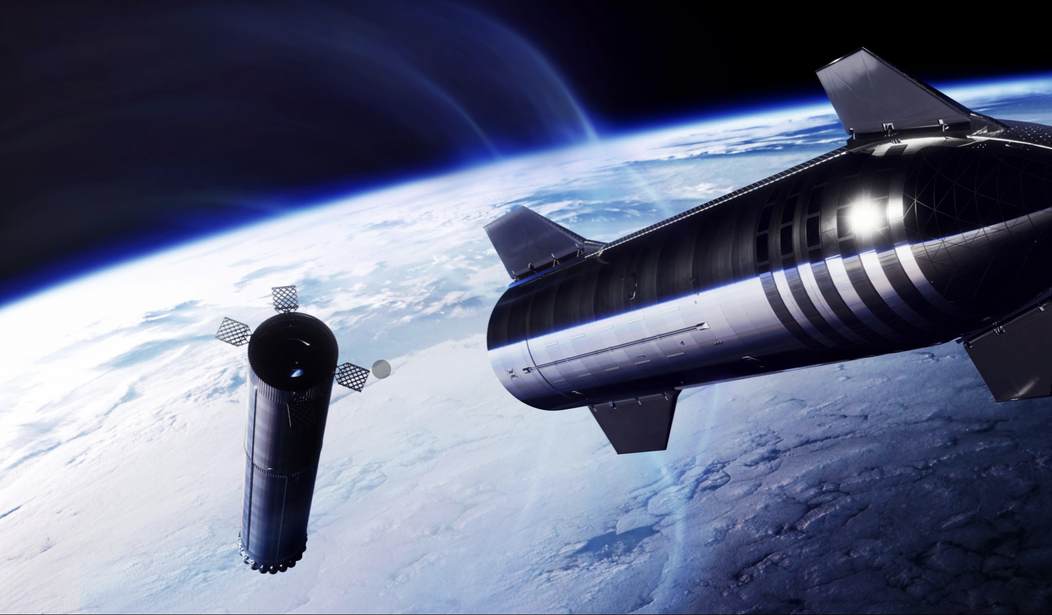
There is so much more riding on Starship Flight Test 13 than the first 20 functional Starlink V3 satellites, which are designed to deliver fiber-like internet speeds anywhere on land, air, or sea.
People's retirement portfolios, for example.
SPCX shares have struggled since the company's June initial public offering. Originally offered to the public at $135 on June 12, SPCX shares actually opened at $150 (an 11% pop) amid massive demand and hype. I bought exactly one on launch day, my "vanity share," as I like to call it. Prices hit an intraday peak of $225.64 just four days later, but have since sagged to as low as $136.
For SpaceX, everything — not just the value of SPCX shares, but literally everything — rides on making Starship live up to Elon Musk's promises.
That's why Thursday's launch matters so much.
The launch window for the next test of just that opens at 6:45 p.m. ET on Thursday, July 16, with some nice additions from FT12 in May.
FT13 will follow the same flight path as FT12, with the booster sending Ship 40 (S40, making its first flight) on a suborbital trajectory before splashing down — with the usual 4K video provided by a buoy — about 65 minutes after liftoff.
If this seems a little same-old same-old, nothing could be further from the truth.
For starters, FT12 suffered serious engine anomalies that are supposed to be corrected. Here's Grok's summary of what went wrong in May:
Slight timing differences in Ship engine startup during hot-staging caused the booster to flip ~90° off-axis. This led to heat effects on propulsion components during ascent and erroneous engine alarm/abort settings. As a result, only a few of the 33 Raptors relit properly for the boostback burn, causing an early shutdown and a hard splashdown instead of a controlled one.
TL;DR? The boostback ignition partly failed, and that giant booster hit the Gulf of America like a brick.
And about 40 seconds after separation, the upper Ship stage had one of its three vacuum-optimized engines fail. It still made its planned flight, proving an important "engine-out" capability, but SpaceX had to scrub a planned in-space engine relight.
Since then, SpaceX has taken FAA-approved corrective actions, leading to the agency giving its blessing to FT13 earlier this week.
Here's how it should go.
#Starship Flight 13 (unofficial) step-by-step infographic. SpaceX’s promise of “excitement guaranteed” is a certainty. pic.twitter.com/UaNtufe5nJ
— Tony Bela - InfographicTony (@InfographicTony) July 15, 2026
Assuming a nominal launch and landing for Booster 20 (B20, also making its first flight), the Ship is scheduled to do some seriously cool stuff.
And Another Thing: Sorry, but there will be no attempt to catch the booster with Mechazilla again this time around. You have no idea how sorry I am. Instead, B20 will perform a boostback burn and make a controlled water landing in the Gulf of America.
During FT12, the Ship deployed mockup V3 Starlink satellites to test the vehicle's "Pez dispenser" deployment system. For FT13, S40 will for the first time deploy functional V3s — six with cameras meant to capture images of the Ship's heat shield for future refinements. The sats will also attempt brief internet connections to a ground station in South Africa (one of the few countries along the flight path) and the orbital Starlink system.
That will give SpaceX a better idea of just how good the V3 birds are. But the test will only last a few minutes, since the satellites follow the Ship's suborbital path and will burn up shortly in the atmosphere.
On reentry, S40's new heat shield arrangement includes load-sensing tiles to measure stresses during a higher-pressure descent meant to stress-test the shield and the Ship.
The overall purpose of the test is to set up FT14. Assuming a nominal FT13, the next launch will be the Ship's first orbital flight. And the whole purpose of Starship is to reduce cost-to-orbit by 90%, to under $100 per kilogram.
At that point, SpaceX can start putting data centers in orbit with operating costs an estimated one-third to two-thirds less than ground-based compute. That's just one reason why Citibank this week gave SPCX a "buy" rating. As DogeDesigner put it, Citi sees SpaceX as "a vertically integrated platform spanning space access, Starlink’s global connectivity network and AI infrastructure," while praising "its ability to lower costs while increasing output at a scale competitors may struggle to match."
With Falcon 9, there really isn't anybody who can compete with SpaceX on medium-lift to Low Earth Orbit. With Starship, there won't be anybody able to compete with SpaceX on compute costs in a world with an insatiable appetite for AI, digital communications, and every other service currently provided by power-hungry, Earth-based data centers.
Or as my old friend and aerospace engineer Will Collier reminded me last week, "These [Wall Street] analyst dweebs just have no clue what daily orbital access at under $100/kg means."
But Elon Musk does, and he means to deliver it.
Recommended: Turns Out, Big Brother Is Actually a Matronly Euro-Scold
Need more? We got more.
PJ Media VIP members get tons of exclusive goodies, including podcasts and video live chats with your favorite writers. You can support alternative conservative news and save 60% with promo code FIGHT.



Join the Conversation
VIP members get the ability to comment on articles.