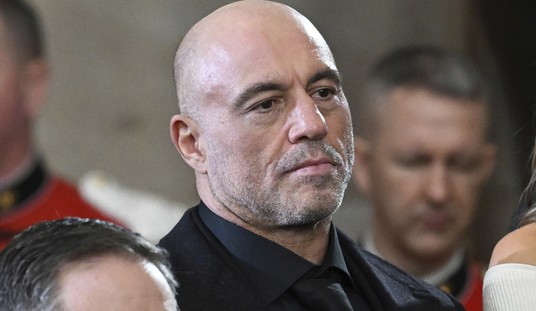




If you drive a lifted truck, grill steaks in a half-cut oil drum, or crank up country tunes while shotgunning beers with your bros... you might be Japanese." —Jeff Foxworthy, maybe
Among life's countless imponderables — What price freedom? How did humanity survive before discovering coffee? Tuesdays — what perplexes this American the most is that some other culture beat us to the concept of cheese violence.
Back in March, Elon Musk's X rolled out an automatic inline translation powered by the company's Grok/xAI LLM, and inadvertently launched a trans-Pacific love-fest much bigger than that one friend of yours who watches anime.
Thanks to translations of foreign posts that now magically show up in readers' native languages — and some savvy cross-pollination — this spring everyday Americans and Japanese found that our two cultures are more simpatico than a typical social media user could have previously imagined.
There's so much more to talk about today than just our new Mutual Bro-Love and Respect Society, but let's start there before getting to the more serious stuff.
Japan has the highest per capita X usage of any country in the world, and the typical Japanese spends more time on X, too. So once they tweaked the algo to encourage more Japanese-American sharing, Americans learned just how impressively well the Japanese adapted some of the best parts of our culture, and Japanese discovered how much we respect them for it.
This young lady explained the American side of things so well on social media that I'll let her do it here, too.
こんにちは to our new patriotic friends in Japan 🇺🇸🤝🇯🇵
— 𝐃𝐚𝐫𝐤 𝐇𝐚𝐢𝐫𝐞𝐝 (@DKH013) March 31, 2026
Who knew Japanese social media would celebrate American culture with so much enthusiasm? 🥹❤️ It’s genuinely heartwarming to see this kind of cross-cultural appreciation.
Here’s to more moments like this maybe even a… pic.twitter.com/ovQhkv1F16
The love goes both ways, which is how we ended up with charming exchanges like this one:
おれもアメリカが大好きだ、だからジーンズで出勤だ👖
— 池淵圭輔|Keisuke Ikebuchi (@ksk160909) March 31, 2026
The reply — translated automatically on the X and app — said, "I love America too, so I'm heading to work in jeans."
How perfect is that?
The brief exchange launched one of countless conversations that were nearly impossible before March. "I’m very happy to receive so many photos and comments from America!" Yohei wrote after finding his mentions filled with love from the U.S.A. Yohei's timeline is pretty much nothing but asking questions about America and answering questions about Japan.
Almost all of what you'll find is so warm and friendly that you'll forget all about how vicious social media can be.
Japan-American X is the best X, particularly a little something the Japanese call cheese violence that you must see to believe.
And Another Thing: X's translation feature is so seamless that I don't always notice I'm reading a post from a couple of continents away. That can actually be a problem, because I'll sometimes embed a post here or at Instapundit without realizing it's in another language — and translation doesn't happen in embeds. So if you've ever wondered why I sometimes post something you can't read, now you know.
Check out these shots of our Japanese friends sharing grilled beef and beer with friends out in the wilderness somewhere, and you'll see that it could be anywhere in America.
BBQ in JAPAN
— りょーいち (@159762Rs) May 3, 2026
彼らはカントリーボーイ pic.twitter.com/b3d9ZiTza9
The Japanese text translates to: "They are country boys."
They sure are, but don't think that the cultural cross-pollination runs just one way, as American X user Chris showed this week.
I marinated these steaks in Japanese barbecue sauce before grilling over charcoal. pic.twitter.com/RPJ1hUCXXy
— Chris (@ChrizDDv3) May 4, 2026
There's a beautiful element to the Japanese temperament, and it's probably unique, too. When they fall in love with something, even something foreign, they over-engineer it to its logical extreme.
Toyota learned mass manufacturing from watching Ford, but then created "the Toyota way" that resulted in ever-improving vehicles that often left American carmakers in the dust.
Levi Strauss & Co. invented blue jeans, but Japan now makes the best in the world. Levi’s stopped using quality American-made selvedge denim in favor of cheap imports that don’t deserve the name. Japanese companies snapped up America's classic denim looms. If you know any denim snobs — they really do exist — they'll tell you to buy Japanese.
Japanese whisky was originally a second-rate homage to scotch, but now brands like Yamazaki, Hibiki, and Nikka routinely beat out the "real" stuff in international competitions, just like California winemakers started doing to the French five decades ago. See, we can play that game, too.
My bucket list long ago included a week spent prowling Tokyo's jazz kissas to hear some of the best jazz musicians in the world play live.
Daniel Franke this week shared a joke about anvils engineered to the specifications of various countries:
You buy a Japanese anvil. It arrives wrapped in rice paper inside a paulownia box, accompanied by a certificate bearing three generations of signatures and a photograph of the first production example being presented to the Emperor. The face has been hand-polished by a seventy-eight-year-old master whose family has made striking surfaces since the Muromachi period. You are given detailed instructions for oiling it with a cloth folded in a specific way. It is the most beautiful object you own. You never quite work up the nerve to strike it.
Sometimes Japan's obsessions work out less well, like that time Imperial Japan decided to recreate the British Empire in a frighteningly bloody new image, invaded pretty much all its neighbors, and ended up getting nuked a couple of times before it was all over.
But once that unpleasantness ended, the Japanese devoted their obsessive perfectionism to more peaceful endeavors.
Cheese violence, for example.
When X's cross-pollination began in March, our Japanese friends saw Americans do totally American things like putting way too much cheese on a burger with too many patties.
Smash or pass? pic.twitter.com/SI8xbNPjez
— Sweet Nectar. (@AmazingEyes1122) March 29, 2026
A Japanese user took one look at that gorgeous monstrosity and replied, "Please watch cheese violence."
So then our Japanese friends said, "Hold my Asahi," and shared something so totally Japanese that it might be my new obsession. That's because no matter what I might have just written a couple of sentences ago, there's no such thing as too much cheese.
Observe, please, the answer to the question nobody outside of Japan ever asked: "What if I took a cheeseburger and dipped it in cheese fondue?
アメリカ人よ🇺🇸
— 🇯🇵星空音夢🇯🇵🧀Cheese police 👮 (@hoshizorarock) May 6, 2026
君達の大好きなチーズの暴力だ🧀 pic.twitter.com/WHQK2YiOB2
Also remember that cheese didn't even go mainstream in Japan until after World War II, when it arrived with American occupation troops. The student then surpassed the master.
The Japanese are not my people. And yet they are my people. Or as Jim Treacher put it a few weeks ago, "Yeah, that’s it. They nailed it. Cheese violence. I love it. I’m going to start using that. I want some cheese violence."
Japan doesn't have a Second Amendment, but some Japanese are working hard to adopt American gun culture.
🗣️ why can’t you act like a cute girl? Guns don’t suit you👎🏼
— りりあんぬ葵*LillyTactical (@LillianneMoo) May 3, 2026
🤡You want cute?? Here you go🤡 pic.twitter.com/LaJ52CKGxR
I wouldn't mind taking her to the range, IYKWIMAITYD.
It's fair to say that Japan's love of Americana is almost Trumpian in its enthusiasm. But stick a pin in that because I'll come back to it shortly.
Inevitably, the memes came.
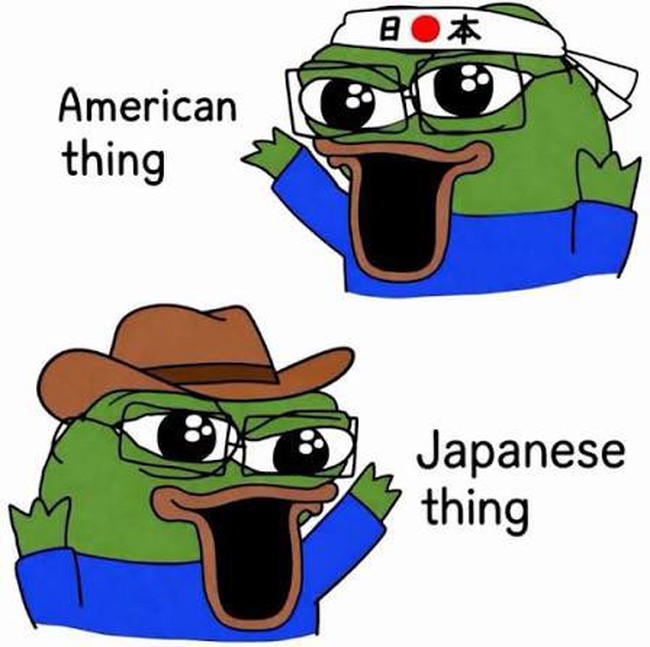
The weeks-long bro-fest caused Geiger Capital to conclude, "Our greatest ally, and it isn’t close."
Naturally, here's where I pivot to the more serious stuff. But don't worry, I had so much fun with the fun stuff — and hope you did, too — that I won't have to drag you too deep into the weeds.
If recent developments on X highlight our longstanding cultural alliance, our military alliance was cemented in 1951 with the U.S.-Japan Security Treaty. Not that Tokyo had much of a choice. The country was, let us say, fully demilitarized in 1945, and Article 9 of the constitution Gen. Douglas MacArthur imposed insisted that "the Japanese people forever renounce war as a sovereign right," and that "land, sea, and air forces, as well as other war potential, will never be maintained."
Yeah, that didn't last.
The Soviet threat was just too much, and while controversial at the time, we allowed and encouraged Japan to rearm in the early '50s. The country's Self-Defense Forces aren't large, but they are lethal. That's particularly true of the Air SDF and Maritime SDF, which boast well-trained airmen and sailors, first-rate gear, and in Tokyo, a new willingness to take a wider view of what constitutes self-defense.
Speaking to the Japanese Diet last November, conservative prime minister Sanae Takaichi was asked about possible Chinese aggression against Taiwan. She said, "If it involves the use of warships and the exercise of military force, it could certainly amount to a survival-threatening situation."
"Survival-threatening situation" isn't language used lightly. Ken Jimbo, a former Special Advisor to Japan's Minister of Defense, explained that it's "a legal terminology to apply Japan’s commitment to the exercising of collective self-defence. So if the United States decides to engage in the Taiwan contingency, even if Japan is not directly attacked by the adversary, we are able to support the US operation by jointly responding to the adversaries."
Takaichi's answer certainly raised eyebrows in Beijing, where memories of Imperial Japan's brutal occupation run long. Well, tough cookies, Comrade Xi — Tokyo's military growth is in response to yours.
Previously, Japan capped the country's we-swear-it-isn't-military-spending at 1% of GDP, in no small part to avoid raising fears of renewed imperialism. Tokyo is doubling that figure — impressive, given they're the world's third-largest economy. More importantly, the SDF will for the first time deploy a "counterstrike capability" of long-range missiles, no doubt targeted at China and North Korea. Tokyo has also significantly reinforced islands near Taiwan and the East China Sea.
In April, a Japanese Maritime Self-Defense Force destroyer sailed through the Taiwan Strait to assert freedom of the seas against possible Chinese interference. Beijing regularly bullies Philippines fishermen and other naval vessels — in Filipino waters, mind you — which is one reason why this week "the defense ministers of Japan and the Philippines have agreed to set up a working group between their ministries to promote Japan's early overseas transfer of used destroyers and other defense equipment."
That's the kind of thing we used to do more of, back when we still knew how to build warships at a respectable scale.
Tokyo is doing even more than all that, including increased training with regional powers like Australia and India.
Under Takaichi, Tokyo sounds increasingly Trumpian in its willingness to defend Japan's interests in the Pacific. The strongest military alliances share strong cultural ties, and even this lover of sashimi and Ultraman didn't appreciate until very recently how strong our cultural ties are.
The Soviet threat is gone, but Communist China — with its unprecedented peacetime naval and air force buildup — is a more dangerous and less predictable threat. So when anyone asks, "Why do we spend billions defending Japan?" I tell them: "We don't. We spend billions maintaining the peace — and Japan is pitching in like never before. And if you think that's expensive, try a war sometime."
But I'd much rather try some of that Japanese-style barbecue.
Last Thursday: Beware the Authoritarian Temptation