





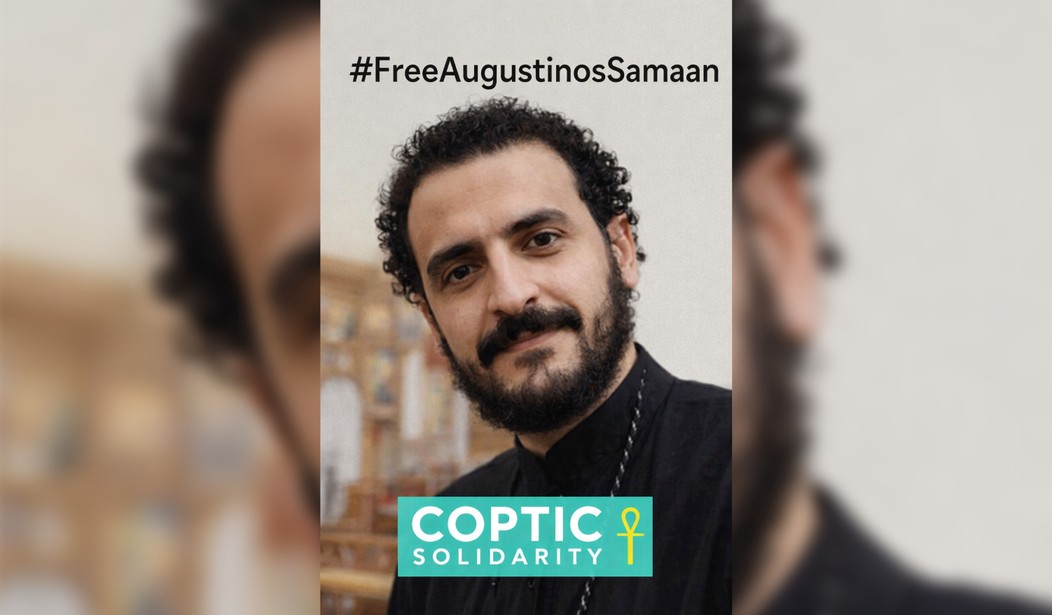
The Egyptian government continues to disproportionately arrest Coptic Christians on "blasphemy" charges. Dialogue or debate regarding religious beliefs, criticism of Islam, or the Egyptian government often brings arrest, torture, and imprisonment.
Dr. Augustinos Samaan, 37, is a Coptic researcher arrested by masked special-forces officers on Oct. 1, 2025, for “derision of Islam” under Egypt’s “contempt of religion” laws. Samaan holds a Ph.D. in comparative religion and is engaged in Christian apologetics.
Through scholarly work and online educational content, Samaan peacefully discussed religious issues and responded to anti-Christian sentiment. These are all activities protected under international human rights law. Yet on January 3, Samaan was sentenced to five years’ imprisonment with hard labor. He was also assaulted by other detainees.
The Organization Coptic Solidarity (CS) is campaigning for Dr. Samaan's release.
During his detention, the officers confiscated his laptop, phone, books, and personal papers. Following national security investigations — an ordeal that reportedly included torture — he was initially charged with terrorism-related offenses. Prosecutors eventually amended the case to “contempt of religion” under Article 98(f) of the Penal Code.
The sentence was issued in a secret criminal trial without notification to his legal counsel or family, without public proceedings, and without granting the defense access to the case file or a meaningful opportunity to represent him.
Dr. Samaan was twice taken before the court without the knowledge of his lawyers or family, culminating in a secret conviction. On Jan. 6, 2026, his family and legal team expected a detention-renewal hearing. Instead, upon arriving at court, they learned that the case had already been tried and decided in their absence. Court officials later confirmed that the case was heard on Dec. 27, 2025. It was further adjourned and adjudicated on Jan. 3, 2026 — without notice to the defense and without public scrutiny.
The appeal hearing scheduled for January 26 was also postponed to February 2, reportedly due to “difficulties in bringing the defendant to court.”
"This explanation raises serious concerns, given the stark inconsistency with prior proceedings," CS stated. "The sudden claim that he could not be transported for an appeal hearing is therefore both implausible and troubling."
To date, Dr. Samaan’s lawyers have not received access to the case file, undermining the most basic elements of due process and the right to defense.
“This is not a legitimate judicial proceeding—it is punishment by procedure,” Coptic Solidarity noted. “Secret trials and denial of defense rights place Egypt in clear violation of its constitutional and international commitments.”
"There is also growing concern for Dr. Samaan’s physical and mental well-being, following reports of torture and mistreatment in detention. The Egyptian government bears full responsibility to ensure his safety, humane treatment, and access to necessary medical care, in accordance with its domestic and international obligations."
The latest hearing took place on February 23. An Egyptian Misdemeanor Appeals Court upheld the five-year prison sentence with hard labor against Dr. Samaan, according to a statement by his legal counsel, Saeed Fayez.
The ruling confirmed the verdict of the lower court and also imposed the payment of all associated court costs. Following the decision, Fayez highlighted significant “procedural issues” that have plagued the case since its beginning. The defense team says that it was denied timely access to essential case files, a move they argue constitutes a violation of the constitutional right to a fair and effective defense.
The organization Coptic Solidarity urges legislators, governments, and international bodies to raise Dr. Samaan’s case urgently and to call on Egyptian authorities to immediately release Samaan, overturn his conviction, and end the use of blasphemy (“contempt of religion”) laws to silence peaceful expression. CS added:
These proceedings violate Article 96 of the Egyptian Constitution, which guarantees the presumption of innocence, the right to defense, and fair-trial standards. They also contravene Egypt’s obligations under the International Covenant on Civil and Political Rights (ICCPR), including Article 14 (fair and public hearings) and Articles 18 and 19 (freedom of belief and expression).
Egypt is home to one of history’s earliest influential civilizations. The Copts are the indigenous people of Egypt and are currently over 15 million strong (12-15% of the population). They are the descendants of ancient Egyptians and have lived in their homeland for several millennia.
After centuries as a center of Christianity, the invasion of Byzantine (Eastern Roman) Egypt by Arab Muslim forces in the seventh century marked the beginning of Egypt’s gradual transformation into a predominantly Islamic society, with Arabic eventually replacing Coptic and Greek as the main language. Copts have since survived centuries of persecution at the hands of Arab Muslims and Ottoman Turks.
Dr. Samaan's case is not an anomaly. Coptic Christian journalist Ramy Kamel suffered similar injustices between 2019 and 2022 for his civil rights work and religious freedom advocacy.
Egypt is number 42 on the Open Doors World Watch List, which ranks the countries where Christians face the most extreme persecution. Christians in Egypt face long-standing, systematic persecution, including violent attacks on churches, abductions of women, mobs expelling Christians after alleged blasphemy, and societal discrimination.
Open Doors reports:
Despite promises from the President that a church will be built in every new neighborhood, construction of new churches is restricted… The Grand Imam of Al-Azhar University (one of the most influential Islamic universities globally) has stated that Muslims may not convert to Christianity. Security services maintain a strong grip on converts from Islam to Christianity, regularly detaining and abusing them and forcing them into isolation. The state also makes it impossible for conversions to be officially recognized.
All over, there is considerable division between Christians and Muslims. Employment discrimination against Christians is still common, especially when it comes to sensitive government jobs. Christian businesses can be boycotted. Christians remain vulnerable to mob attacks, which can be triggered by a rumor of alleged blasphemy or the opening of a new church. Usually, the local authorities use so-called 'reconciliation sessions' to resolve a conflict, which often result in Muslim attackers going free and a culture of impunity for violence against Christians.
Christians in Upper Egypt often avoid visible symbols, such as car crosses, fearing harassment. Most Copts bear a tattooed cross marking their faith, but it also exposes them to discrimination… In rural areas, unemployment and bias against Christian names leave young men disadvantaged and vulnerable to financial incentives to convert to Islam… Church leaders, almost all male, are easily targeted for harassment, killings, or attacks on their families.
Christians often feel they are treated as second-class citizens and face unfair treatment when dealing with the state. The state is reluctant to respect and enforce the fundamental rights of Christians.
Christian women and converts from Islam bear the brunt of religious persecution in the country:
Christian women in Egypt, particularly in rural areas, face grooming, forced conversion, and sexual harassment, often within an honor-shame culture that stigmatizes their families. Some are stripped, beaten, or abused publicly, while perpetrators frequently enjoy impunity, leaving victims silenced and fearful. Coptic women face constant harassment for not veiling. Girls from vulnerable families are lured into early marriages with Muslim men, pressured to convert. Female converts from Islam are most at risk: they may be locked up, beaten, killed for 'honor,' divorced, and lose custody of children.
Lindsay Rodriguez, Coptic Solidarity's Director of Development and Advocacy, told PJ Media:
Dr. Samaan’s case is not isolated: the forced disappearance of minor Silvana Atef, the continued detention of convert Said Abdelrazek, mass arrests of Christians when peacefully seeking equal treatment, and preventing St. Catherine’s Monastery from legally defending itself against government-led efforts to overtake control and monastery property, all point to a widening pattern of repression. As one of Egypt’s largest providers of foreign aid, the US administration has the tools to secure meaningful protections of religious freedom —the question is whether it will use them.


Join the Conversation
VIP members get the ability to comment on articles.