


Two things that non-Catholics and many Catholics don’t understand about the Catholic Church are that it’s not a democratic organization and it’s not an autocracy. In other words, as powerful as the Pope is, he cannot arbitrarily or single-handedly change doctrine and policy. At the same time, even though the church counts 1.4 billion members around the world, it is not structured to take their input into account the way representative government works in America.
Among Catholics, this confusion often pops up when the discussion turns to declining mass attendance and increases in the number of lapsed Catholics who no longer consider themselves a part of the church, even though they may have been baptized in the church.
To get them back, we might argue, the church needs to allow women to be priests, or priests to get married, or to change our hard line on abortion, or to change the church’s position on LGBTQ issues.
That’s not how it works, or at least, that’s not how it’s supposed to work. I know I’m going to hear from the Catholic catechism and Canon Law technicians on this oversimplification, but here goes: The church is here for Jesus Christ, the Holy Spirit and God Himself. We exist to please God. God does not exist to please us. He is not our creation. We are His creation.
From a purely administrative standpoint, the church has had to find ways over the past 2,000 years to function in a changing world. That is definitely not to say that the church has had to change with the times or change simply to stay relevant, but rather, it has had to stay true to itself in the context of the times.
Against this backdrop, Pope Francis decided to convene a Synod of Bishops in 2021 to consider ways in which the church can be more responsive to the culture without diminishing its core doctrines and policies, and the catechism itself.
In the Catholic Church, a Synod of Bishops is a formal assembly where bishops meet to discuss subjects tied to doctrine, governance, pastoral practice, or mission. If there is any one approach the church uses to try to stay relevant, this would be a key method. Of course, there are many within the church who argue against a “synodal mentality,” where they feel that the desire to be more relevant or “accessible” can undermine the core attributes of the church itself. They feel too much weight is assigned to synods.
When this particular synod was convened, the church invited its members from around the globe to participate. “Listening sessions” were held at the most local of levels – the parishes. It’s been reported that millions of Catholics participated in this process, where the input and feedback received were fed up the food chain from the parishes to the dioceses; to the bishops at the local level; then to the “continental level,” and ultimately on to the Vatican.
Out of this process emerged what the church called a “Working Document,” which then was reviewed in the Vatican before this final report was released.
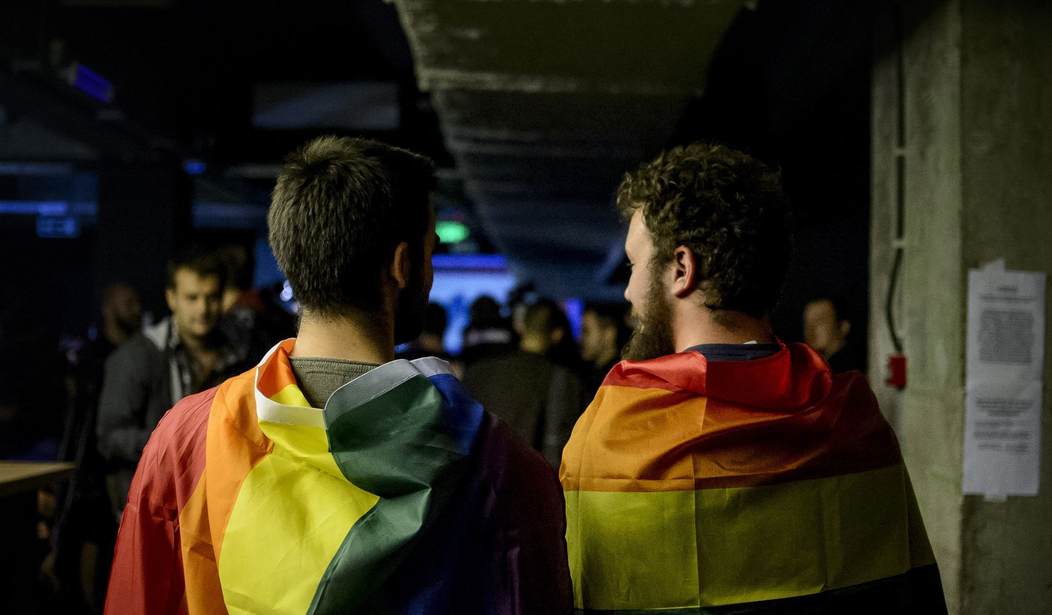
And so, Study Group 9 of Pope Francis’s synod has now released its final report, and in it is included the testimonies of two homosexual men. This is included as part of the report’s “cases for listening.” In the slow-moving world of Vatican policy change, this is a tectonic shift.
What’s actually in the report
According to insiders, throughout the synodal process, the bishops looked more closely at a number of issues, including women’s ordination, the church and the internet, ecumenism, polygamy, the Catholic liturgy, and other things. But the headlines coming out of the final report are sure to center mostly on how it treated the LGBTQ issues.
The synod’s final report includes that testimony where two “married” homosexual men, who say they are Catholic, described the church’s role in creating an atmosphere of “solitude, anguish, and stigma that accompany persons with same-sex attractions and their families.”
John-Henry Westen, co-founder of LifeSite, reacted to the release of the report on the X platform, saying that it “Suggests a reframing of homosexuality in the church, endorsing testimony without qualification that ‘sin at its root does not consist in the (same-sex) couple relationship, but in a lack of faith in God who desires our fulfillment.’” This is covered in the first couple of minutes in Westen’s video.
Sorry my shirt was wrinkled here, but this news is TOO IMPORTANT to miss. And please share it. https://t.co/ycP3tmbrmT
— John-Henry Westen (@JhWesten) May 5, 2026
The report also touches on what the Religion News Service describes as “the negative impacts of conversion therapy, or ‘the devastating effects of reparative therapies aimed at recovering heterosexuality.’”
Keep in mind, “conversion therapy” is not what it sounds like. In the LGBTQ lexicon, which is a study in opposite thinking, “conversion therapy” is when mom and dad tell their son he’s a boy. “Affirmation” is when mom and dad tell their son that if he thinks he’s a girl, then he’s a girl. That’s the context for transgenderism.
If the issue is homosexual attraction, the distinctions are less stark, but conversion therapy is still a way to see if therapy can help in some way.
Of course, the Orwellian language doesn’t stop there. If you want to dilute the church’s mission and values, start a “ministry.” That’s right. Don’t call it a rebellion, a deviation, or a rogue sect within the church. Just classify your efforts to undermine the church’s teaching as a new “ministry.”
The most well-known player in the LGBTQ’s Catholic community is Rev. James Martin, who founded what he calls an “LGBTQ Catholic ministry” called Outreach. Get it? “Out” reach?
Martin said, “LGBTQ issues were discussed at the first session of the Synod, and these discussions proved, at times, explosive. Despite so many bishops conference reports including the topic, and despite the fact that some delegates were eager to discuss outreach to this community, some delegates opposed this discussion (and even the mention of the term ‘LGBTQ’).”
So, when the final report came out, Martin commented, “It’s a big deal because they included testimonies and published testimonies from two LGBTQ people, both of them married, which is also unusual for the Vatican to do… As far as I know, it’s the first time that in any official publication of the Vatican, they’ve included witnesses and testimonies and stories from LGBTQ Catholics in any kind of detailed way.”
Martin himself was a delegate to the synod, which in addition to bishops also included priests, a nun, and a layperson.
Study Group 9, and any study group as part of a synod, is not responsible for announcing changes to church doctrine. Instead, its role is to make suggestions to help the church address certain issues as they become more pressing.
Religion News turned to a Los Angeles-based Catholic “lay minister” and self-described attorney and community organizer, Yunuen Trujillo, who also identifies as a lesbian, for comment. Of the inclusion of the homosexuals’ testimonies, she said, “It’s a really good — I would even say historic — document… It’s still calling for all Catholics to engage in a process of discernment that is respectful of people’s lived experiences.”
I could try to translate that, but there’s no point. The bottom line is she sees the tectonic shift, too. Political agitators of all stripes know that once you crack something open, there’s no turning back.
Said Religion News, “(Trujillo) said it might take a while for LGBTQ+ Catholics in the pews to feel the impact and noted that the document only focuses on lesbians, gays and bisexual people. ‘But I do believe it would be a positive impact, not a negative one,’ she said.”
I’ll venture to translate that. Religion News is noting the exclusion of transgenderism, but it's hopeful that in time, "Catholics in the pews" will start to feel all of this, one way or the other. You won't be able to ignore it or escape it.
We’re now at the very top of a very steep, fast, and slippery slope, and the LGBTQ people are very, very happy about that because they know where this is going.
Diane Montagna, one of the sharpest and most independent journalists covering the Vatican, reported that one of the two homosexual men included in the report wasn’t just a random selection. She said that one of the men was also featured in the New York Times story about Martin blessing a gay couple.
JUST IN: Has the Vatican’s Synod Office Become Fr. James Martin’s PR Arm? — https://t.co/3dCYHCF5Om
— Diane Montagna (@dianemontagna) May 6, 2026
Synod study group n. 9 final report highlights testimony of New York Times-featured man blessed with his “husband” by Fr. James Martin one day after release of Fiducia Supplicans. pic.twitter.com/IUf8uGXs5g
With 1.4 billion Catholics in the world, what are the odds that the synod study group chose the same man for both its earth-changing synodal report and for its earth-changing priest blessing of a same-sex marital couple? Further, what are the odds that the priest who gave that blessing was also a delegate to the synod? I’m not sure about you, but I’m baffled.
Montagna wonders if the Vatican’s synodal office has become Martin’s PR operation.
On the matter of that slippery slope to the normalization of same-sex culture within the Catholic Church, Francis DeBernardo, executive director of New Ways Ministry, an LGBTQ advocacy organization, told Religion News that “Dialogue really is the first step… The genius of Pope Francis is that he realized that people had to start talking with one another, and learning about each other and not having the fear and the stereotypes.”
“Dialogue?” To what end?
With that "first step" reference, DeBernardo almost came right out and detailed what we mean by the term “slippery slope.” People who want to destroy the church from within use euphemisms like “dialogue” as though that is an end unto itself, and that once Catholics start to dialogue about homosexuality, there will be this greater understanding, and we’ll all go back to a live-and-let-live utopia of tolerance.
That’s not how slippery slopes work. Now that LGBTQ culture has worked its way in through this synodal process, it’s not going to be about live-and-let-live. It’s not even going to be about tolerance. Recent history has already shown us this.
LGBTQ factions within the church will form, and they will aggressively attack the status quo at every turn. They will be accusatory and divisive, knowing that the clergy and the congregation aren’t looking for a fight; they are conflict-averse, actually. This works for the agitators.
Based on experience, these agitators know that, once they're inside, much of what they say and do will go unchallenged.
How will this manifest itself? You can use your imagination, and your eyes and ears. It’s all on the table. Just wait and see, because I suspect the "Catholics in the pews" — and in the schools, and in CCD classes — won’t have to wait long.
Recommended: UnitedHealthcare Learns You Can’t Fix Stupid, Fires Social Media Manager Over Trump Post
Find out what you’re missing behind the members-only wall. It’s time for you to take advantage of the full catalogue of common-sense thinking that comes with a PJ Media VIP membership. You’ll get access to content you didn’t even know you wanted. The good news is that PJ Media VIP memberships are on sale! Get 60% off an annual VIP, VIP Gold, or VIP Platinum membership! Use promo code FIGHT to get 60% off a VIP membership!




Join the conversation as a VIP Member