


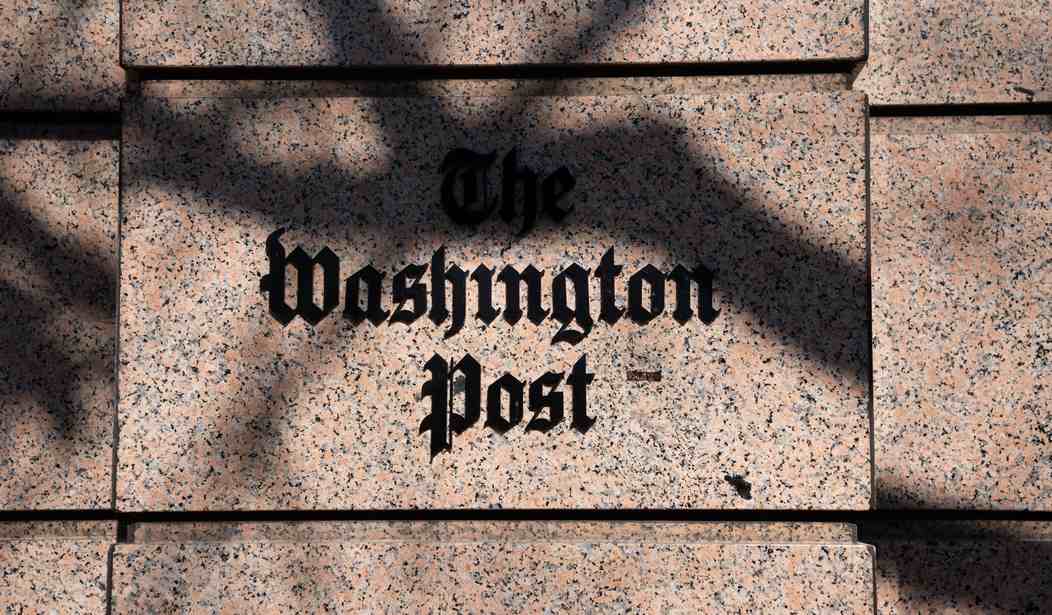
For most of the last 50 years, the Washington Post reigned supreme as the ultimate anti-Republican boogeyman — the Democratic Party’s media-stormtroopers who toppled Nixon, targeted conservatives, and carried water for the left by the barrelful.
G. Gordon Liddy (who knew a little bit about the Post’s hatred for Nixon) used to refer to it as the “Washington BLEEP” on his radio show, faux-censoring its very mention.
Today?
The Washington Post is in its death throes, circling the drain, hemorrhaging money, and on the verge of total collapse. Its billionaire owner, Jeff Bezos, just [feces]-canned Post CEO Will Lewis — allegedly for partying too visibly at the Super Bowl. Over 300 employees were fired last week, including more than one-third of its newsroom.
Yet just a few years earlier, the Washington Post AND the New York Times, those two national pillars of the mainstream media, had experienced a stunning financial turnaround. Buoyed by the left’s hatred for Trump, both papers found a lucrative new purpose:
They would shine a bright light on the evils of Trumpism, rallying left-leaning readers into political action!
And it worked, too. As Axios wrote on Nov. 24, 2020: “Trump Bump: NYT and WaPo Digital Subscriptions Tripled Since 2016”
Sources tell Axios that the Post is nearing 3 million digital subscribers, a 50% year-over-year growth in subscriptions and more than 3x the number of digital-only subscribers it had in 2016. The New York Times now has more than 6 million digital-only subscribers, nearly 3x its number from 2016.
Each outlet tripled its subscribers, but their approaches were very different:
Both companies are growing at an impressive pace, especially given the bleak outlook for media amid the pandemic. But the Times' recent investments in stars — like Ezra Klein, Ben Smith, Kara Swisher, and Jane Coaston — has some media insiders wondering about The Post's plans.
Specifically, here’s how they differed:
- The Post's culture isn't driven by boosting individual brands, and sources say the company has no interest in hunting for big personalities to boost products.
- That doesn't mean it's not investing in editorial talent, but it's more focused on building editorial teams in topic areas that drive lots of user interest, like politics, international, tech, business, investigations and data journalism.
- Post insiders told Axios that much of the company’s focus on stars has been internal, including more women of color elevated to leadership positions.
The Times has also leaned heavily into its opinion section, recruiting big names to not only write columns, but also to launch new opinion podcasts.
- Some argue that the Grey Lady's focus on subscriptions could cause its journalism to cater to more to its mostly progressive and affluent subscriber base.
- By comparison, The Post hasn't leaned as far towards its opinion voices to drive sign-ups. It's focused more on attracting a wider net of potential subscribers through investments in other areas, like video across social platforms, including TikTok, Snapchat, YouTube and Amazon-owned Twitch.
So the NYT invested in celebrity pundits/personalities who appealed to left-wing audiences; the Post invested in upgrading its internal reporting processes and tertiary platforms.
Initially, the Washington Post explained its mission in grandiose terms: “Democracy Dies in Darkness.” If you were a left-leaning reader who hated Trump, it was the perfect tagline — foreboding, ominous, scary… and just a wee bit hopeful.
Seriously, folks: It was one of the greatest taglines of the last 20 years, because it brilliantly reinforced EVERYTHING left-wing audiences knew and loved about the Post!
But behind the scenes, Jeff Bezos was having doubts: His paper was losing millions. That’s bad enough, but the WaPo’s public profile was imperiling Bezos’ other, more-lucrative interests, including Amazon and Blue Origin.
Antagonizing conservatives, you see, was bad for his OTHER businesses.
Bezos didn’t mind underwriting the Post (and being adored by liberals) — but he wasn’t gonna let it be an albatross around the neck of his business empire. Running the WaPo was a hoot, but making billions with Amazon and/or flying to outer space was a helluva lot more exciting.
So, when our country’s cultural headwinds changed in 2024, Bezos changed with them. Instead of doubling down on “Democracy dying in darkness,” he recalibrated the WaPo’s direction, requiring it to focus on free markets and personal liberties.
He also forbade it from endorsing yet another Democratic presidential candidate, ending the WaPo’s 36-year streak of siding with the Donkeys.
The blowback was near-instantaneous: Over 200,000 subscribers left by the end of Oct.
On the other hand, the NYT never budged from its left-leaning sensibilities: It provided left-wing commentary and left-wing perspective to a left-wing audience.
After all, the NYT’s ownership’s focus was singular: The Sulzburger family has controlled the paper since 1896. It’s not a small cog in a greater business empire; this IS the business.
It’s who they are.
The NYT was the “paper of record” for liberal America — period, end of story. Its brand identity never budged.
Meanwhile, the WaPo sought to reinvent itself.
Perhaps Bezos hoped a newer, less-liberal identity would appeal to moderates and independents. For a data-crunching techie like Bezos, it probably seemed like a smart play: We’ve reached the point where the largest American voting bloc — 45% of U.S. adults — are now political independents.
Only 27% are liberal.
Makes sense to fish in the lake with the most trout, right? Only it didn’t work that way, because Bezos misidentified the demands of his audience.
PRediction: The lesson learned from the WaPo’s failures will echo throughout the media landscape, and that lesson is simple:
You can go woke and make money. You can go MAGA and make money.
But there’s no money going after moderates!
Fox News doesn’t bother. Neither does CNN or MSNBC MS NOW. All the top cable news networks are “comfort food” for partisan viewers.
Every now and then, you’ll hear someone lament, “Gee, I wish there was at least one news outlet that called everything straight down the middle.”
But there’s simply no market for it anymore: Everything is advocacy.
PRojection: And the biggest reason why there’s no market for it is because we no longer depend on journalists to report the news.
There was a time when every decent-sized city had multiple daily papers. We read one in the morning, the other in the evening. (And each paper, weirdly, would always end up in Dad’s bathroom.) Everyone watched the evening news at 6:30 p.m. to see what happened that day. Nothing was instantaneous; everything was delayed.
Even our personal communications were delayed: Back in the 1990s, I left for college and called home once a week (maybe). Nobody in my friend-group spoke to their parents daily! Like, it would’ve been weird.
Today, my kid is at college, and I’m annoyed at him ‘cause he’s only sent me one lousy text over the last 72 hours. (Grr.)
Our expectations are different.
Still, for the most part, our expectations are met. With smartphones and 24/7 media, we don’t need to be force-fed the news at specific times, because we’re snacking throughout the day: We already know the who, what, where, when, and how.
But sometimes, we need help with the why.
And sometimes, we also want to hear the best arguments from those who already agree with us, because it strengthens our resolve, unifies our side, crystalizes our own beliefs, helps us win elections… and makes us sound gosh-durn clever in social situations.
Bottom line?
If your goal is advocacy, then it’s your responsibility to know the messaging that works.
That’s something that partisan media (including — full disclosure — PJ Media) does exceptionally well. It’s where you hear the sharpest arguments in the shortest time.
And it’s something “moderate,” down-the-middle reporting does very poorly.
Here are the new rules for the media landscape:
- “Go woke, go broke?” Not necessarily. The NYT is doing just fine, because liberal audiences WILL financially support liberal messaging and advocacy.
- You can go right, too. (The number of $100M+ conservative media companies is astonishing.)
- But there’s no money in being moderate. There’s simply no demand for it anymore.
PRaise: To the Babylon Bee. It’s hard-hitting “coverage” of the Washington Post’s death throes is probably the most accurate reporting anywhere:
Sad: With Washington Post Cutbacks, No One Keeping Track Of How Racist The Birds Are Getting https://t.co/gD5rcMGVXn pic.twitter.com/VdNUBEDvmZ
— The Babylon Bee (@TheBabylonBee) February 7, 2026
Journalists Shocked To Be Laid Off From Obsolete Media Outlet That Loses $100 Million Annually https://t.co/qNW5aCrHNj pic.twitter.com/GHzn8zhk7i
— The Babylon Bee (@TheBabylonBee) February 6, 2026
If your position at The Washington Post was recently eliminated, please consider applying to write for The Babylon Bee. We are seeking applicants experienced in writing fictional content presented in the tone and style of a legitimate news organization.
— Seth Dillon (@SethDillon) February 5, 2026
Oof. That last one’ll leave a mark.
PRedators: I hope everyone who’s weeping over the tragic loss of 300 journalism jobs remembers that this wasn’t something that happened by accident. It wasn’t a wacky quirk of fate or a weird, inexplicable occurrence.
This was what left-wing activists were demanding!
Stephen L. Miller said it perfectly:
So to be clear, Bezos announces a new moderate shift for the Wash Post, then a bunch of journalists (and other activists) encourage people to cancel their subscriptions, which they do, resulting in more jobs now being cut?
— Stephen L. Miller (@redsteeze) February 4, 2026
What are they upset about then? Today is exactly what… https://t.co/Ec221l8Tqi
Cause and effect, boys and girls. Just how it is.