


I don't remember exactly how old I was when I discovered the American Girl dolls. I think a catalog showed up in the mail one day, and my mom and I were mesmerized by it. We'd look through it like it was a storybook at night, learning the dolls' names and backstories.
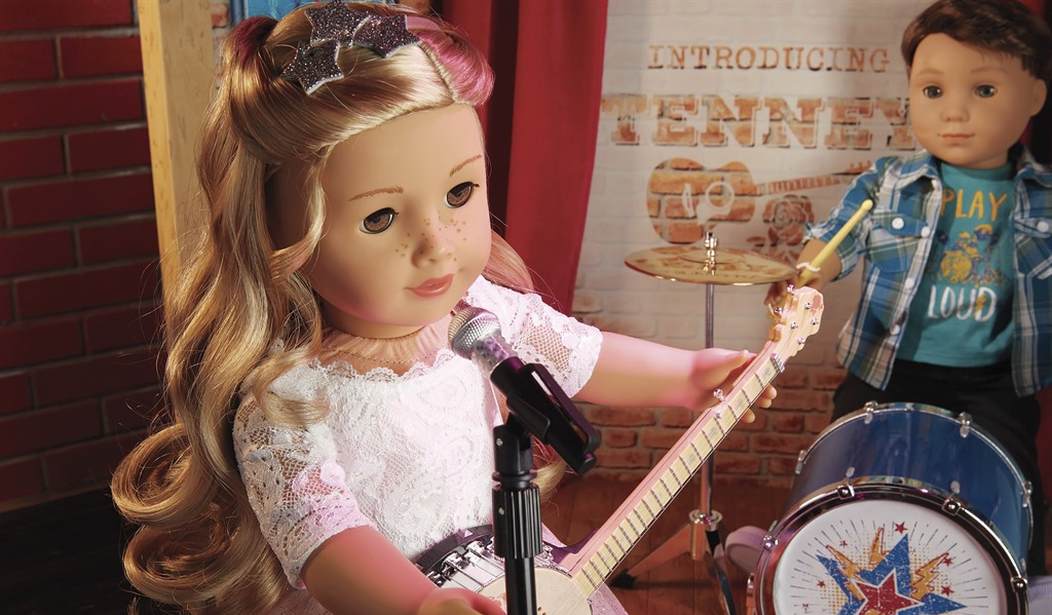
I remember the original three: Kirsten Larson, Samantha Parkington, and Molly McIntire. Each one lived during a different period of United States history. Kirsten was a Swedish immigrant from the 1850s, Samantha was a fancy girl from the early twentieth century, and Molly, who was my favorite, was from World War II. Eventually, they added Felicity from the American Revolution and Addy from the Civil War. Each doll came with a lot of cool accessories and a series of books.
Unfortunately, my mom was never able to afford one of the dolls for me — they weren't cheap — but that didn't stop us from getting the books and reading them together. I learned a lot about history through those stories because they made it fun and interesting. Looking back, something I really appreciated about them as I got older was that they reflected traditional American values and didn't shy away from topics like Christianity.
Unfortunately, because we can't have nice things, American Girl eventually went woke.
I think it kind of started in the late 1990s when Mattel purchased the Pleasant Company — the company that originally made the dolls — and decided it needed to go all DEI on our toys. Thankfully, I was too old for dolls by then, but even as a teenager, I remember thinking that they were ruining a good thing. They started producing boy dolls, more dolls from various ethnic and religious backgrounds, dolls from around the world, and contemporary dolls. Not that there's anything wrong with all of this necessarily, but they totally lost sight of the original concept. It's not like there wasn't more American history to cover.
Plus, it felt like a slippery slope, and now, looking back, I think it was.
There were books that covered more topics beyond the lives of the dolls — I worked in the kids' department at my local Borders when I was in college and put them out on the shelves every week. They started out innocent enough, but by 2022, that changed.
That year, the book A Smart Girl's Guide: Body Image, which had originally been about navigating body changes and learning to love your body image, had sections on gender ideology. It urged little girls as young as three years old to ask for puberty blockers without their parents' consent if they felt uncomfortable, and it featured they/them pronouns, trans flags, and a general LGBTetc. agenda. A 2021 doll's backstory also included visiting her married lesbian aunts.
The latest gripe with American Girl is the "cultural celebrations" clothing and accessories you can buy for your doll. One of those is a "Eid al-Fitr Celebration Outfit." The description on the online shop page reads:
This Muslim holiday, meaning Festival of Breaking Fast in Arabic, comes at the end of Ramadan, a holy month of prayer and fasting. It's a joyous time for families to give gifts, especially to those in need. The celebration set includes:
A long-sleeved turquoise abaya dress with embroidery at the bodice and sleeves
A one-piece pink hijab with rhinestones on the front
A pair of blue cotton jersey leggings to wear under the abaya
A pair of gold sandals with elastic at the heels
Two beaded gold bracelets on elastic
A gold envelope that holds five pretend $1 bills
A booklet that highlights five different cultural celebrations
In case you missed it, Eid al-Fitr was on Friday, and American Girl released a video of American Girl in a hijab explaining the holiday. Needless to say, it made a lot of people unhappy.
American Girl features doll wearing a hijab to encourage young children to take part in Eid prayers.
— Oli London (@OliLondonTV) March 22, 2026
“Eid starts with a special prayer at the mosque or in the community. We greet everyone by saying Eid Mubarak.” pic.twitter.com/viVVgLUpMA
The cultural celebrations section of the American Doll website features outfits for Lunar New Year, Hanukkah, Kwanzaa, Diwali, and Day of the Dead. I was just about to complain that they left Protestant Christians out, but there is a little Christmas section that says "Christmas Day is a Christian holiday that honors the birth of Jesus. Families and friends around the world may celebrate by attending church, giving gifts, decorating, and hosting special gatherings." However, I didn't see an outfit or accessories, like a Bible, cross necklace, or nativity — just red party dresses and packages. Maybe they're just out of stock, but somehow I doubt it.
Perhaps this is just my "old man yelling at clouds" moment, but seeing that doll in a hijab made me wonder how we went from dolls that taught us about U.S. history to... dolls that celebrate Islam. I'd say there was a demand for it, but a Google search and search of social media tell me that it's led to a lot more backlash than praise. Consumers didn't ask for it; it was thrown in our faces, but I guess that's DEI in a nutshell. I just wish it didn't have to extend to our dolls.
You can actually still buy the historic dolls, and if I ever have a daughter, I'd probably be able to get her one, fulfilling a childhood wish for her that my mother was never able to do for me. But at this rate, I'm not really sure I want to. They've lost what made them special, and now they're just like everything else out there.