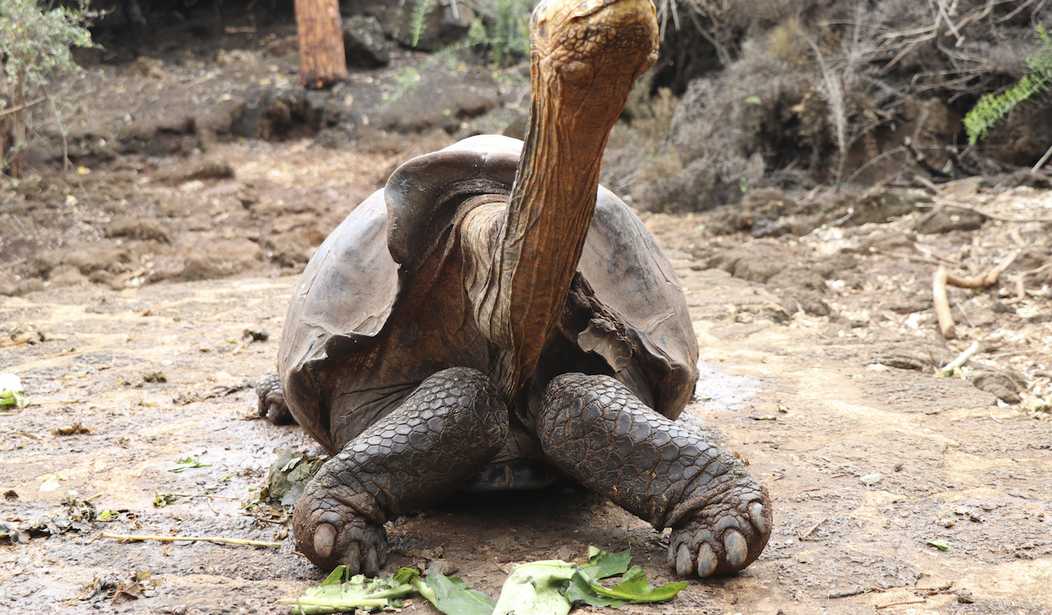
The Galapagos Islands are high on my bucket list of travel destinations, but unfortunately, the Ecuadorian archipelago is also a hotspot for cartel activity, especially the vast blue waters that surround the islands.
Some call the zone a "gas station" for cartels. The Times reports:
For the cartels who run the international cocaine trade, the once-quiet ocean around the Galapagos has become a vital refuelling stop that allows them to ship tonnes of drugs from mainland Ecuador to Central America and onwards to consumers in the West — a journey that would be impossible without the fuel provided by the fishermen.
They often exploit fishing boats in the area, having them bring fuel from the mainland. The set-up is facilitated by corrupt officials who are in bed with the cartels. But the money is good. According to The Times, a fisherman can make between "$25,000 and $90,000 selling fuel" in just one trip.
One fisherman named Diego explained it like this: "If you’re a fisherman an intermediary will come to you and offer you cash. If you’d pay $50 for petrol, for example, they’d offer you $150, just to go out far into the water and hand it over to the next person in the chain."
"This is a mafia," he added. "Everyone is involved, from top to bottom."
The cartels also use uninhabited islands to store their merchandise. Officials there largely refuse to speak out about the situation because they rely heavily on tourism to survive. If the tourists knew that the islands were so embedded in organized crime, many of them may not come.
I've been writing a lot about Ecuador lately, but someone needs to. About 70% of all the cocaine in the world flows through the country. Around 65% of that goes to Europe, with the remaining 35% going to the United States. As I've mentioned countless times, less than a decade ago, it was one of the most peaceful countries in Western Hemisphere. Today, it's one of the most violent.
Related: Daniel Noboa Unleashes the Beast and We're All Better Off For It
The current president, Daniel Noboa, has been trying to change that for two years. The Joe Biden administration was not much help, but the Donald Trump administration has ramped up its support. Noboa was a guest at the Shield of the Americas summit earlier this month, where Trump promised to partner with any country that was ready to battle the cartels. Both Kristi Noem, when she was the Department of Homeland Security (DHS) secretary, and Secretary of State Marco Rubio have visited Ecuador within the last year, and I'm actually hearing rumors that Noem will be back there this week in her new role as special envoy for the Shield of the Americas, but I can't confirm it.
We've been partnering to bring more security to Ecuador and the region ever since.
Last week, Noboa sent 75,000 troops and police officers into the most crime-ridden parts of the country and set a curfew in those areas in an effort to begin dismantling the cartels that have taken over many parts of Ecuador. They've had great success on land (more on that in a minute), but what about the sea? The Times stated in December that neither Ecuador nor the Trump administration, which, as we know, has been blowing up a lot of narco-boats coming from South America over the past six or seven months, has been able to stop the ones in this area because they're able to adapt and use new routes.
Well, that may be changing. Nope, I'm going to say it is changing.
The Ecuadorian Armed Forces and National Police, along with help from the Ecuadorian Navy, the U.S. Coast Guard, and the U.S. Drug Enforcement Administration (DEA), arrested at least 11 people and seized approximately 2.9 metric tons (around 3.2 regular U.S. tons) of drugs over the weekend via three separate operations carried out in the sea in the vicinity of the Galapagos.
The first was 263 nautical miles from the islands, where they seized 1.9 metric tons of mostly cocaine and two Ecuadorian citizens were arrested. The second was about 154 nautical miles off the coast of Ecuador's Santa Elena province, and that resulted in the arrest of three more Ecuadorian citizens and the seizure of 56 kilograms of drugs. In the third, the DEA and National Police intercepted three boats around 180 nautical miles off the coast of the Ecuadorian port city of Manta. They arrested six people and seized about one metric ton of drugs.
All of these moves came within 24 hours of each other, and led the Ecuadorian government to state that it was a "a major blow to drug trafficking economies" and that the sea in the area is no longer safe for cartels.
Now, back to the land briefly. According to Infobae, since these latest attacks on the cartels in the Guayas, Los Ríos, El Oro, and Santo Domingo de los Tsáchilas provinces began around March 16, Ecuador has arrested 743 people and destroyed six narco-terrorism military targets, though the operation is still ongoing, so these numbers can and probably will change.
Let's keep up the good work!