


The United States has more overseas military bases than any other nation in the world — around 750 across 80 countries. The majority are in Europe and Asia, with a few scattered throughout Latin America and the Caribbean.
But one country in the Western Hemisphere is toying with the idea of inviting us in to add three more — though it would take some major constitutional changes — and it's one that might surprise you.
As I reported last month, Costa Rica elected a new president, Laura Fernández. She's got a little bit of Donald Trump and a little bit of Nayib Bukele in her, which means she's a major hardliner on crime. It couldn't come at a better time. Costa Rica, which is usually a peaceful little place, has seen an extensive increase in crime in recent years.
Previously, petty theft was the biggest issue you might face there, but, like the rest of the Americas, cartels have infiltrated parts of the country. Armed robberies, assaults, burglaries, and scams have increased, and homicide rates have nearly doubled since 2020. This is largely why Fernández was elected and won decisively — almost every country in Central and South America is looking for their Bukele who will come in and get rid of the gangs and cartels.
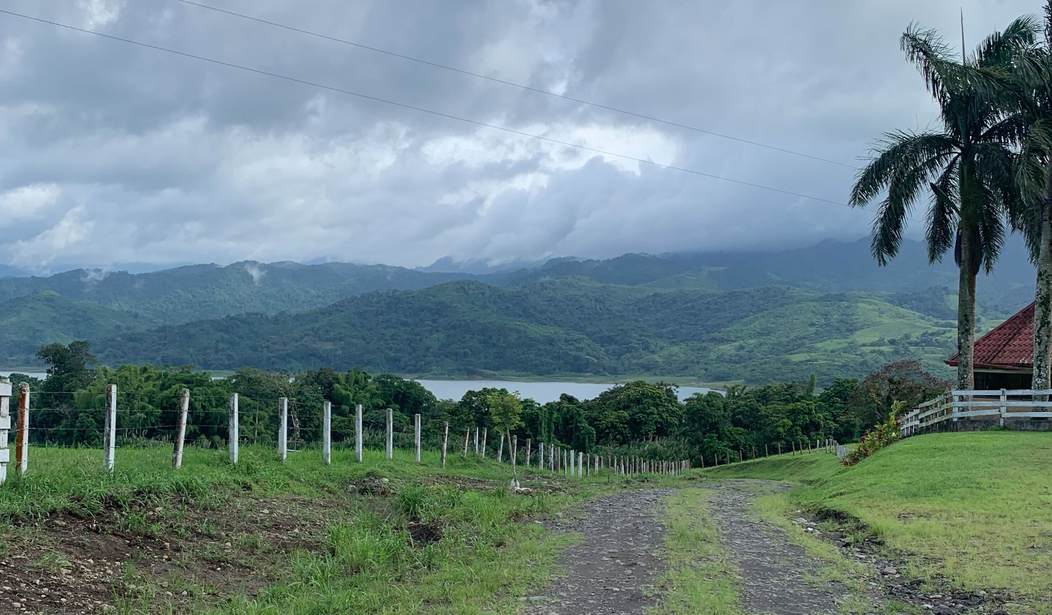
Plans to build a mega prison similar to El Salvador's CECOT are already underway in Costa Rica, but Fabián Silva, an advisor to Fernández, has suggested something even bigger: allowing us to install three U.S. military bases in the country's Limón, Puntarenas, and Guanacaste provinces. That would cover the Caribbean Coast (Limón), the northwest near the Nicaraguan border (Guanacaste), and the southern Pacific coast (Puntarenas) — all of the main drug trafficking routes.
Silva said in a recent interview that this set-up would allow the U.S. to capture and bring the "drug lords" to justice in our system. "Crime takes place here, but the harmful effects extend to all countries. We should not have to bear the burden of this mafia in Costa Rica," he said. He's also asking for the incoming Legislative Assembly to take it seriously and have a mature debate.
Fernández herself hasn't yet commented on the idea, but there has been some backlash in opposition circles. They say it's a threat to Costa Rica's sovereignty. Those in favor say that it will strengthen the country's ties with the United States and make it a safer place again, potentially boosting the tourism on which the country's economy relies heavily.
Related: An American Murdered in Paradise — A Sign of Something Bigger?
Another reason why many are against the idea is that Costa Rica doesn't have a military, and they fear this could lead to some sort of militarization. It has Public Forces, which conduct both police and defense operations, and civilian organizations that handle some national security issues. It also depends heavily on international security support — largely from the United States. For example, it's part of the Rio Treaty, signed in 1947, which states that an attack on any country in the Americas (or, at least, the 18 members of the treaty) is an attack on us all, and we shall defend them.
But it doesn't have a proper army, navy, or air force, and it's been that way since 1948. The money saved allowed the country to invest more in infrastructure, education, and healthcare, which led to a higher standard of living than other nations in the region. Costa Rica even celebrates Dec. 1, the day the army was abolished, as a national holiday. Many people don't want this to change.
Even if Fernández does endorse it, making it happen would be an uphill battle. As I said, it would require true constitutional reform, and while her party will have a majority in the incoming legislature, it's not big enough to make changes that grand without some opposition support.
But never say never. In May, the current Legislative Assembly voted 44-13 to amend its Constitution to allow the extradition of criminal Costa Rican nationals to the United States and other countries. Previously, it would only extradite foreigners, protecting its own people.
The U.S. and Costa Rica already have a great working relationship when it comes to combating drug trafficking, but it's limited to maritime and law enforcement support. As a matter of fact, in December, the Legislative Assembly voted 38–5 to authorize up to 195 U.S. Coast Guard vessels to dock, remain in ports, and allow crew disembarkation for joint anti-drug trafficking operations in 2026.
It'll be interesting to see what happens, but either way, it's another sign that our partners in the Western Hemisphere are just as serious about cleaning the place up as our own president is. The future looks bright — unless you're running a cartel.