


I've been sort of obsessed with health lately, but not in a "quick fix" or "put a bandaid on an issue without getting to the root of the cause" kind of way as we often are. It's been more of a desire to completely overhaul my life and just... feel better.
The biggest thing, so far is cutting out processed foods. In just a few short weeks of doing that, I feel great, sleep better, and look better.
It's not just changing what I eat. I'm trying to learn new recipes and cook more. I'm shopping differently. And it's not just about food — I'm working hard on eliminating stress and clutter, both mental and physical, from my life, and now that we're no longer living in a frozen tundra, I'm trying to start moving more and spending more time in nature. Going for more walks. Sitting outside in the sun. Doing more outdoor projects. I'm also leaning into my hobbies that don't require a screen, particularly reading and gardening.
A few days ago, I ran across a story about a guy named Stamatis Moraitis, a war veteran who moved to the United States from Greece as a young man. He got a job, built a life, got married, and started a family, but when he was in his sixties, he started experiencing shortness of breath and becoming tired easily. Multiple doctors diagnosed him with the same thing: terminal lung cancer. They told him he had about nine months to live and there was nothing they could do.
Moraitis eventually decided that if he was going to die, he may as well move back to Greece, so he could be buried with his family. He and his wife packed up and returned to the island of Ikaria, the place where he was born.
Initially, he spent his days in bed, allowing his wife to care for him, and only leaving the house to visit the Greek Orthodox chapel where his grandfather once served as a priest. Childhood friends would stop to visit and bring food and wine. After a while, he noticed he felt a little stronger and was tired of being in bed.
He managed to plant a vegetable garden and a grape vineyard in the backyard he shared with his elderly parents, and he said he was sad that he would never get to see it grow, but he found comfort in knowing that one day, his wife would harvest the grapes.
That was in 1976.
Moraitis died on February 3, 2013, and not from lung cancer.
Many "experts" have attributed this miracle of sorts to where he lived.
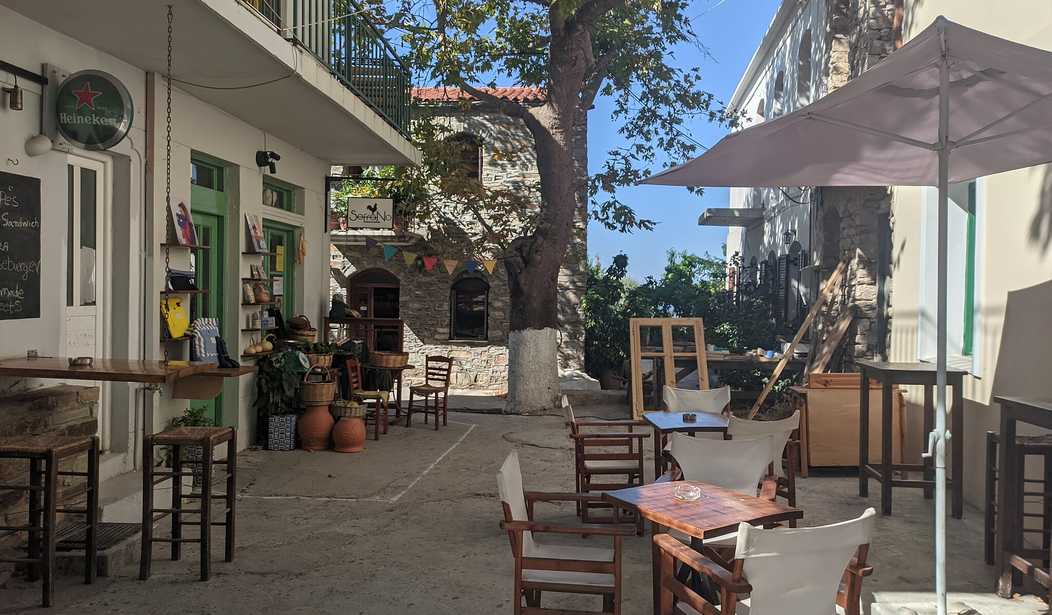
Ikaria is a Greek island located in the Aegean Sea, and it's one of the so-called Blue Zones in the world. These are geographic locations that were discovered in the early 2000s as places where the inhabitants live long, healthy lives, with many of them living to be 100 years old or older, without much, if any, medical intervention.
While there is some debate, the Blue Zones are generally thought to be Okinawa, Japan; Ikaria, Greece; Sardinia, Italy; Nicoya, Costa Rica; and Loma Linda, California, though there is allegedly some controversy surrounding whether Loma Linda truly deserves to be on the list, given that the author who first included it did so because of pressure from his editor.
That author would be Dan Buettner. I've always heard about the Blue Zones and have been fascinated by the concept, so upon hearing Moraitis' story, I decided to watch Buettner's Netflix documentary, Live to 100: Secrets of the Blue Zones, this week.
If you haven't seen it, it's an interesting watch, but it wasn't as great as I'd hoped The first three episodes were fine, but I didn't even finish the fourth one. It felt contrived and almost as if was going against everything Buettner had discovered in the first three. I also felt he was somewhat biased for and/or against certain things.
But during those first episodes, he traveled to all of the Blue Zones and met with people in their eighties, nineties, and beyond to attempt to learn their secrets. I found that part interesting. And the thing is, there was no one single secret to a long life. There were some ideas, like in one place they drank herbal tea or in another, they ate a lot of certain foods... things like that
There were also some concepts that overlapped. A sense of purpose — many of these older people still got up every day and went to work, whether they had actual paying jobs or they spent their days tending their gardens and animals or cooking for their community. Speaking of community, that was another big one. These people seemed to surround themselves with friends and family who made them feel welcome at a time when the elderly are often cast aside.
There were factors like daily movement and diets rich in real, whole foods, not processed junk and sugar. These people cooked, grew their own food, sometimes made their own clothes, and often did things the old-fashioned way, foregoing shortcuts and modern technology.
There were no supplements, diets, secrets, or schemes... just food, exercise, sunshine, and happiness as medicine
But what I noticed more than anything was that all of the people had a positive outlook on life. They weren't stressing or worrying about every little thing. They seemed shocked that anyone would question their lifestyles, and one woman even said with the straightest of faces something like, "I guess I'm getting pretty old — I'm 97," as if she hadn't really thought about it. .
I wasn't actually surprised that one of the Blue Zones is in Costa Rica. As many of you know, that country has become a second home to me in recent years, and the way my body feels while I'm there is a big reason why I've fallen in love with it. While I have been to Nicoya, it's not a place where I've spent a lot of time, but I still feel some of the benefits described there in other parts of the country.
For what it's worth, I don't go down there and vacation and party — most of the time — I go down and live. I rent a house. I work. I shop. I socialize. And yet, I find that I'm a lot less stressed. I'm eating cleaner. I'm walking and swimming more. I'm surrounded by some of the most welcoming people in the world. I spend time in the sun and among nature. My skin isn't dry. I don't get migraines. I sleep well. Other health issues improve almost immediately.
I love our country dearly, but when I come home, it always feels like back to the grind and all of those good feelings go away. I always find myself thinking that it shouldn't be like this. And I think that's what finally hit me a few weeks ago when I began overhauling my l lifestyle. I can't be in Costa Rica 24/7, but I'm going do as much as I can to bring the same vibe to my life here in the United States.
Maybe the Blue Zones are a fluke — there's a lot of argument that they lack scientific study. Maybe Moraitis' doctors were all wrong. Or maybe, just maybe, there's something to be said for slowing down and creating a life with less stress and more purpose. Maybe we don't have to accept that feeling exhausted, inflamed, anxious, and chronically unwell is our only option. Maybe we can recreate these Blue Zones in our own little corners of the world. I know I'm going to try.