The American birthrate has fallen below the replacement level for the third time since 1900. Unlike the birthrate crisis during the Great Depression and the years from 1972 to 1989, coinciding with the advent of the birth control pill, this crisis is due to changes in social mores, not economic factors.
Replacement level birthrate is 2.1 children born per U.S. woman. The current 1.6 kids born per woman means that the U.S. population will peak around 2050 at around 351 million and then begin a decline. This statistic includes projections of the number of illegal aliens entering the U.S. over the next 25 years.
A new report from the Institute for Family Studies, “The Demographic Dead End,” has found some startling reasons for the falling birthrate and why the birthrate is unlikely to recover anytime soon.
The authors, demographer Lyman Stone and researcher Peter Foreshaw Brookes, found "evidence that the fertility collapse is not only economic, but social," writes City Journal's Robert Henderson. "Americans are not having fewer children because they want fewer children. They are having fewer children, in part, because friendship has thinned and social support for family life has weakened."
Hillary Clinton was widely mocked for making "It takes a village" a major theme of her 2016 presidential campaign. Clinton wrote a book in 1996, It Takes a Village: And Other Lessons Children Teach Us, referencing the idea that it takes the government and other strangers to raise a child.
The book's title is actually a proverb that originated in Africa and has nothing to do with the government. In small villages in Africa, where almost everyone is related, family was of paramount importance in raising a child. Stone and Brooks discovered that lacking a reliable support system of family and friends is a disincentive to having children.
True, financial considerations, especially affordable housing, are a problem for younger couples who may desire children. In fact, surveys show that younger couples "desire" about 2.4 children, well above the replacement level. But actual family size comes in at 1.6 kids per family. The difference between desired family size and reality is not only due to financial considerations, but also to peer culture.
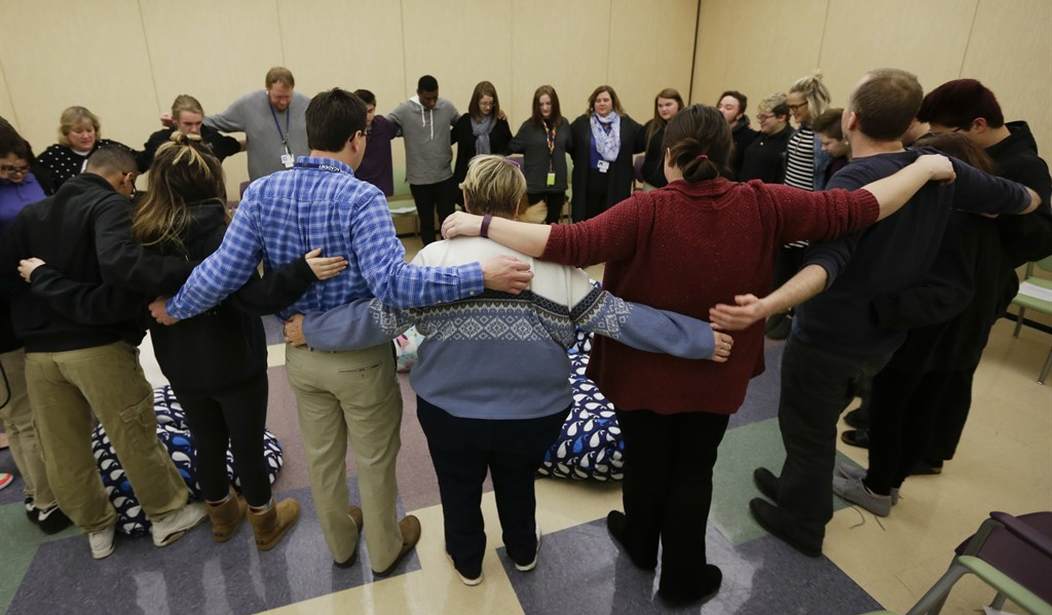
The researchers asked respondents how many kids their three closest friends had, and how those friends would react if the respondent had another baby. Would they offer to help? Cook meals after the birth? Or would they worry about their career stalling or stop inviting them out?
The answers were associated, to a startling degree, with the desire to have children. For Americans under 30 with the least supportive friends, desired family size was about 1.7 children. For those with the most supportive friends, it was 2.8. That is a full extra child, associated with nothing more than having trusted friends who show up.
Compare that with religion, the variable social scientists often concentrate on when looking at birth rates. Young Americans who never attend religious services want about two children. Regular attendees want about 2.7. Religion matters, but helpful friends matter just as much, if not more, and the statistical models suggest the two effects are separate.
"Additionally, having friends with kids predicts wanting more kids yourself," write Stone and Brooks.
Another factor in play is the "celebrity effect." Well-known people who get pregnant and have children are likely to increase the number of women (especially young women) who desire children.
It is “empirically possible,” the authors write, “that paying Taylor Swift a billion dollars to have children might produce more children in society than spending the same money on child tax credits, if her choice sways her wide fanbase.” While the authors have their tongues firmly planted between their teeth, it's actually not as crazy as some other ideas being floated to end the birthrate crisis.
The bottom line is that "ambient culture sets the aspiration, but real-world friends lead to actual births," according to the authors.
What's worse is that Americans are having far fewer friends than previously measured.
Friendship, though, is collapsing. The number of close friends Americans report has been falling for decades. Time spent with friends has dropped sharply, particularly for the young. The report cites new economics research with a title that says it all: “Is the iPhone Birth Control?” The study contends that smartphone adoption itself depressed birthrates.
Seen this way, the fertility crisis looks less like an economic problem and more like a downstream symptom of the loneliness problem. The friendship recession and the baby bust are the same recession.
Indeed, the UK has a "Minister of Loneliness," as does Japan. Some public health officials think that loneliness is the next big public health issue. Joe Biden's Surgeon General, Dr. Vivek H. Murthy, issued an 82-page report titled "Our Epidemic of Loneliness and Isolation." Loneliness leads to shorter lives and more health problems, according to the study.
Screen time is getting in the way of the time we should be spending with other people face-to-face. The loneliness epidemic shows up in the shocking (to me) lack of sex and intimacy experienced by younger people.
The trend of younger people having less sex—often referred to by sociologists and media outlets as the "sex recession"—is supported by extensive data from major research institutions, including the Centers for Disease Control and Prevention (CDC) and the General Social Survey (GSS).
The statistics show a clear, multi-decade decline in sexual activity among teenagers and young adults. The GSS shows that the percentage of young adults aged 18 to 29 who reported having no sex in the past year doubled over a 14-year period, rising from 12% in 2010 to roughly 24% by 2024. Between 1991 and 2021, the percentage of high school males who had never had sex increased from 42.6% to 70.7%, while for females it jumped from 49.2% to 69.4%.
We can assume that this isn't a lack of desire, teenage hormones being what they are. It can be attributed to living our lives online rather than spending time in the physical presence of friends. That, and a lack of practice in developing the social skills needed to make and maintain friendships, is leading us to an uncertain future, where humans, among the most social of all animals, live life alone and friendless.