


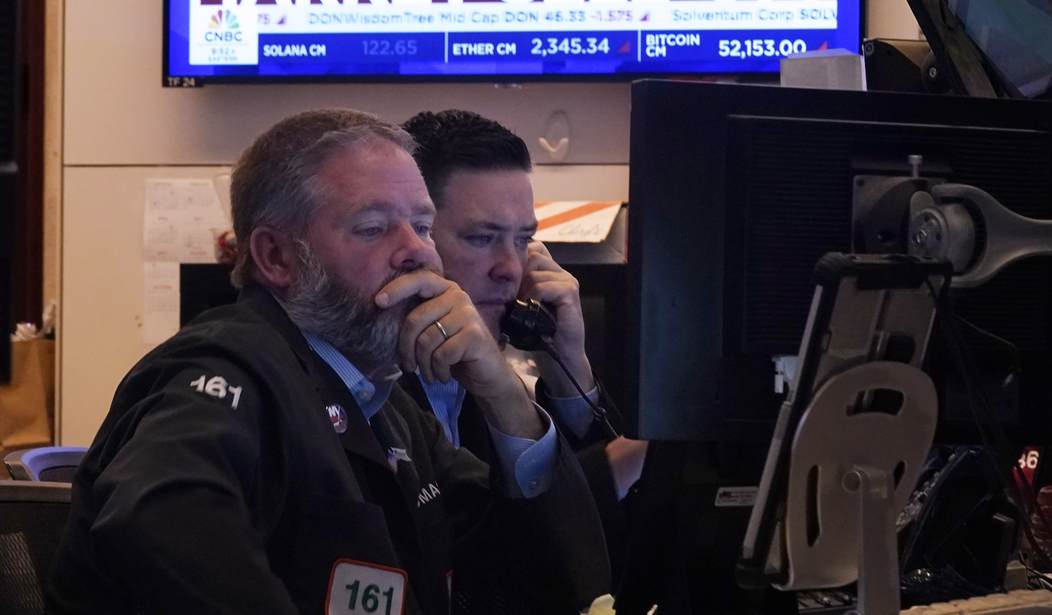
You get the impression at times that noted finance reporters are a skittish bunch. They are constantly "surprised" by economic news, especially when their predictions are proven spectacularly wrong.
Hence, the catch-all word "unexpected" is used when describing data that doesn't match their previous sage pronouncements. I suppose it's better than admitting they were wrong because they don't know diddly.
The Consumer Price Index (CPI) for January rose by just 2.4% compared to January 2025. It was 0.3% lower than December's inflation number and less than the 2.5% predicted for January by "The Street." This brings the CPI a lot closer to the 2% Federal Reserve target, meaning that it's likely the Fed will be a little more aggressive in cutting interest rates.
Excluding the volatile food and energy sectors, the core CPI was up 2.5%.
“This is great news on inflation,” said Heather Long, chief economist at Navy Federal Credit Union. “Inflation fell to the lowest level since May and key items such as food, gas and rent are cooling off. This will provide much needed relief for middle class and moderate-income families.”
On a monthly basis, the all-items index was up a seasonally adjusted 0.2% while core gained 0.3%. The forecast had been 0.3% for both.
Though the category accounted for much of the CPI gain, shelter costs rose just 0.2% for the month, bringing the annual increase down to 3%. Shelter makes up more than one-third of the CPI.
Elsewhere, food prices increased 0.2% as five of the six major grocery group categories posted gains. Energy fell 1.5% while vehicle prices also were muted, with new vehicles up just 0.1% and used cars and trucks falling 1.8%.
Stock market futures were little changed after the report while Treasury yields moved lower.
January's "unexpectedly strong" jobs report drove the unemployment rate down to 4.3%. The fourth-quarter GDP showed a booming economy, with 3.7% growth. Energy prices are falling, the spike in housing costs is moderating, and food inflation is also easing.
The Federal Reserve Board will meet in mid-March, where it is expected they will hold the line on any rate cuts. While the news is good, they were burned by their dismissal of early signs of inflation after the pandemic, when prices spiked by 9% in 2022. They are going to be more cautious this time.
If the good news on prices and the jobs outlook continues to improve, the Fed meeting in June should see another cut in interest rates.
Right now, there appear to be two paths to future cuts. The first revolves around the labor market. Clear signs of material weakness — most likely in the form of the unemployment rate spiking — would prompt the central bank to move. The second revolves around inflation and the pace at which it returns to the Fed’s 2 percent target, a goal that is measured by the Personal Consumption Expenditures Index. The central bank has missed that target for roughly five years. As of the index’s latest release in November, it stands at 2.8 percent.
The Fed is wary about sending the wrong signal about its commitment to its 2 percent target, hence its caution about cutting rates too swiftly. At the same time, policymakers do not want to move so slowly that they jeopardize the labor market.
The Fed will consider a cut of .50 basis points (one half of one percent) in June as long as the indicators remain solid for employment and prices.
The new year promises to be one of the most pivotal in recent history. Midterm elections will determine if we continue to move forward or slide back into lawfare, impeachments, and the toleration of fraud.
PJ Media will give you all the information you need to understand the decisions that will be made this year. Insightful commentary and straight-on, no-BS news reporting have been our hallmarks since 2005.
Get 60% off your new VIP membership by using the code FIGHT. You won't regret it.





Join the conversation as a VIP Member