


The idea of "political reporting" wasn't born until the 1830s, when James Gordon Bennett bought the New York Herald in 1835. Before founding the Herald, Bennett was often cited as the "first real Washington reporter." In the late 1820s, he sent regular dispatches from Washington, D.C., to the New York Enquirer. His writing was unique because it provided colorful, aggressive, and often critical accounts of figures like John Quincy Adams rather than just reprinting dry government documents.
After founding the Herald in 1835, Bennett formally organized the first dedicated staff for specialized news gathering. In 1838, he assigned the first reporter to regularly and exclusively cover Congress, marking the birth of the full-time political beat as we recognize it today.
Where do these political reporters come from? Today, we have specialized, prestigious journalism schools from which political reporters learn their craft (or "art," as it may be) and are hired as interns at big newspapers. For TV reporters, there's always the boondocks, where cities like Green Bay, Schenectady, and Bloomington hire these fresh-faced kids for peanuts and teach them the ropes.
Back in the day, many of the best political reporters came from the sports desk. With rare exceptions, politics was covered like a horse race, with the reporter "handicapping" it for readers.
Then came Woodward and Bernstein, and Watergate, and suddenly, every reporter wanted to make an impact on history, instead of just writing about it.
We see it today with reporters who probably know less about world and national affairs than the average American, standing in front of a camera and asking some 22-year-old kid what he thinks of Trump, immigration, and isn't it terrible what's happening in Minneapolis?
“It brings up mixed emotions to represent the U.S. right now… Just because I wear the flag doesn't mean I represent everything that's going on in the U.S.”
— Jon Root (@JonnyRoot_) February 7, 2026
- Team USA Olympic Skier Hunter Hess
The anti-ICE, liberal athletes are already insufferable at the Olympics…
If… pic.twitter.com/yn7ruEHbFr
“It brings up mixed emotions to represent the U.S. right now… Just because I wear the flag doesn't mean I represent everything that's going on in the U.S.”
Mike Eruzione, legendary captain of the 1980 "Miracle on Ice" gold medal U.S. hockey team, had some choice words in response.
"Hunter Hess US snowboarder saying he doesn’t represent his country but his family and friends. Then don’t put on the USA uniform maybe just put for family and friends some athletes just don’t get it," Eruzione said.
Significantly, the hockey great's post has been deleted.
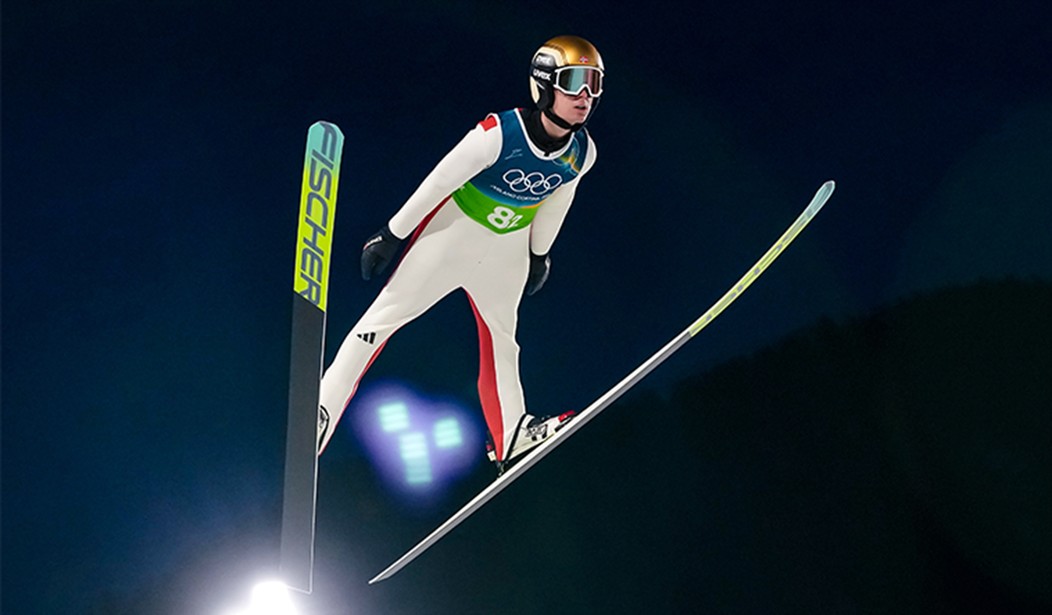
There’s plenty of blame to go around, of course. One might save some annoyance for the press corps that insists on treating Olympic athletes as if they were visiting heads of state with the power to dictate foreign policy, as opposed to what they actually are, jet-lagged 27-year-olds with 5 percent body fat whose primary skill is throwing themselves down vertical cliff faces with their feet strapped to large pieces of Teflon. Pressing athletes to speak on political questions—on topics miles outside their area of expertise and influence, and to which they invariably offer less-than-articulate answers that lead to an ugly backlash—may be technically within bounds for journalists, but it’s not very nice. As figure skater Amber Glenn noted in a social media post after comments she made at a press conference went viral, she was receiving “a scary amount of hate/threats for simply using my voice WHEN ASKED about how I feel.”
Exactly. Why ask her a question well outside her area of expertise? The reason is that these reporters rarely have an audience of tens of millions. (How many people actually watch curling?) They want to appear as journalistic sages by asking a question that will elicit a viral response.
Meanwhile, the ignorant kids who think an ICE agent is the guy who runs the Zamboni machine have no clue what ICE does, that they're engaged in a constitutionally mandated law enforcement action, and that the hysteria ginned up by Democrats makes their jobs incredibly dangerous.
Do fans of freestyle skiing really want to know a competitor's opinion about politics or policy? They tuned in to the Olympics to forget about that crap for a few hours. Now, NBC reporters are throwing it in their face, looking to score that one big, angry quote that will catapult them to that next step up the ladder.
Ever notice that the U.S. is the only country whose athletes are asked about domestic or foreign policy? Athletes from places like China, Russia, or some other authoritarian paradise never get ambushed and asked about their government's oppressive policies.
Take Eileen Gu, the American-born skier held up as a hero by Time magazine despite her choice to compete at the Olympics as a representative of China, a.k.a. the authoritarian dictatorship where free speech goes to die. When asked how she feels about the nation’s well-documented abuse of Uyghurs, she said: “I’m not an expert on this. . . . I haven’t done the research. I don’t think it’s my business. I’m not going to make big claims on my social media.” And when the 22-year-old was asked how she’d respond if asked about Trump’s tariff war with Beijing at the Olympics, she said: “I would just say, ‘I didn’t know I got promoted to trade minister.’ ” Clearly, she has been media trained—and the media isn’t exactly putting the screws to her.
Gu is competing for China because she wasn't good enough to make the U.S. team. Nevertheless, why can't Americans give similar answers to annoying questions they know they shouldn't comment on, because, frankly, they're ignorant of the issue?
I really wish reporters would stop trying to win a Pulitzer and ask the standard questions, such as "How do you feel about winning the Gold Medal?" or "Did you win it for your sick father?" Most fans tuning in would rather know the answer to those questions than what some barely sentient athlete thinks about Trump.
The new year promises to be one of the most pivotal in recent history. Midterm elections will determine if we continue to move forward or slide back into lawfare, impeachments, and the toleration of fraud.
PJ Media will give you all the information you need to understand the decisions that will be made this year. Insightful commentary and straight-on, no-BS news reporting have been our hallmarks since 2005.
Get 60% off your new VIP membership by using the code FIGHT. You won't regret it.



Join the conversation as a VIP Member