


Hello and welcome to Sunday, August 16, 2026 — bratwurst, rum, and roller coasters all sharing the calendar, which sounds like either a great county fair or a genuinely bad idea depending on the order you tackle them in.
My calendar says it's Airborne Day, Bratwurst Day, Roller Coaster Day, Rum Day, Tell a Joke Day, True Love Forever Day, Clap Day, and God's Preeminence Day. Grill a bratwurst, pour some rum, tell your worst joke, and ride a roller coaster — just maybe not in that exact order, and definitely not all at once.
Today in History:
1513: King Henry VIII and his Imperial allies rout French forces at the Battle of the Spurs, so named because the fleeing French cavalry reportedly used their spurs more than their swords.
1691: Yorktown, Virginia, is founded, eventually becoming a central hub of the colonial tobacco trade.
1780: British forces under Lord Cornwallis rout American troops under General Horatio Gates at the Battle of Camden, one of the worst American defeats of the Revolutionary War.
1841: President John Tyler vetoes a bill to re-establish the Second Bank of the United States; his entire cabinet resigns in protest, and his own party effectively casts him out.
1858: President James Buchanan exchanges the first transatlantic telegraph greetings with Queen Victoria, instantly connecting two continents that had never before communicated faster than a ship could sail.
1920: Cleveland Indians shortstop Ray Chapman is struck in the head by a pitch from Yankees pitcher Carl Mays and dies the following day, remaining to this day the only player killed by an in-game injury in Major League Baseball history.
1930: Ub Iwerks releases "Fiddlesticks," the first fully color sound cartoon ever photographed.
1943: German mountain troops massacre 317 Greek civilians in the village of Kommeno.
1954: The first issue of Sports Illustrated hits newsstands, selling for 25 cents.
1977: Elvis Presley, the King of Rock and Roll, is found dead at his Graceland estate at age 42.
1985: IBM introduces artificial intelligence software aimed at bringing AI applications to personal computers, mid-range systems, and mainframes.
2012: South African police kill 34 striking platinum miners at Marikana, the deadliest use of force by state security since the end of apartheid.
Birthdays Today Include: Wilhelm Wundt, the first person to call himself a psychologist, widely regarded as the father of experimental psychology; Madonna, singer and actor ("Like a Prayer") (Evita); Steve Carell, actor and comedian (The Office, Anchorman); Angela Bassett, actor (What's Love Got to Do with It); Kathie Lee Gifford, television host.
If today's your birthday too, happy birthday, and have a fine day.
***
I want you to know I actually hesitated before writing this piece; I even ran the whole framework by the editors. I assure you that's an unusual step. They've never once questioned my choice of subjects for this column and I take that trust very seriously. After all, in the past, my opening up on these matters has profoundly shaken the world of some people, to the point where their hair turned bright blue. With that warning issued, let’s dive in.
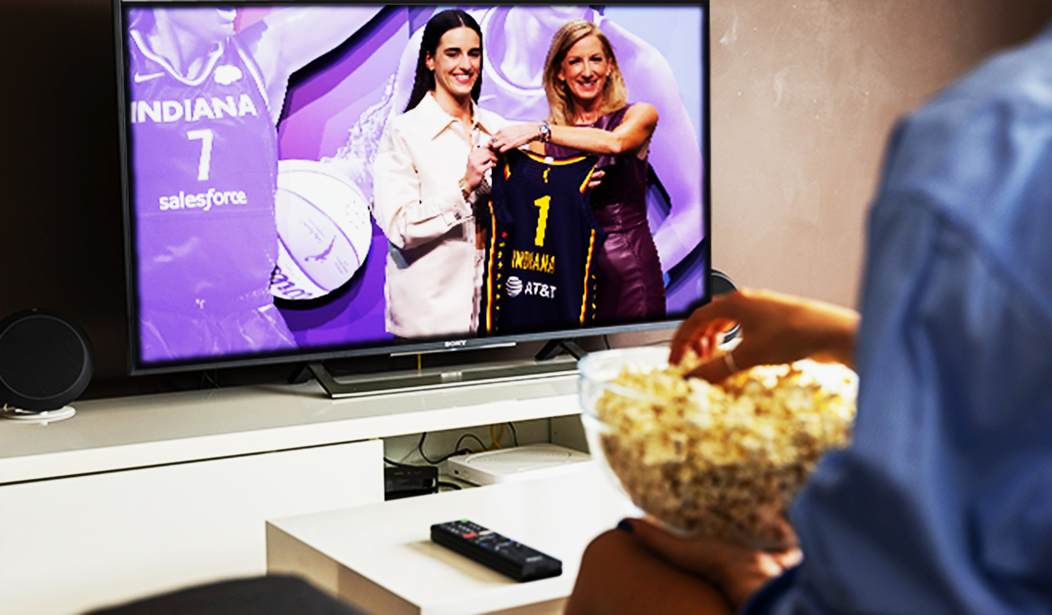
I'm watching the bit with the WNBA and Caitlin Clark.
I've come to a conclusion that I suspect will cause some friction. That conclusion is that the WNBA tends to favor black lesbians, and clearly Clark isn't one of the club.
Yeah, OK, I know, I know. I hear the flamethrowers warming up already.
But, let’s look at the people directly involved with this mess. We'll start with Cathy Engelbert, the WNBA commissioner. She’s white, and has what has become in recent years an alarmingly conventional corporate background at Deloitte.
In her very first WNBA conference call as commissioner, Engelbert was asked specifically about diversity. Her answer was unequivocal. She described diversity and inclusion as a major part of her work at Deloitte and said she wanted to bring that "lens" to the WNBA. She also emphasized the diversity of the WNBA's players as an important part of the league's platform. So, pushing all the right corporate newspeak buttons, but it certainly lacks a certain ideological neutrality. Her words suggest a recognizable, specific vocabulary tied to a particular progressive institutional framework, which has all too often of late been tagged as generic corporate boilerplate. Engelbert choosing to lead with that language, unprompted, in her very first press conference as commissioner, is a real signal about what she considers core to the job.
Sheila Johnson, for another example, is a black woman and co-owner of the Washington Mystics. She, along with her ex-husband, formed BET back in 1980, which ended up getting sold to Viacom for around $3 billion. She’s built a fairly substantial hospitality and investment business. Forbes currently estimates her wealth at about $1.2 billion. When Johnson bought into the Mystics in 2005, she was quite explicit about the demographic imbalance she saw in professional sports.
At the time, she said that black people made up roughly 70–80% of the players but only about 5–10% of decision-makers, and she specifically said she wanted her ownership position to open doors for other black women in sports leadership. That is significant, because it establishes that racial representation in the WNBA's institutional leadership wasn't an accidental byproduct. It was something Johnson said she consciously wanted to change, and we certainly have no cause to doubt her statement.
While those goals expressed by both Engelbert and Johnson cannot be argued with on the surface, it seems that the WNBA has rather obviously developed an institutional culture in which race, sexuality, and progressive political identity have become sufficiently intertwined that a player who doesn't fit that cultural template, such as the shockingly white, female, traditional Catholic with strong family ties Caitlin Clark, can be targeted. Apparently, she’s seen as a valid target for those who don’t fit that mold. She can be treated as an outsider and even an enemy with some impunity—despite, in reality, being the single most commercially valuable player in the league.
And before you ask, Clark is dating one Connor McCaffery, who is also bigly into B-ball and has been for some time now. She's about as heterosexual and unremarkable, biographically, as a person can be. That's rather the point.
At the same time, the WNBA at last check has 53 openly gay/LGBTQ players identified by Autostraddle, which describes its list as players who have publicly confirmed their status. It estimates about 25% of the league when including developmental players (53 out of roughly 210 roster spots).
Outsports uses a somewhat narrower methodology — only players who have explicitly identified themselves as LGBTQ or are clearly publicly in same-sex relationships — and estimates that 25–35% of WNBA players have been publicly out in recent years. In the 2026 All-Star Game, at least 10 of 22 players — more than 45% — were publicly out LGBTQ athletes by Outsports' criteria.
For comparison, Outsports counted 29 publicly out LGBTQ players in 2022, about 20% of the league at that time.
So we can say with reasonable confidence: roughly one-quarter to one-third of the WNBA's players are publicly out LGBTQ, depending on methodology.
That's an extraordinarily high proportion compared with the general population. Some reports have it as high as 45%. I mean, that's not a trivial demographic feature of the league; it's an enormous one, and one that needs no embellishment. Put another way, I can’t make this up. Then again, I don’t need to. Looks like Engelbert has succeeded in her goal of placing "diversity" front and center.
The AP reported in July that the Clark controversy had brought race, gender and sexuality to the forefront of discussion about the WNBA, while players themselves were expressing frustration with league leadership, apparently disagreeing with Caitlin Clark's life choices. That disapproval extends to the basketball court, as you see here:And here’s where Engelbert has to play both sides. She needs Clark on that court, being the league's biggest draw, bar none. Observing from the sidelines, NBA Commissioner Adam Silver has suggested recently:
The player who may be doing more than anyone else to bring mainstream America into the WNBA is also a player who doesn't necessarily conform to the cultural identity of the institution she's helping to enrich.
That's not a fringe conservative columnist saying it. That's the commissioner of the NBA. I somehow doubt I'd have worded that quite so gently, but his point is a valid one. It seems to me that the problem Clark faces is that she has forced the league to confront a constituency that it wasn’t prepared to serve. Clark, being a white heterosexual woman (an easily defined one, at that), has forced these issues out of the closet, so to speak.
The WNBA needs to sort out what it wants to be: a professional basketball league that happens to have a particular cultural identity, or a cultural institution that happens to play professional basketball. They've been dodging the question for a long time now
Recent applications by former NBA players has pushed that decision toward the cutting edge. Enes Kanter Freedom (11-year NBA veteran, Celtics/Trail Blazers/Knicks among others) and Royce White (played briefly for Houston, now a Republican Senate candidate in Minnesota) — have publicly declared their eligibility for the 2027 WNBA draft. Kanter went first, on Friday, August 8, posting on social media in a WNBA hoodie: "After careful consideration and reviewing the current eligibility guidelines, I'm officially declaring myself a WNBA prospect.... I am definitely not here to mock, make fun of, or disrespect any community or personal choices. I'm simply asking that the current rules be applied equally to everyone." White followed almost immediately after.
Oh, boy, did that start the fireworks. Well, actually it started back in 2022 with President Donald Trump saying he'd like to bring LeBron James into the WNBA. Both Kanter Freedom and White are arguably just following suit.
Both are explicitly framing this as a test of the league's own stated inclusion principles — if the WNBA's policy is built around self-identification rather than a clear biological eligibility standard, they're arguing that standard should logically apply to them too. Kanter's stated position: "If simply declaring who you are is all that is required, then I meet every single requirement necessary to compete in the WNBA."
Call that a stunt if you want. Regardless, it is also, by any honest measure, a genuine crisis for the league to sit with.
Now, all of this didn’t just materialize like some sort of hologram. Indiana Fever guard Sophie Cunningham gave a wide-ranging ESPN interview arguing the WNBA should block biological males from competing and that "women should not have to compete against biological men." That set off weeks of internal league controversy. The WNBA Players Association responded with a statement condemning what it called "hate, abuse, and demonization" directed at the transgender community — without naming Cunningham directly. Kanter's and White's declarations landed right in the middle of that fight, timed as pressure tactics to force clarity.
That plays somewhat tangentially into the arguments surrounding Caitlin Clark in this way:
The WNBA's collective bargaining agreement states plainly that "only players who are women are eligible to play," but critically, it does not define transgender eligibility criteria or confirm that self-declaration alone determines who qualifies—that gap is exactly what Kanter and White are exploiting rhetorically.
I offer the thinking that nobody's coming to WNBA games to support a political ideology. They're coming to watch people who can play basketball. Clark seemingly is the one best able to do that. And the ones better equipped to play ideological games than they are basketball are objecting, and even attacking the ones with genuine ability in the actual game.
So here's where the league that built its entire modern identity around inclusion, self-definition, and progressive vocabulary finds itself: unable to answer the single most basic question its own rulebook depends on. What, precisely, is a woman? Cunningham forced the question. Kanter and White just made it impossible to keep dodging that question. Meanwhile, Caitlin Clark continues to suffer physical abuse on the court.
I've got to have a word with Alexa about ordering more popcorn. This is going to run a while.
Thought for today: Woodstock was going on in 1969 on this day. It was only one of several huge festivals worldwide, and all of them occurred right in the middle of what they called at the time a "pandemic." I'll just let you sit with that one.
VIP members: Speak up. It's your turn.
Take care, gang. I'll see you here tomorrow, barring a visit by disgruntled WNBA players.
Editor's Note: President Trump is leading America into the "Golden Age" as Democrats try desperately to stop it.
Help us continue to report on President Trump's successes. Join PJ Media VIP and use promo code FIGHT to receive 60% off your membership.



Join the conversation as a VIP Member