


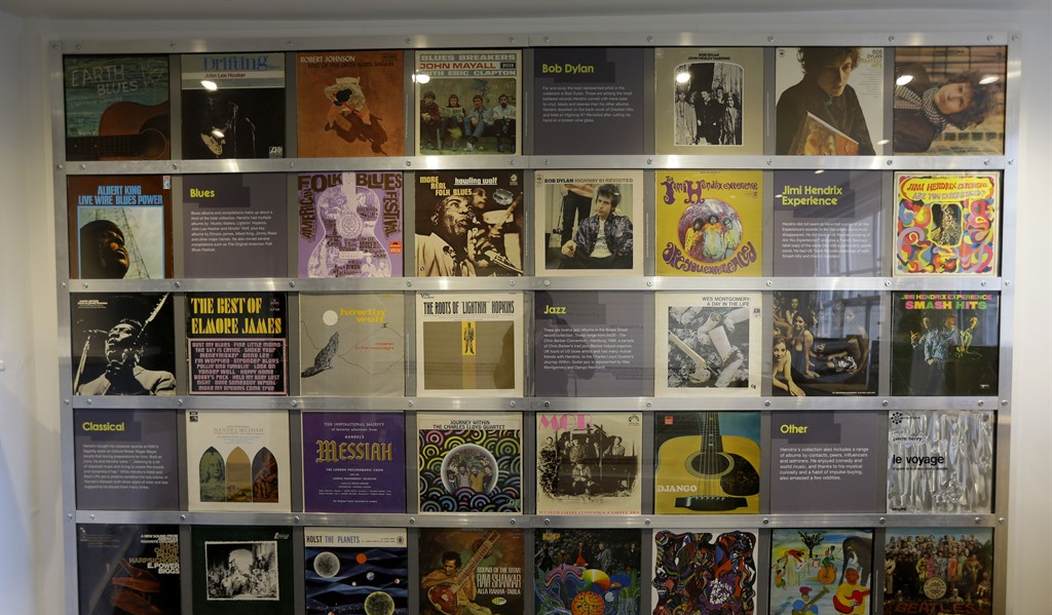
As I said in "Albums That Shaped My Life, Part One," I don’t play all of these albums frequently, but these were all a part of my youth, as you will see. I add that these albums are not necessarily popular today, and a few of them are totally new and/or obscure. As with Part One, I’ve set out links to the full albums listed so you can hear them. Consider this an invitation to explore things you’ve not heard before.
Al Stewart, Year of the Cat 1976 Recorded at Abbey Road Studios in January of 1976, and engineered by Alan Parsons, it set Stewart up for classic pop stardom. Notables in the band include George Ford, the bassist for Emil Ford and the Checkmates, a British band that had folded by this point; Phil Kenzie, who plays one of the more recognizable sax solos in pop music; and Peter White, who has made a name for himself in the world of smooth jazz as a guitarist.
Interestingly, the then-20-year-old White was originally hired as a keyboardist, a role he did well in. The surprise, though, was that he was also a guitarist who was able to nail the Spanish guitar solo on “On the Border.” In fact, rumor has it he did this in one take (his name will come up again later in this piece).
In January of ‘77, I was working the side-hustling overnights as a security guard and spent each night huddled with the AM radio. You couldn’t get away from this album and from the title track. Every radio station was playing it, and later, the second single, “On the Border,” as well. I’d be listening to the local top 40s here in Rochester, and the song would come on… so having heard it already three times that night, I’d switch it to another station—say, WCFL or WLS in Chicago, or perhaps the New York City stations: WABC or WNBC, even CKLW in Windsor, or CHUM, which was still top 40 at the time on 1050 AM in Toronto—and find it playing there, too. Eventually, I gave up trying to chase other music for a while.
Here’s Alan Parsons on working with Stewart.
Bob Seger, Night Moves 1976 Released within a month or two of Year of the Cat, Night Moves was his ninth studio LP. Backing was split between the Muscle Shoals Rhythm Section and the Silver Bullet Band. Up until this one came out, quite frankly the last I’d heard of Bob was 1969’s Ramblin’ Gamblin’ Man, which I liked, but not enough really to chase his music at all. Night Moves, though, surprised me. I imagine I was not alone in this.
The title track was recorded up in Toronto at Nimbus 9 (the same studio the Guess Who was recording in for their bigger hits). That was the big single and struck me as being far more personal and more… well… more connective than I expected from Seger, based on what I’d heard from him before. I was intrigued.
Then, I heard one of the follow-on singles, "Mainstreet," and I was permanently hooked. One got the impression of someone struggling to bare his soul and his personal memories, though his lyrics. It struck me as almost Gordon Lightfoot-ish, lyrically.
That alone made it worth listening to for me. That kind of connection with the listener is when the magic happens, and once Seger learned that lesson, he never forgot it through his long career (consider "Against the Wind" and "Roll Me Away," etc.). That personal connection made this album very much a part of my musical history. That’s why this album is on this list, and why I’ve got everything he recorded from this album forward.
Cecilio and Kapono, Night Music 1977 I’m willing to bet you’ve never heard of these guys if you don’t live in Hawai'i (yeah, that's how they spell it there). This was their third album for Columbia Records. I actually got turned on to these two in ‘76, in the form of their second album, when I was working at what was WVOR in Rochester. Working in radio at the time meant two things: you never had a shortage of new stuff to listen to, and you probably had a large collection of music that nobody outside of the business had ever heard of. Sad, really. On the basis of the music, they deserved better recognition than they got. The title track is a great example of their general direction. I found out much later that there was some less-than-savory stuff with these two I won’t get into here, but the music was surprisingly good, to the point where I picked up several of their discs.
As for their style, think of them as working in the same general area as Hall and Oates from their Abandoned Luncheonette days, with an island accent that is actually charming. I guess I am dating myself here, but I had this album on 8-track for the car. The girl I was dating at the time loved it. It’s a gentle reminder of those times.
Peter White, Glow 2001 By this time, in 2001, Peter White had already climbed small mountains of session work under his belt, and seven other albums where he was the lead, and these days, 17 total discs. From about ’80 until ’86 or so, I was working at a jazz station in Rochester, doing the morning shift. In the doing, I picked up a taste for what these days is called smooth jazz. I probably wouldn’t have latched onto his work absent his history with Al Stewart, as I mention above. I find myself gravitating to this album of all of his others. I never played this one on air, but it would have fit beautifully. I often think of those days when this one comes up in rotation.
Edgar Winter Group, They Only Come Out at Night 1972
Their debut studio effort reached #3 on the Billboard charts. Like many of the day, I had an 8-track of this in the car for most of my wildly misspent youth. Musically, how could you go wrong with the lineup of Winter, Rick Derringer, Ronnie Montrose, Dan Hartman, and Chuck Ruff? Ruff had come with Montrose from the group Sawbuck.
Yeah, I know… you’ve never heard of Sawbuck. That’s because just as they were going into the studio, Montrose and Ruff left for Edgar Winter’s band. Montrose, before that, had left Van Morrison’s band, having played that fabulous lead on Morrison’s “Wild Night.” The strange part is, Montrose really didn’t consider himself a rock and roll guitarist, as amazing as that is to say (consider “Space Station #5,” and explain that to me. To this day, I don’t understand his attitude). Anyway, together, Edgar Winter’s group found lightning hiding in that bottle, and that resulted in hardly anyone under the age of 30 who didn’t have a copy of this album in their collection. Made my car stereo sound so good on cruise nights, up and down Lake Ave. Like most supergroups, they didn’t last long, but what a blast while we had them.
Gordon Lightfoot, Gord's Gold 1975
For those who don't know, Rochester, N.Y. (my hometown), being on the south shore of Lake Ontario, is within radio earshot of a huge chunk of Canada. As a result, we got a lot of Lightfoot even on the local stations back in the day. As a result, back in the day, you couldn't get too far away from someone playing his songs. His work was very much a soundtrack of the times.
Remember, the general tilt of much of music in those days was shaped by jean jackets and flannel shirts, and by such folks as Jim Croce, Harry Chapin, James Taylor, America, Don McLean, Simon and Garfunkel, John Denver, Cat Stevens, and the above-mentioned Al Stewart, to name a few. Most of these, however, wouldn't have gotten their start in the directions their music took absent Lightfoot's material. He was the original, far as I'm concerned. Yeah, I know—Dylan. But whereas Dylan was a writer, and certainly a master lyricist, Lightfoot was all that and could sing without strain.
This is a superb collection of those works, which I had on 8-track. His musicianship and his storytelling made his reputation more than deserved. This collection includes a number of (I think superior) re-recordings of his earlier work for United Artists, but mostly originals from his Reprise Records days. It is a testament to his songwriting and his longevity that this is a double album set. It's an even bigger thing that this collection covers only the earlier half of his recording years.
I'm interested in hearing your comments on these albums, particularly if they're new to you.
Media bias is undeniable. They never give you the big picture. They're certainly never going to tell you the economy is doing better, unless it makes Democrats look better. That's why it's important for you to become a PJ Media VIP member. Not only do you support the reporters and writers who support YOU, but you also get 60% off the regular price by going to this link and using the promo code FIGHT.