


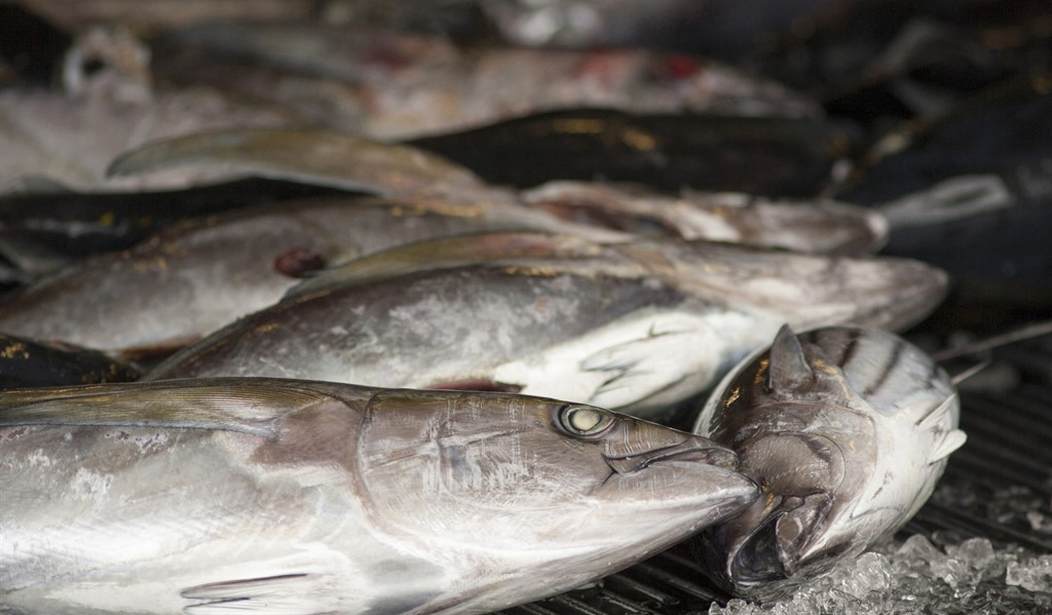
A fisherman walked into the Oval Office this week and thanked President Donald Trump for something Washington rarely gives working people: room to work. American fishermen weren't asking for another study or speech; they wanted access to American waters without being treated like enemies of the ocean.
Trump signed a June 11 proclamation reopening commercial fishing access in parts of the Pacific that had been closed to U.S.-flagged vessels.
Building on prior actions to strengthen American seafood production and support working fishing communities, this proclamation restores access to hundreds of thousands of square miles of Pacific waters for commercial fishing managed under existing Federal law. I have determined that restoring access to responsibly managed fishing grounds will promote economic opportunity while ensuring continued stewardship of our Nation’s marine resources.
These proclamations imposed restrictions on commercial fishing within specified areas of the monuments. Prior to the establishment of these monuments, the marine resources identified in Proclamations 8031, 8335, 8337, and 9478 were subject to comprehensive Federal management and conservation authorities, including regulations that managed commercial fishing.
After further consideration of the nature of the objects identified in Proclamations 8031, 8335, 8337, and 9478 and the protection of those objects already provided by Federal law, I find that appropriately managed commercial fishing under existing statutory authorities will not put the historic and scientific objects within these areas at risk.
The action covers areas of the Papahānaumokuākea Marine National Monument, the Mariana Trench Marine National Monument, and the Rose Atoll Marine National Monument. The administration says the move restores access to nearly half a million square miles of Pacific waters.
For fishermen, a line on a government map means paychecks, crews, fuel bills, processors, welders, dock workers, and coastal towns that survive because boats come home full. When Washington closes water, it squeezes the people with the least power to fight back.
Commerce Secretary Howard Lutnick called the proclamation a win for fishermen and coastal communities. NOAA Administrator Dr. Neil Jacobs said it will put more U.S.-caught fish on American tables.
NOAA is proud to support the Administration’s pledge to restore U.S. seafood competitiveness through the America First Fishing Policy. The President’s Executive Proclamation comes as a direct result of feedback from the U.S. fishing industry, and his action will continue to increase economic opportunities for American fishermen.
“President Trump is once again delivering for American fishermen by opening prized Pacific fishing grounds with this Executive Proclamation,” said Commerce Secretary Howard Lutnick. “By restoring commercial fishing in the remote Pacific, we are creating new economic opportunity for coastal communities and restoring U.S. seafood competitiveness.”
Previous prohibitions on commercial fishing in the Pacific Ocean forced American commercial fishermen further offshore into international waters to compete against poorly regulated foreign fishing fleets. Restoring access to these valuable fishing grounds within the U.S. exclusive economic zone will give diligent and honest American fishermen closer access to tuna and other pelagic species.
Their point hits home because America controls rich waters and skilled crews, while seafood shelves still depend heavily on foreign supply.
The Biden administration's instinct was to let the federal machine grow heavier. Fishing families faced overlapping limits, slow decisions, offshore wind conflicts, and a regulatory culture that treated domestic production like a problem instead of a strength.
Trump's April 2025 seafood order put the issue in plain terms; the United States controls over 4 million square miles of prime fishing grounds, yet nearly 90% of seafood on American shelves is imported, and the seafood trade deficit sits above $20 billion.
Those numbers should shame any government that keeps burdening U.S. fishermen.
The Atlantic side tells the same story. In February, Trump reopened the Northeast Canyons and Seamounts Marine National Monument to commercial fishing. In April, NOAA Fisheries rescinded the rule that had blocked commercial fishing there while leaving other protections in place.
Critics will say any rollback risks the environment, while real stewardship still counts. Yet U.S. boats already operate under strict rules, and many targeted species are highly migratory. Pushing American fishermen aside can hand market share back to foreign fleets that face weaker standards.
Biden's approach made life harder for the people closest to the work. Trump is moving in the other direction by reopening access, cutting needless barriers, and reminding federal agencies that fishermen are workers trying to feed their families and help feed the country.
American fishermen don't need Washington to love them; they need Washington to stop tying knots in their nets, closing off their waters, and treating imported seafood like the moral high ground.
Trump's latest move will not resolve every problem in one day, but it shows the right instinct. A country with American waters, American boats, and American workers ought to let them fish.
Right?
Keep PJ Media in the fight for the stories big institutions would rather bury under paperwork, process, and polite excuses. Join PJ Media VIP and use promo code FIGHT for 60% off today.


Join the conversation as a VIP Member