


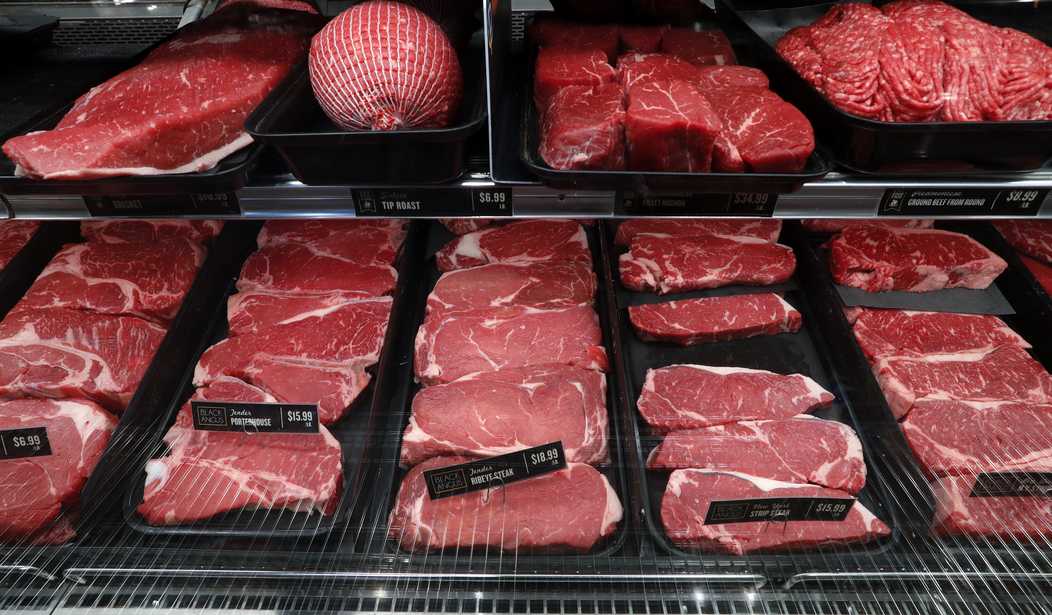
Looking at the cost of beef in the food store, my wife, who is by far more attractive each day she blesses my life (contractual obligation met), tells me that a pound of tofu is $3.00.
I was smart enough to keep quiet.
But the story at the meat counter tells the story without much effort, as ground beef pushes toward $10 a pound in some places, and as steak prices are sitting at near-record levels. The numbers haven't eased, and there's a reason, which hasn't changed: the beef market isn't dealing with a short-term spike. It's working through years of contraction that can't quickly be reversed.
The latest from the USDA National Agricultural Statistics Service shows the U.S. cattle herd sitting at roughly 86.2 million head. That's the lowest level in decades; beef cows number about 27.6 million, numbers not seen since the early 1960s. Calf production has slipped, and feedlot inventories have edged lower. Supply has tightened across the entire chain, and every step forward depends on time, weather, and cost control.
USDA’s April Cattle on Feed report came in very close to expectations. Total on-feed inventory was down by just over 0.5% from 2025 at 11.58 million head. Both placements and marketings were down considerably from last year but very close to pre-report estimates. The report was generally consistent with the ongoing trends of tight cattle supplies, lower slaughter levels, and longer feeding periods.
The pressure didn't build at once; it came in waves. Droughts stretched across key cattle regions and forced ranchers to shrink their herds just to keep operations alive.
Feed grew scarce, water turned uncertain, and all the while bills kept climbing, leaving producers with fewer good options and plenty of risks.
Many made practical choices, selling cattle instead of trying to rebuild in the middle of that uncertainty. U.S. Secretary of Agriculture Brooke Collins has pointed to rising input costs as a major obstacle, noting that steady pressure like that makes expansion a gamble, even when market prices look good.
In her exclusive interview with RFD News on Tuesday afternoon, Secretary Rollins emphasized that fertilizer prices have climbed significantly in recent years and have been further affected by overseas conflict, and she is working with lawmakers across Washington to bring real relief to producers as soon as possible.
“Yeah, it’s a really important issue right now, especially for our farmers in planting food,” Rollins said. “And you mentioned it. Listen, this is not a new issue. The cost of fertilizer went up 40% in the last administration. We were working and had begun to see a little bit of moderation on that. When the conflict overseas happened, and the president, you know, was very clear. There may be some tribulations we’re going to have to work our way through. And, certainly, we have seen that specific to certain pieces of the fertilizer industry. But with regards to nitrogen and a few others, you’ve seen a big cost increase.”
She pointed to recent actions, including regulatory adjustments and efforts to improve domestic fertilizer movement and production capacity.
Rebuilding doesn't happen on a tight schedule; a sold cow isn't easily replaced. Ranchers have to hold back heifers, breed them, and wait for calves to grow to market size, a process that takes years, not months. Even if conditions improve, supply slowly responds. Analysts at the National Cattlemen's Beef Association don't expect meaningful herd growth before 2027, and that depends on better weather and lower costs holding steady.
Production numbers show the strain. U.S. beef output dropped to about 26 billion pounds in 2025, and is expected to slip again in 2026. Fewer cattle are going to market, and while heavier weights help offset some loss, they don't close the gap.
USDA Economic Research Service projections point to continued pressure on domestic supply through the year.
Demand hasn't cracked; people are still buying beef, even with higher prices staring back at them from the cooler case. Retail prices have hovered around $9.50 per pound on average, with some cuts climbing higher.
Restaurants trim portions or adjust menus, and grocery shoppers make tradeoffs, but the appetite for beef hasn't disappeared. Demand has held firm, even as prices push into record territory.
The market is going to continue to contend with less beef production. Rising imports will continue to augment supplies of lean beef for ground beef. While consumer beef demand has been resilient in the face of high and rapidly rising fuel prices, it will pressure consumers’ disposable income. The shifting landscape of consumers’ purchases in the coming months will generate more ups and downs on the beef price roller-coaster as the year goes on.
Imports are helping fill the gap and keep things from getting worse. The U.S. is on track to bring in about 5.8 billion pounds of beef in 2026, mostly lean stuff that goes straight into ground beef and burgers.
Australia, Canada, Brazil, Mexico, and New Zealand are sending a lot of it, with the USDA reporting those imports are making up a bigger piece of the whole supply than they used to.
Exports are heading the other direction; beef costs so much here at home that it's getting harder to sell it overseas. Shipments to big markets such as Japan and South Korea have slowed down; more of our beef stays right here, but it's still not enough to take the pressure off prices.
The packing plants add their own headache; when cattle numbers drop, the big operations don't always adjust smoothly. Some slow down shifts or change what they're running, and because just a few huge companies control most of the slaughter, there's not much wiggle room. Feeling it first, as they always do, small ranchers discover fewer buyers, along with even less clout when they try to sell.
Weather is still the boss, same as the old boss. Parts of Texas, Oklahoma, and the Plains are staying dry, so feed stays expensive, and there's less grass for the cows. Even a short break in the drought doesn't fix years of built-up stress.
Ranchers want to see steady rain before they start rebuilding the herd, and that kind of reliable weather just hasn't shown up yet.
Nothing in the market right now says we're getting a quick fix; these high prices come from years of tough decisions under tough conditions. Even if things improve, growing the herd back takes time — a lot more than a single good season.
Unfortunately, we'll keep seeing higher prices at the store, and producers will keep weighing every risk before they make a move.
And, I pray, I won't have to run away the next time my gorgeous wife brings up tofu at the meat counter.
Unlock deeper reporting and analysis that cuts through the noise and gets straight to what matters. Take advantage of a limited-time discount using promo code FIGHT and save big on full access.








Join the conversation as a VIP Member