


Somebody broke into Carmen Van Huss's Indianapolis apartment on March 24, 1993, raping her and stabbing her 61 times. She was only 19 years old, and her father found her body the next day. For over 30 years, her family lived without answers.
Those answers arrived on Feb. 13, 2026, when Marion County Superior Judge Mark Stoner sentenced Dana Jermaine Shepherd to 45 years in prison for Van Huss's rape and murder. The sentence was the result of a plea agreement signed weeks earlier, which closed a case that had remained unsolved for 33 years.
The breakthrough that changed everything
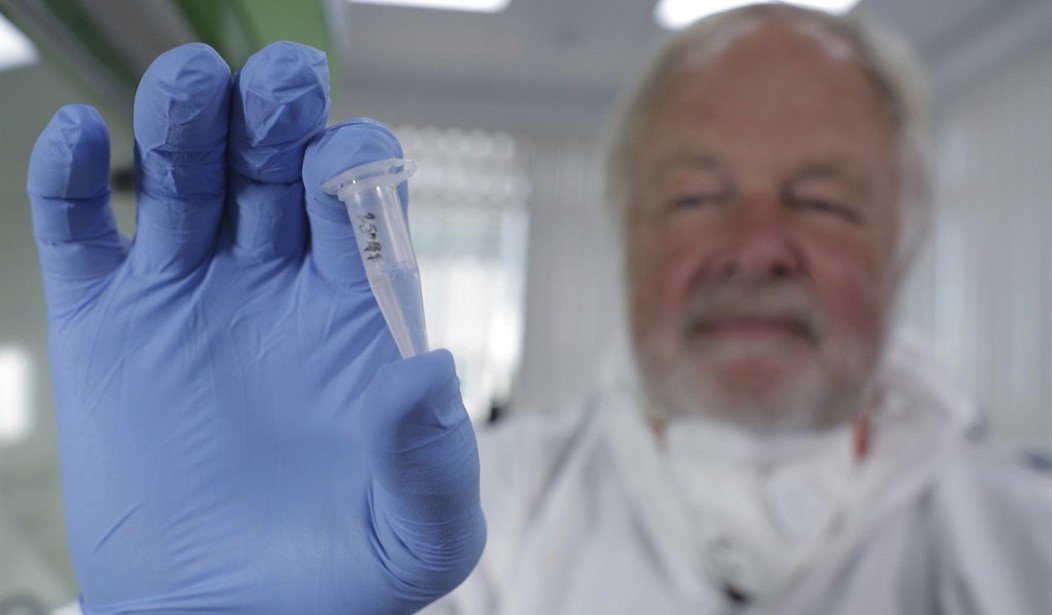
In 2013, investigators uploaded crime scene DNA to CODIS, but no match was found. Then, in 2018, detectives turned to Parabon NanoLabs, a Virginia-based forensic lab specializing in genetic technology.
These tests were different; instead of looking only for exact matches, analysts compared the unknown profile to distant relatives who had voluntarily uploaded their DNA to public genealogy databases such as GEDmatch and FamilyTreeDNA.
Using those distant-cousin matches, Parabon scientists built family trees that narrowed down to a small number of possible suspects. Following additional investigative work, along with a tip that the killer had lived in the same apartment complex, led authorities to Dana Jermaine Shepherd. Following through on a warrant for his DNA, detectives learned about the positive match.
Police then obtained a warrant to take a DNA sample from Shepherd. When police showed it to him, he “was visibly shaking,” according to the document.
That testing tied Shepherd to the crime, and he was arrested in 2024 in Columbia, where he was working for the University of Missouri. He was extradited to Indiana and charged with rape and murder.
Shepherd had a rap sheet in Indiana before the murder, including charges for battery and public intoxication, Fox59 reported. In the years after the murder, he had also been charged in Missouri with stealing, disturbing the peace, and driving without a license, according to the outlet.
Police arrested Shepherd in August 2024, who later accepted a plea agreement that spared Van Huss's family a trial and secured a long prison sentence.
The Van Huss family released a statement reacting to the sentencing.
“While this plea deal was not our first choice, we are grateful that after 33 years, the man responsible for Carmen’s brutal rape and murder is finally being held accountable,” the family stated.
They continued, “For decades, the perpetrator was able to live a normal life after taking that right away from Carmen and from our family. Nothing can undo that loss or erase the injustice of him living freely for so long, but we are thankful that the truth has finally come to light and that he has not escaped justice.”
Families waiting decades
Cases like Carmen Van Huss's no longer stand alone. Since 2018, when investigators used genetic genealogy to identify Joseph James DeAngelo as the Golden State Killer, law enforcement agencies across the country started using the technique.
The National Institute of Justice has supported forensic genetic genealogy research and training programs for law enforcement agencies looking to responsibly use the method.
Numbers that tell a story
In recent years, authorities have solved over 1,400 cold cases using forensic genealogy, but progress has been slow: only a handful were closed during the first year.
Now, hundreds of cases are resolved annually because labs have expanded capacity by using more voluntary DNA profiles.
A Texas-based forensic lab, Othram Inc., has identified victims and suspects in decades-old cases across several states. In February, Othram helped ID Bryant Keith Bates, who went missing in 1988, but his remains were found in a coal bin. Testing confirmed his identity, while ruling his death a homicide by gunshot, a 38-year-old unsolved murder.
The nonprofit DNA Doe Project has also identified over 250 previously unidentified remains using genealogical DNA techniques; many of those cases involved murders that went cold for 30 years or more.
New rules and ongoing debate
As public awareness has grown, companies have changed their policies; ancestry now requires law enforcement to obtain a valid legal process before accessing customer information.
GEDmatch lets users opt in for law enforcement matching, and FamilyTreeDNA enables law enforcement access using user-defined terms.
Despite tighter rules, the number of solved cases continues to rise. Investigators combine genealogical leads with traditional detective work, interviews, and forensic testing. DNA doesn't replace police work: It strengthens it.
For families like the Van Huss family, technology has turned fading hope into courtroom justice, where files once marked "cold" are now moved into active evidence rooms. Court dockets that once held empty spaces now carry names.
Final thoughts
Thirty years passed before Dana Jermaine Shepherd entered a courtroom. For Carmen Van Huss's family, those years never really changed; they waited while life marched on for everybody else.
Those timelines are changing because of genetic genealogy, where cold cases no longer fade into permanent silence, and the shield that time once gave violent offenders grows thinner with every lawful warrant and voluntary DNA match.
Privacy matters, so do constitutional protections, and law enforcement must operate within clear legal boundaries, while courts guard against abuse. Genetic genealogy works because it follows legal process, not because it bypasses it.
Carmen Van Huss wasn't asked for permission to endure what she endured, a loss her family carried for 33 years.
I pray I never know that waiting, but for families like the Van Huss', forensic genealogy isn't a theory, it's the moment a name replaces "unknown," and it's a courtroom, not a cold file.
Safeguards need to stay strong, and oversight needs to stay firm, yet the balance can't ignore the suffering of families who live decades without answers.
Once, time protected killers, a protection that's gratefully changing. Justice continues to move through courts, evidence, and due process; it just moves with new tools.
For families waiting a lifetime, that's the most important change of all.