


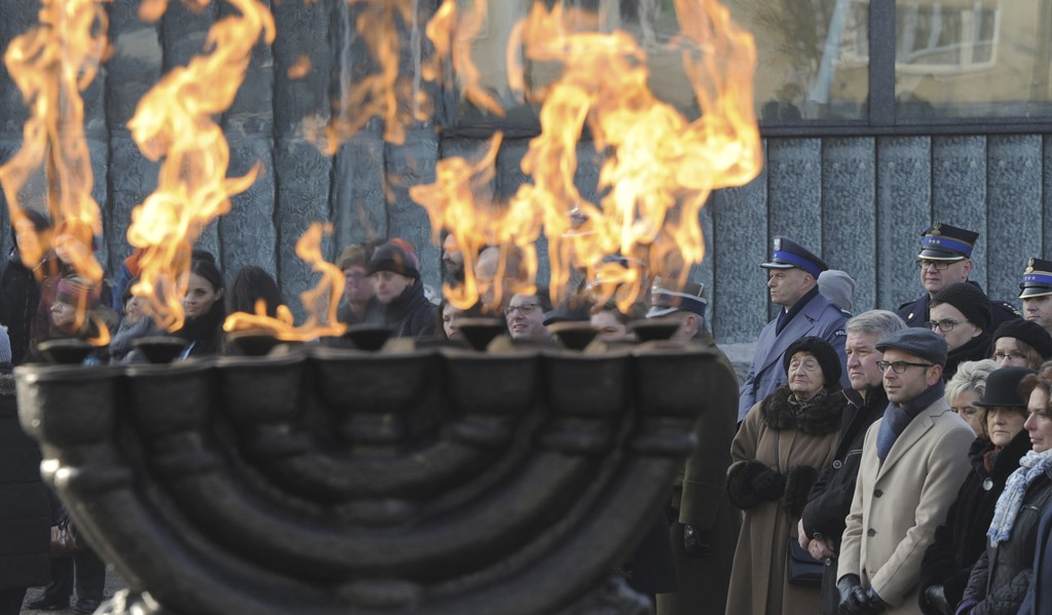
The rebirth of Israel and its continued survival are partly a work of God's grace, and very much a work of sacrifice and suffering from countless Jews who offered their lives to fight the murderous antisemites, like the heroes of the Warsaw Ghetto Uprising, which began on this day (April 19) in 1943.
Below is the state of Israel's message for this historic but tragic anniversary. It ends with a reminder that when the Jews incarcerated in the Warsaw Ghetto faced an impossible situation, they chose to fight and die bravely, not submit to the butchers passively. "We remember them not only for how they died, but for how they chose to live and to fight." And therefore even in their deaths, those fighters inspired new generations who carry on their cause to this day.
Today marks 83 years since the Warsaw Ghetto Uprising.
— Israel ישראל (@Israel) April 19, 2026
Facing certain death, Jews chose to fight - not for victory, but for dignity, identity, and the right to resist.
Their message endures: freedom isn’t granted - it’s defended. Even against impossible odds.
We remember them not… pic.twitter.com/x10XGcZT34
Moshe Ekhajzer's wife and two of his daughters (one of whom was pregnant) died during the Nazi Holocaust, and he himself gave his life fighting in the Warsaw Ghetto Uprising. Yad Vashem published the last letter Moshe wrote, which was addressed to his daughter Ola, who did survive the war by pretending to be "Aryan." Much of the letter concerned potential escape plans and how to obtain the money he needed to do so, but despite his hope of escape, which was ultimately unfulfilled, Moshe knew that he could very well die in the coming days. And so he did begin his letter as a farewell, a parting message to Ola. "My darling! Meanwhile I am holding fast. What will be afterwards – God only knows," he wrote.
Read Also: America's 250th Birthday and the Shot Heard Round the World
"Whatever happens – don't be sorry. I am no more worthy than so many [fellow Jewish] brothers and sisters," Moshe continued. "Either way, I hope to get to safe haven. I only think about and worry for your fate. You, my darling Ola, on your shoulders rest the responsibility to take care of your mother and sisters. I tried to be brave and arrange everything calmly and wisely. That was the only thing that could save you. Of course, I am writing this with the responsibility of a father and husband. I have not for one moment lost hope that I will be saved and return to you. It is very bad for me that I was left penniless. It makes it very hard to get food. And if you have a chance to escape, it is impossible without money."
Moshe Ekhajzer did not escape. The Nazis killed him on May 7, 1943, as he was a member of the brave but doomed uprising. But as the state of Israel affirmed, we remember how he chose to live and die. The Ekhajzer family had believed strongly in the effort to refound Israel. Moshe's wife Miriam donated her wedding ring to support Jewish settlement in Israel. One of their surviving daughters, Nehama, immigrated to Israel after WWII, and brought her younger deceased sister's remains to be buried in Jerusalem.
Of course, the deaths of so many members of the Ekhajzer family were irreparable tragedies, as were the lost lives of all six million Jews who died in the Holocaust. But the surviving Ekhajzers who helped refound Israel and carry on the family legacy of courage and learning did honor to the deceased. "Never again" means fighting violent prejudice and building a freer and better world.