


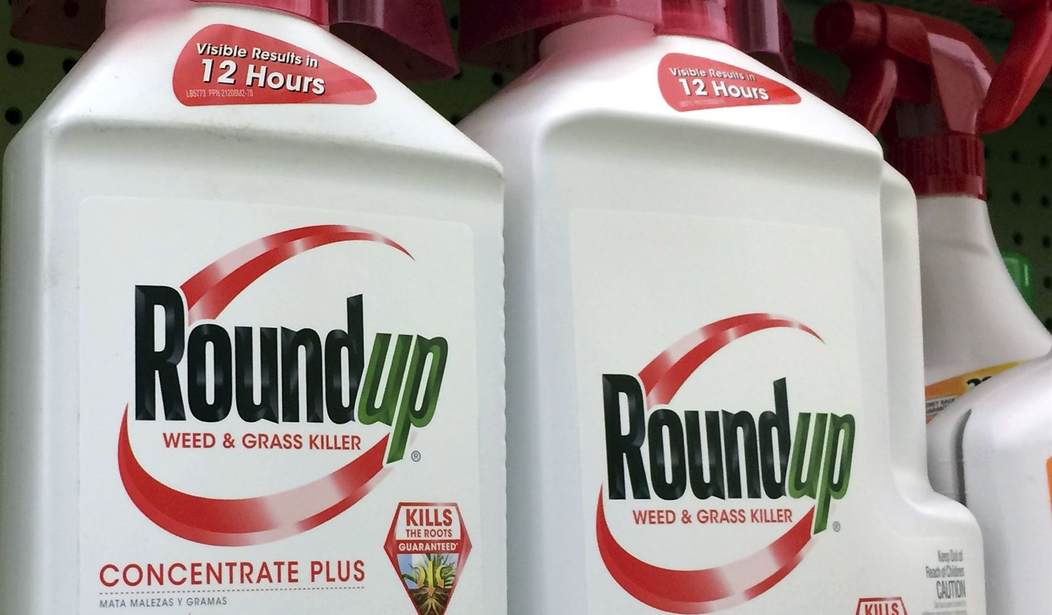
Last month, citing national security imperatives, President Donald Trump issued an executive order (EO) requiring the increased production of elemental phosphorus as well as the herbicide glyphosate, which requires elemental phosphorus, citing national security in reference to glyphosate’s role in maintaining optimal crop yields.
Related: Chelsea Clinton Launches Anti-MAHA Podcast
Via White House, Feb. 18, 2026 (emphasis added):
By the authority vested in me as President by the Constitution and the laws of the United States of America, including the Defense Production Act of 1950, as amended (50 U.S.C. 4501 et seq.) (the “Act”), and section 301 of title 3, United States Code, it is hereby ordered:
Section 1. Policy and Findings. Elemental phosphorus is pervasive in defense supply chains and is therefore crucial to military readiness and national defense. It is a key input in smoke, illumination, and incendiary devices and is a critical component for manufacturing the semiconductors that are central to numerous defense technologies, such as radar, solar cells, sensors, and optoelectronics. It is also increasingly important in modern lithium-ion battery chemistries used in a multitude of weapon-system supply chains. For these and other reasons, on November 7, 2025, the Department of the Interior, acting pursuant to the Energy Act of 2020, designated phosphate as a critical mineral.
Elemental phosphorus is also a critical precursor element for the production of glyphosate-based herbicides, which play a critical role in maintaining America’s agricultural advantage by enabling farmers to efficiently and cost-effectively produce food and livestock feed. As the most widely used crop protection tools in United States agriculture, glyphosate-based herbicides are a cornerstone of this Nation’s agricultural productivity and rural economy, allowing United States farmers and ranchers to maintain high yields and low production costs while ensuring that healthy, affordable food options remain within reach for all American families.
The EO called for “ensuring an adequate supply of elemental phosphorus and glyphosate-based herbicides” while providing immunity to manufacturers via Section 707 of the Defense Production Act (50 U.S.C. § 4557).
Continuing:
There is no direct one-for-one chemical alternative to glyphosate-based herbicides. Lack of access to glyphosate-based herbicides would critically jeopardize agricultural productivity, adding pressure to the domestic food system, and may result in a transition of cropland to other uses due to low productivity…
Ensuring an adequate supply of elemental phosphorus and glyphosate-based herbicides is thus crucial to the national security and defense, including food-supply security, which is essential to protecting the health and safety of Americans. Nonetheless, the United States’ ability to domestically produce those critical inputs is extremely limited…
The Secretary [of Agriculture] shall use the authority under section 101 of the Act (50 U.S.C. 4511), in consultation with the Secretary of War, to determine the proper nationwide priorities and allocation of all the materials, services, and facilities necessary to ensure a continued and adequate supply of elemental phosphorus and glyphosate-based herbicides…
In exercising the authority delegated in this section, the Secretary shall take into account the President’s judgment that domestic production of elemental phosphorus and glyphosate-based herbicides is critical to the national defense…
This order confers all immunity provided for in section 707 of the Act (50 U.S.C. 4557).
Related: Bill Gates Lobbying White House to Reverse USAID Cuts: Report
The move garnered some criticism from the MAHA faction of the broader MAGA base, a coalition that then-candidate and current HHS Secretary Kennedy helped foster when he endorsed Trump in August 2024 — one of the most, if not the most, critical endorsements of the campaign that led to Trump’s success.
Kennedy, ironically, made his bones as an environmental lawyer suing Monsanto over its glyphosate product, Roundup.
Related: Unhinged Liberals Accuse RFK Jr. of Using Secret Nazi Code on Twitter
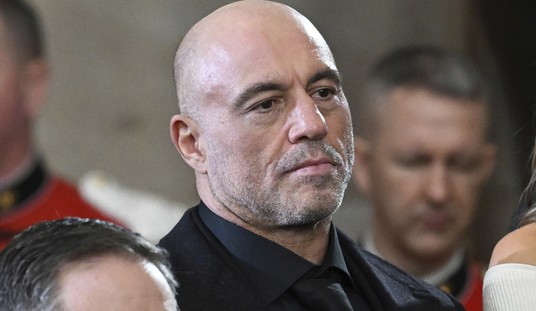
During a recentinterview with Joe Rogan, Kennedy described the EO as “not something that I was particularly happy with” while explaining that, essentially, the glyphosate industry and the regulatory authorities have systematically addicted the American food production system to the pesticide over many decades, such that untangling the Gordian Knot is not an overnight endeavor.
However, tempering his criticism, Kennedy also said he “understands the president’s point of view” and called for the gradual phasing out of reliance on glyphosate for food production:
I’ve spent 40 years fighting pesticides. It was… I was part of the trial team on the Monsanto case, which was the team that, you know, we won three cases in a row. And then got an $11 billion settlement with Monsanto, which is now Bayer. By the end of our trial, Bayer owned Monsanto.
But, you know, pesticides are poison. They’re designed to kill all life. It’s not a good thing to have them in your food. So, but I also… it’s not something that I was particularly happy with, let me put it that way, mildly. But I also understand the president’s point of view. The president didn’t create this system. He’s dealing with a problem that was created long before over the past sixty years. When, um, we… through federal policies and subsidies and management of farming in this country, the agricultural management, we have addicted our farmers to these pesticides, and particularly glyphosate…
98% of soy is produced with glyphosate. If you banned glyphosate overnight, or if you got rid of it, or someone else cut off our supply, it would destroy the American food system...
But we all know we’ve got to transition off of glyphosate. We all know that. And the farmers hate it...
Most European countries don’t allow the export of our crops to their countries.
Joe Rogan questions HHS Secretary @RobertKennedyJr on recent Trump executive order re: glyphosate pic.twitter.com/kSVLhBru86
— Ben Bartee (@BenBartee) March 4, 2026