




A revolution started in the launch industry almost exactly 11 years ago, when a SpaceX Falcon 9 booster safely returned to Landing Zone 1 at Cape Canaveral after putting a set of Orbcomm satellites into Low Earth Orbit (LEO). Just 15 months later, the revolution was complete when a Falcon 9 booster successfully flew for a second time on March 30, 2017.
Falcon 9's reusability promised — and then delivered — price reductions that opened up all kinds of previously impossible activities in space, along with saving American tax payers tens of millions of dollars for each crewed mission to the International Space Station.
On Friday, the planned Starship Flight 15 promises to do more than change the launch industry again. It might just change the world.
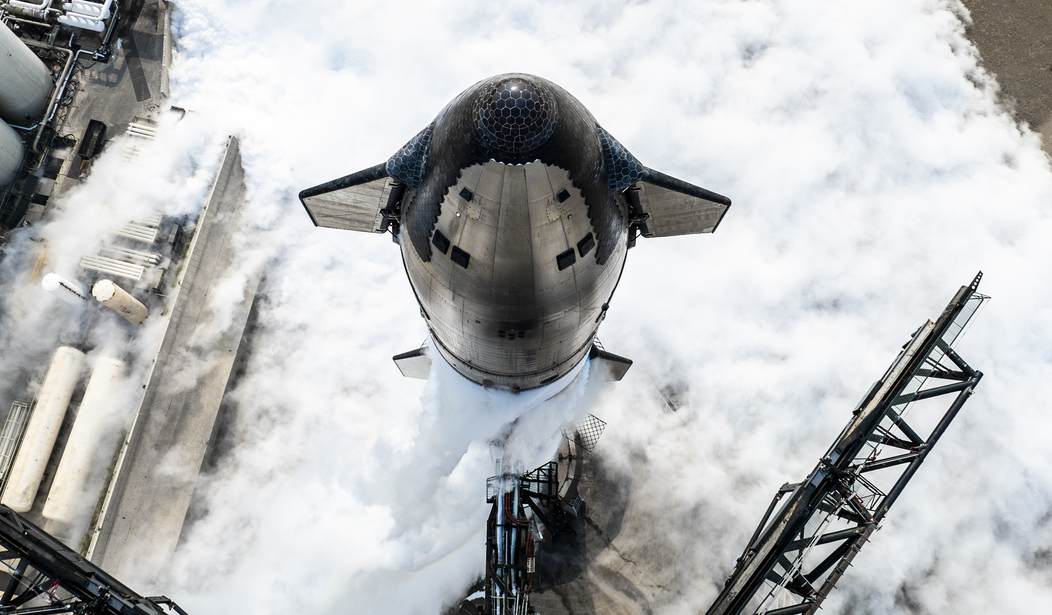
Starship's Super Heavy Booster achieved reusability in May of last year, when Booster 14 flew a second time, using 29 (out of 33) "flight-proven" Raptor 2 engines. Booster 15 made its second flight in October 2025.
But this is the big deal: The Ship upper stage has yet to achieve reuse. It's never even been caught in the tender embrace of the Mechazilla landing platform giant steel chopstick arms.
SpaceX hopes to change all that on Friday, November 13.
Yes, Friday the 13th.
Assuming regulatory approval, and no tech hiccups, Flight 15 will light up Friday afternoon.
A successful boost phase will, as before, hot-stage the Ship into an orbital trajectory, and then the Ship's engines will begin lifting it into LEO. Meanwhile, the Super Heavy Booster is set to conduct the usual boostback burn, and for only the fourth time will land right back at its launchpad.
Once in orbit, the Ship will do the same thing it did last time, and deploy 26 Version 3 Starlink internet satellites. Three of those sats are equipped with cameras that will look back and conduct an examination of the Ship's heat tiles.
And Another Thing: In terms of increasing Starlink's throughput, this Starship flight will be worth about 10 Falcon 9 launches. A fully-laden Starship — its max payload is about 60 V3 satellites — will deliver 20 Falcon 9s worth.
If all goes well — everything from the engines to passing the heat tile inspection — Ship will fly 14 orbits on a planned 22-hour mission. And then it will do something never done before, and land right back at the launch site, same as the Super Heavy Booster.
“If successful, this will mark the first full recovery of an orbital launch system and a breakthrough moment in making Starship a reliable, rapidly reusable rocket,” the company said in a statement.
Once the concept is proven, the rest is just getting good at it.
But that isn't where the revolution lies.
Currently a couple of weeks is generally required for the recovery and re-flight of a Falcon 9. But Starship — and its ambitious launch and catch and refuel pad — is supposed to be capable of re-flight every few hours. SpaceX aims to turn around the largest and most powerful ever built in not much time than a passenger jet.
Not only does Starship enable orbital data centers at a cost less than terrestrial-based ones, it opens up possibilities like:
- Orbital manufacturing at scale of products like drugs and chips best made in microgravity.
- Plus 30-minute delivery of the finished products.
- Space stations on the cheap (a single Ship could have about the same habitable space as the entire ISS in a single launch and without any expensive and risky orbital assembly)
- Much bigger yet much cheaper (due to much higher size limits) space telescopes.
- "90 minutes from New York to Paris," or to anywhere else in the world.
And more. Starship is the difference between going to the Moon to plant a flag and going to the Moon to colonize it.
I keep hammering readers over the head with this, but we have to get out of the mindset that space is the most expensive place to do anything.
The Space Shuttle was remarkably useful, but cost about $54,500 per kilogram to LEO, and each Shuttle flew maybe a couple times a year. Starship promises $67 (that's sixty-seven dollars, no missing zeroes) per kilogram to LEO, and might fly every couple of hours.
That's the future, and it could begin as soon as 3:45 p.m. Eastern this Friday.
Recommended: China Reveals Timeline for Manned Moon Landing
Gain insight. Get cool stuff.
PJ Media VIP members get tons of exclusive goodies, including podcasts and video live chats with your favorite writers, almost none of which are Russian or Pakistani bots — guaranteed! You can support alternative conservative news and save 60% with promo code FIGHT.



Join the Conversation
VIP members get the ability to comment on articles.