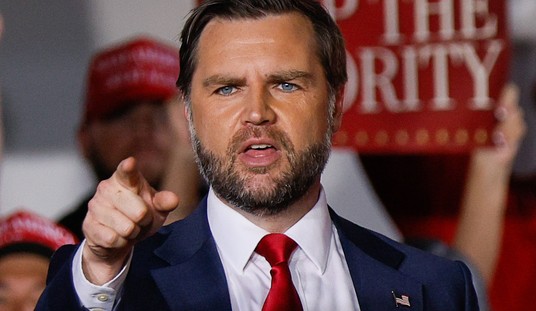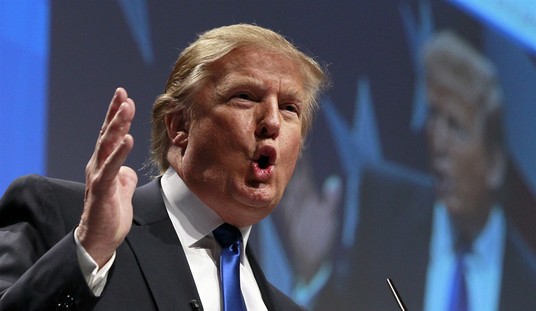

"This was not a positive view of the Democrats. This was a rejection of Republicans in Washington. And Democrats just happened to be the beneficiary." —Florida Gov. Ron DeSantis on the midterms.
Note: Most Thursdays, I take readers on a deep dive into a topic I hope you'll find interesting, important, or at least amusing. These essays are made possible by — and are exclusive to — our VIP supporters. If you'd like to join us, take advantage of our 60% off promotion.
The polls were not wrong, gentle reader. If anything, they overestimated the GOP's chances literally everywhere. The red flags waved all over the place, but the reddest and waving-ist was seen three weeks ago in one of the most reliably conservative districts in one of the most reliably Republican states.
South Carolina's 1st congressional district is white, well-to-do, and deeply red. President Donald Trump won there in 2024 by 13 points. GOP Rep. Nancy Mace — retiring from Congress to run for governor — won reelection that same year by an even wider margin.
The open race pitted Democrat Nancy Lacore — a carpetbagger from Virginia who only moved to South Carolina last year — against Republican Jenny Honeycutt, a well-respected small business owner with deep roots in the area. Honeycutt ran a competent and refreshingly low-drama campaign. Lacore had to be removed from her Navy Reserve leadership post by War Secretary Pete Hegseth — and I probably don't have to tell you what that should have meant in South Carolina, where the military is respected as in few other states.
Nevertheless, Democrats smelled blood in the water, and outside groups poured money into helping Lacore. It was effective, too. So much so that the Republicans were forced to respond in kind. Punchbowl's Jake Sherman reported on October 14 that two national GOP groups had just spent close to a million dollars on TV ads for Honeycutt.
All that in a Trump+13 South Carolina district with a solid candidate. If the Republicans weren't safe in SC01, they weren't safe anywhere.
Lacore is the projected winner with a small lead but almost certainly large enough to survive any recount.
So it went all across the nation.
Or as I put it privately in PJ Media's Slack channel when I first saw Sherman's item three weeks ago, "We're probably gonna get creamed, and the GOP is as clueless now as it was in 2006, thinking they had so much money that everything would be fine."
Donald Trump won every swing state in a virtual cakewalk two years ago, yet flush with cash, Republicans performed so badly that Michigan voters sent a terrorist sympathizer to the Senate, and every statewide office in Texas flipped blue.
As far as disasters go, it was the Towering Inferno collapsing on the Poseidon during a Sharknado.
The only place where the dam held against the blue tsunami was in Ron DeSantis's Florida — and even that was uncomfortably close in places.
What happened?
As I wrote in our election night liveblog, "There's no single cause. There's no one finger to point." And I'm not here to point fingers, but to briefly(ish) assess what went wrong so we might course-correct before 2028.
But before we look forward, we must look back at the last two years, as dispassionately as possible.
The first thing we have to do is admit we just got walloped by Democrat turnout. I warned repeatedly at Instapundit for the last year or so that Dems were angry, energized, and motivated. If I had any doubters on that point, they shouldn't have any remaining doubts after Tuesday.
Speaking most broadly, we lost on three fronts that I'll get to momentarily. First though, let's look at the voters themselves.
Patrick Ruffini — I've followed him for a quarter of a century, and he's solid — broke down the electorate's leftward shift by demographic in Tuesday's exit polls. And while those numbers were revealing, what perhaps hurt most was dispirited Trump supporters.
Here's the cause, and as Patrick said, it's "not that complicated."
Not that complicated. https://t.co/iwqtYpGMaC
— Patrick Ruffini (@PatrickRuffini) November 4, 2026
The Democrats took one of Trump's signature 2024 issues — the affordability crisis — and turned it against him. Leave aside, if you can, that the Democrats will only make things worse. As Alexandria Brown noted in her must-read postmortem, "The Republican candidates failed to persuade people that was the case."
My Twitchy colleague, Sam Janney, reported in from Dem-dominated Virginia with a similar conclusion:
Democrats used the Spanberger Playbook. Pretending to care about affordability. Pretending to be moderates concerned about kitchen-table issues. Those of us who went through this last year saw it. We sounded the alarm. This has always been about revenge. That’s it.
— The🐰FOO (@PolitiBunny) November 4, 2026
Don't complain that the Democrats put on an act because, of course, it was an act. It's a political campaign, fer cryin' out loud. Complain that the GOP helped create the conditions that allowed the Democrats to put on their act, and then completely failed to counter it.
And Another Thing: "It's all Trump's fault for being so aggressive and combative and erratic!" is the one blame game I refuse to play. Trump can be all of those things, but he's also a known quantity. Voters were more than happy to overlook/accept/embrace (pick one or two or three) Trump's personal qualities in the past, and would have happily done so again — if they were happier.
And that brings us back to the three issues that helped tilt the playing field so heavily toward the Dems: the Iran War, Tariffs, and Congress.
Iran War
"The reason we lost is the war," Vice President JD Vance posted this morning. "The president himself said so last night." I don't fully buy into that, but it was certainly a contributing factor. Historically, Americans don't start growing impatient with a war until it's gone on for three years. The Iran War is just seven months old, and only a few weeks saw much kinetic action, and only a dozen or so KIA. As wars go, this one is unsatisfactory, but that's about the worst you could say about it.
But Trump never laid the popular groundwork for a longer effort, and the blowback effects — largely higher diesel prices that raise prices on pretty much everything — went hard against Trump's 2024 campaign for affordability.
Overall, the war effort feels haphazard. "Had that been wrapped up in like a week, like Venezuela was very quick, people probably wouldn't have [made it] an issue right now," as Florida Gov. Ron DeSantis put it last night.
And if we may speak frankly, our close alliance with Israel angers certain unsavory elements within the MAGA coalition who either didn't show up or went and voted for the antisemite (D) on their ballots.
And Another Thing: There's a CBS News report claiming that Trump might fire Hegseth over the Iran War. But it was Hegseth's leaner and meaner War Department that delivered such devastation to the Islamic Republic in the war's first four weeks. The Memorandum of Understanding touted by Vance led to this month-long stalemate. Treasury Secretary Scott Bessent's economic squeeze might yet finish off the regime for a geopolitical win, but politically, this war was a midterm loser. That aside, it would be a huge win for the Swamp if Hegseth — the administration's toughest reformer and a real warfighter — ends up as the scapegoat for political decisions made in the White House, not the Pentagon.
Vance also wrote that "One of the pollsters I really respect told me that our economic messaging wasn’t sharp enough down the stretch," and on that point, we're fully agreed.
Which brings us to the second losing issue.
Tariffs
I remain a big fan of tariffs for isolating Communist China and other rivals. Targeted tariffs are also necessary for protecting/re-shoring industries vital to national security. Rare earths, shipbuilding, steel — it goes against my more libertarian instincts, but sometimes a government has to protect the industries a country shouldn't offshore to a rival.
But there are tariffs, and then there are tariffs.
"Trump sees tariffs as a sort of Swiss Army knife: an all-purpose tool capable of fixing any problem," is how AEI's Aaron Friedberg put it last year. "But large, across-the-board duties of the sort that he is proposing will not achieve the beneficial effects that he has ascribed to them. In a more targeted, tailored form, however, import taxes can play an essential role in helping to defend U.S. interests and push back against Chinese mercantilism."
And Another Thing: Please don't take this week's essay as an attack on Trump or a dismissal of his accomplishments. Crime, inflation, the border — Trump really did turn this country around with remarkable determination and speed. For that, we should be grateful. But for Tuesday's disaster, we must apply a cold eye.
Tariffs are paying off in some ways. We're going through a re-shoring/re-industrialization transition that Trump warned us two years ago would be long and difficult. But the benefits have so far been concentrated, while the resulting consumer price hikes are broadly felt and work against the economy's post-Biden disinflation.
Americans felt them right in the pocketbook, particularly in the swing states that went Trump in '24. Check this out from NBC's exit polling:
It would be naive to ignore the effect of the Iran war on the midterms, but we should not lose sight of the fact that tariffs were brutal for Republicans (via @NBCNews) https://t.co/I9nUBxhfmJ
— Philip Klein (@philipaklein) November 4, 2026
Combined with high interest rates — the fault of overspending Democrat and Republican majorities in Congress — tariffs' medium-term effects didn't prove politically expedient.
Also, oftentimes tariffs feel like the only tool in Trump's diplomatic kit. With respect, not every problem is a nail, Mr. President.
Congress
Pardon my English, but JFC, this useless GOP Congress.
We got the One Big Beautiful Bill Act, followed by the Secure America Act, and, uh... help me remember, please, Majority Leader John Thune?
We said "pass the SAVE Act" too many times to count. Thune just said he didn't have the votes, conveniently forgetting (or hoping you forgot) that as Majority Leader, sometimes it's his job to make the votes. Bribes, threats, whatever it takes to get vital legislation passed.
I don't know if passing the SAVE Act would have improved election security in time for this year's vote, but I can tell you with certainty that failing to pass one of Trump's signature bills compounded MAGA frustration with Congress, Sen. John Thune's Senate in particular.
This section might be a little thin, simply because the GOP held both houses and the Oval Office, yet the congressional majority got comparatively little done.
Compare that with Barack Obama or Joe Biden's first two years in office. They set up the legislation, got the votes, and sent bill after blockbuster, stupid-a**, expensive, destructive bill for the president to sign. Sure, they threw away their legislative majorities in the resulting midterm backlash. But so what? We're still stuck with Obamacare, multitrillion-dollar annual deficits, and all the rest.
The GOP threw away its majority for comparative peanuts.
It's a good rule of thumb that Democrats get voted out of office when they fulfill their promises, and Republicans get thrown out of office when they don't.
And Another Thing: I'd be remiss if I didn't mention the Media-Intel Complex headwinds, but Trump has fought and won against those before. There's also so much to say about the Texas disaster that it'll have to wait for a dedicated column.
The most troubling aspect isn't the shellacking we suffered, but the quality of so many of the Democrats we lost to. As OG Trump guy Michael Caputo warned early Wednesday morning, "This Congress will be the most radical in American history," featuring an enlarged Squad, a serious DSA contingent, a wider variety of Freaks on Parade — and a Democrat leadership that's too old, too feckless, and too cowardly to stand up to them.
We're in for a rocky two years, and the GOP presidential primary fight promises to be epic, and the first in a dozen years that Trump won't dominate like Godzilla over tiny fleeing Tokyo residents.
I’ve watched Republicans here in Colorado lose, then form a permanent circular firing squad instead of dryly assessing what went wrong and working to fix it.
We've lost my beautiful state; we can't afford to lose the nation.
And we haven't.
Despair not, because Tuesday's results, while disheartening, were also oddly mixed. "There is a very interesting mismatch between the elections for *candidates*, which effectively yielded a massive and historic sweep for the Democrats, and the *ballot initiatives*, almost all of which yielded conservative outcomes, even in the deep blue states," except Virginia, Charles W. Cooke noted.
Voters rejected a slew of Republican politicians but embraced conservative issues. There's a lesson in that, if only more Republican politicians would take it to heart.
Last Thursday: Hello, Universe? We're Here.