Note: Most Thursdays, I take readers on a deep dive into a topic I hope you'll find interesting, important, or at least amusing. These essays are made possible by — and are exclusive to — our VIP supporters. If you'd like to join us, take advantage of our 60% off promotion.
“We meant to change a nation, and instead, we changed a world.” — Ronald Reagan, farewell address, Jan. 11, 1989
I come not to praise the '80s, but to bury Ryan Reynolds' stupid, ignorant, and frankly Canadian complaints about the most awesomely American decade ever.
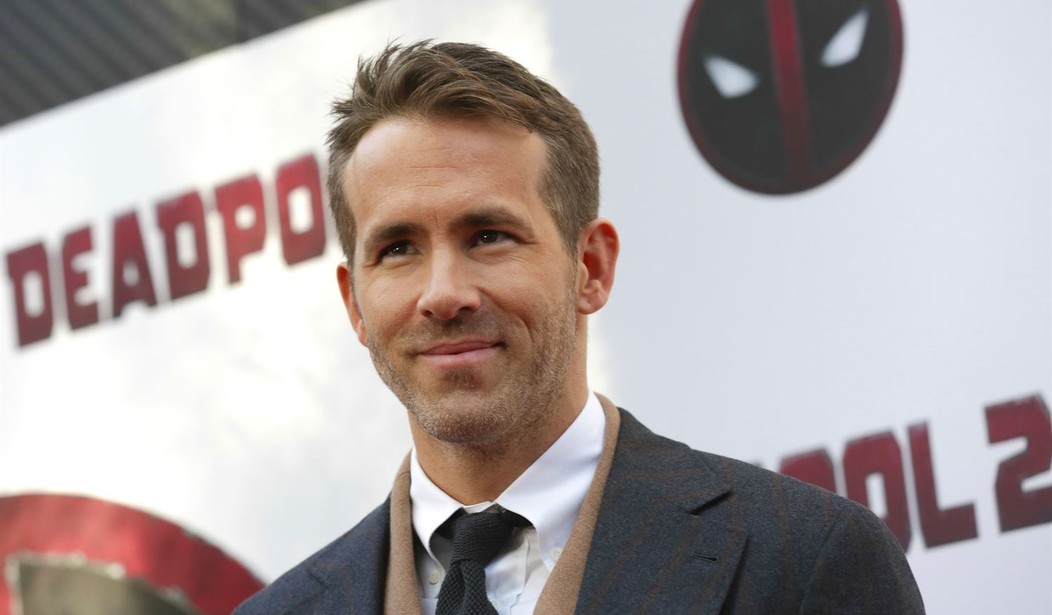
Talking to Variety to promote Mayday — a watch-it-once-and-forget-it flick — Reynolds didn't just diss the '80s; he went off. And he was just so wrong.
“The '80s was a brutal, brutal time for people," Reynolds whined. "It was a f***ing mess and people forget that. It was a tremendous strife. Socio political tensions everywhere. We were still pretty fresh off a Cuban missile crisis, which was only 15-20 years before. It’s a tumultuous period, but you look back at it now and you’re like, ‘Oh, yeah. Top Gun. Cocaine!’ Like, ‘No!’ It was really scary.”
Gentle reader, this effrontery will not stand.
And Another Thing: In Mayday, Reynolds plays a kick-ass '80s U.S. Navy aviator. Maybe he should have taken up Method acting.
Or maybe I'm being unfair. As another Canuck, Robin (Cobie Smulders) from How I Met Your Mother once admitted, "The ’80s didn’t come to Canada till, like, ’93." So maybe Ryan is just a little confused.
But the awesomeness of the '80s is not merely objective; it is also eternal.
Decades, however, don't precisely follow the calendar.
What we think of as the '60s really started with the assassination of John F. Kennedy on Nov. 22, 1963, and raged on probably until the reelection of Richard Nixon almost exactly nine years later. The '70s didn't begin in earnest until 1973. That was the year we left Vietnam, Watergate destroyed the last of our pre-Kennedy political assumptions, the Arab oil embargo hit us, and carmakers agreed to start installing performance-killing catalytic converters on all new cars.
Unmistakably '70s, right? Although to be fair, the first disco songs didn't chart until 1974.
If I had to pick a date that the '70s actually ended, it would be Aug. 8, 1980. That's when Xanadu hit theaters to critical jeers and moviegoer disinterest. I will never forgive the '70s for making Gene Kelly's final big-screen role a part in a movie about a magical fricken roller disco, and also forcing him to share screen time with Michael Beck playing the Gibb brother the family tried to hide in the attic.
Awesome soundtrack though, very '80s. And Olivia Newton-John, whom I will never diss. Not once ever.
And Another Thing: Once reaching a safe remove — for me, it happened in the late '90s — you could reintroduce select disco tracks into your mix tapes. But never doubt for one moment that disco had to die. It had taken over everything, and only a purging fire could cleanse us.
When did the '80s end? Some might mark March 1, 1991, as the end date. That's the day after the military Ronald Reagan built ended its epically lopsided campaign against Iraq, and President George H.W. Bush proudly said, "By God, we’ve kicked the Vietnam syndrome once and for all.”
We could also stretch it out to the election of our first Baby Boomer president, Bill Clinton, the following year.
Me, I'm a bit more generous. I tag the end of the '80s to the day that mall stores started selling bell bottoms again in 1993. With the exception of oversized shoulder pads, we looked so damn sharp in the '80s, but then the lords of fashion had to go and bring back stupid hippie styles. Maybe there was some excuse for Brady Bunch trousers the first time around — nobody had ever worn giant plaid pants with front patch pockets before — but there was no excuse for a do-over.
But I digress.
I can almost hear you ask, "So we killed disco and stopped wearing stupid big pants in the '80s, but what good did we accomplish?"
I'm so glad you almost asked me that question, because have I got answers.
And Another Thing: I write this from the perspective of MY people. We're the kids born in the '60s, the late Boomers and early GenXers. We were old enough to recognize how ugly the '70s were, but not old enough to fully partake. We experienced the turnaround without the baggage. I love my people.
Let me start with my favorite economic factoid of all time, and my only regret is that it never comes up in Trivial Pursuit, which admittedly I win all the time, regardless.
When Reagan came into office in 1981, the misery index (inflation plus unemployment) stood at 19.3. That's inflation at 11.8% and unemployment at 7.5%.
So you know what Reagan did? He and Fed Chair Paul Volcker agreed to make it worse.
That's right, they made it worse.
Courtesy of Richard Nixon and Jimmy Carter, we were stuck with stagflation — low growth plus inflation — a condition so unlikely that all the best economists agreed it couldn't possibly happen right up until it did. Volcker understood (and Reagan agreed) that the only way to get us out of hell, as Winston Churchill would have advised, was to keep on going.
So Volcker pretty much killed off the economy and jobs with massive rate hikes at the Fed, with Reagan providing the necessary political cover. The country entered a deep recession in July 1981, with the goal of finally wringing '70s inflation out of the system.
Only then could Americans get to the serious (and seriously fun) business of wringing the malaise out of our souls.
And that's where the rest of Reaganomics — a word coined by his know-nothing critics — came in. It wasn't enough to tame inflation; Reagan also had to set people free to do stuff. And that he did, with a combination of tax cuts and deregulation that got us humming again.
Memory refreshed, I can finally get to that favorite factoid.
The Reagan-Volcker recession didn't end until Nov. 1982, and it was a bad 16 months for all involved. But from the end of the recession to the end of 1988, right before Reagan left office, we the people achieved something remarkable: In those 73 months, we kinda made ourselves a West Germany.
American workers, investors, business leaders, tech guys — in six years, they built an economy about the size of West Germany's and just sort of casually tacked it onto the world-leading economy we already had.
In the nine months before Reagan's 1984 reelection, median family income went up by almost 7%. That's nearly 14 years' worth of annual income growth under Barack Obama, crammed in between New Year's and Halloween. No wonder Obama always looks so sour.
It really was Morning in America. Please don't take this the wrong way, but Jesus would have lost to Reagan in '84.
And by 1986, we did it all with "The Future's So Bright, I Gotta Wear Shades" turned up to 11. Which was double-awesome because Timbuk 3 wrote the song as an indictment of young '80s strivers, but we ignored their hippie BS and embraced the song unironically. Fifty-thou a year really did buy a lot of beer, and we bought it from brewers that loaded their ads up with bikini girls.
And Another Thing: We got along better in the '80s, too. One of my best friends was a far-left Democrat, and I was basically Alex Keaton. We'd argue politics for hours — really get into it. Then we'd sneak some booze and go try to meet girls.
Sure, there was plenty of "tumult." My beloved '80s had some intractable issues common to any decade, like drugs, homelessness, and disease.
But you know the big one: Global Thermonuclear War.
The threat of Mutual Assured Destruction loomed over us the entire time — in the '80s, the end of the world came with the Domino's Pizza guarantee of 30 minutes or less. And yes, some people — all suspected Canadians — were neurotic about it. But do you know what the rest of us did?
We danced.
We danced to Prince's "1999." We danced to "Two Tribes" by Frankie Goes to Hollywood. We danced to Nena's "99 Red Balloons," or to "99 Luftballons" if we were trying to impress. We danced to "Party At Ground Zero" and “Enola Gay” and “Dancing with Tears in My Eyes" and "I Melt with You" and "Let’s All Make a Bomb," and we even did the "Neutron Dance."
The mopier among us somehow danced to Siouxsie & The Banshees' "Cities In Dust." Slowly, but we did.
We danced so much and so hard.
And then the world didn't end. We won the Cold War — and don't let anyone tell you anything different.
When P.J. O'Rourke went to the Berlin Wall... damn, my eyes started tearing up just thinking about this.
O'Rourke, possibly the last great conservative humorist in the old-school way, went to West Berlin to see in person what the rest of us sat riveted in front of our TVs watching: brave East Germans tearing into that ultimate razor-wire-topped expression of Brutalist construction with whatever tools they could scrounge.
"I really didn’t understand before that moment, I didn’t realize until just then—we won," P.J. wrote. "The Free World won the Cold War. The fight against life-hating, soul-denying, slavish communism—which had shaped the world’s politics this whole wretched century—was over."
More:
And the best thing about our victory was the way we did it—not just with ICBMs and Green Berets and aid to the contras. Those things were important, but in the end we beat them with Levi 501 jeans. Seventy-two years of communist indoctrination and propaganda was drowned out by a three-ounce Sony Walkman. A huge totalitarian system with all its tanks and guns, gulag camps and secret police had been brought to its knees because nobody wants to wear Bulgarian shoes.
Just how bad was Communism? One old joke — not a joke, really — went, "Communism was so bad it made Germans build bad cars."
Still, the Russians sure as hell knew how to build tanks and fighter jets — and in the '80s, we stared them down anyway.
"Blackhorse" troopers of the 11th Armored Cavalry Regiment stood watch on the Fulda Gap against the entire Soviet 8th Guards Army. They were men willing to play human speed bumps to buy American reinforcements time to save civilization from the commie hordes, should the balloon go up.
Men hundreds of feet underwater in metal tubes patrolled the oceans. Our aircraft carrier battle groups sailed proudly, ready to defend the sea lanes. Missileers held their launch keys close in underground launch centers while the best-damn satellites anybody had ever dreamed of kept an eye on the Soviets from above.
We had a nearly 600-ship Navy, and by God, an Air Force of over 4,400 fighter/attack jets and 420 big-ass bombers.
Somehow, they did it all — even while pretty much every Democrat not named Sam Nunn tried to stop them.
And, yeah, like P.J. said, Levi's made our jeans. Ted Danson and Kirstie Alley made us laugh. MTV put everybody from Adam Ant to ZZ Top in our living rooms. We read Tom Clancy and Robert Ludlum and Stephen King. Top Gun dominated our movie screens AND our radio stations. We ate as much steak as we wanted, not everybody took statins, and McDonald's still frenched its fries in proper tallow.
America was back. It was the '80s. And it was awesome.
We entered the decade suffering from malaise, with our military coping with drugs and the move to an all-volunteer force, and — except for movies and music — we were in a deep cultural funk that I find impossible to explain to anyone who didn't experience it. Those who were there need no explanation.
We left the '80s loud and proud, the last socioeconomic system left standing.
Let me return once more to O'Rourke's "The Death of Communism" essay, because I know some readers here took the black pill and got stuck in a doom-and-gloom loop.
"They may have had the soldiers and the warheads and the fine-sounding ideology that suckered the college students and nitwit Third Worlders, but we had all the fun," P.J. wrote. "Now they’re lunch, and we’re number one on the planet."
That spirit is alive right now. Yes, right now, today. We conservatives — the people who brought you the best of the '80s and victory in the Cold War — are the ones having fun, building stuff, and innovating. All while those lefty thumbsuckers remain mired in bad '60s ideology and worse '70s political tactics.
We've got reusable spaceships, a Persian Gulf's worth of oil in the Permian Basin, Sydney Sweeney, and no apologies for putting our favorite ZZ Top videos on repeat.
We've got this, too.
Last Thursday: They Want to Save Us From AI. Who Saves Us From Them?