


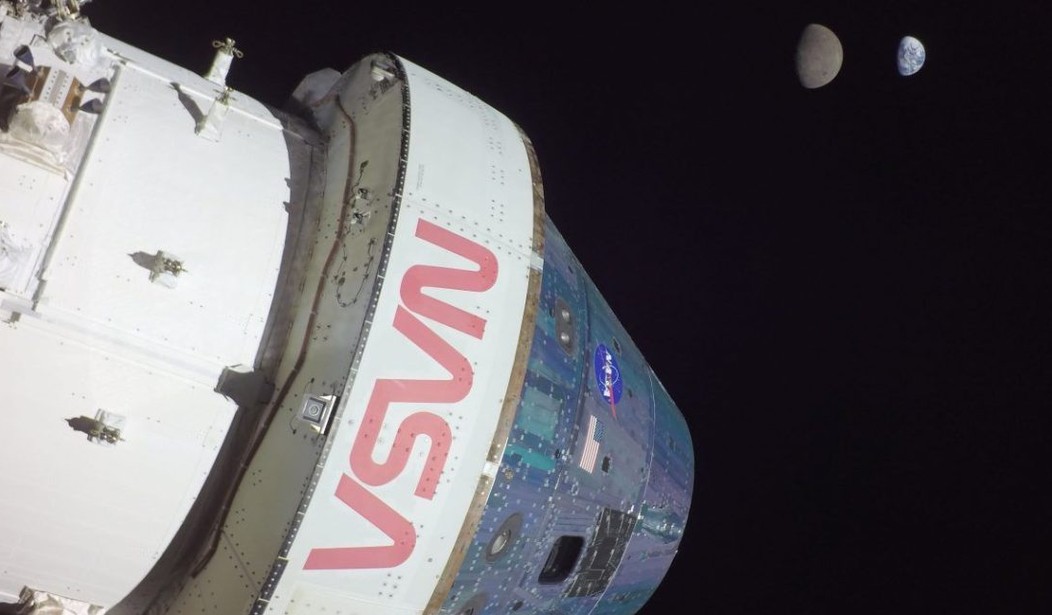
We need to talk about NASA's Artemis program to get the U.S. back to the Moon because things can't continue like this.
The initial reports of last week's Artemis 2 wet dress rehearsal (WDR) made it sound like the hydrogen leaks were acceptable and our first manned mission around the Moon would be good to go for launch during the first week of March. That was Thursday evening. Friday's midday press conference was all happy talk about how well the WDR went.
Before anyone at NASA had time to grab lunch on Saturday, agency chief Jared Isaacman revealed that "overnight data showed an interruption in helium flow in the SLS interim cryogenic propulsion stage," and "teams are troubleshooting and preparing for a likely rollback of Artemis 2 to the VAB [NASA's massive Vehicle Assembly Building]."
Easy fixes are performed outdoors, right there on the launch pad. Trickier fixes require a slow journey back to the VAB on NASA's tracked Crawler-Transporter 2 (CT-2). As it turns out, Artemis 2 requires one of those trickier fixes
So much for that March launch window. Now it's "fingers crossed!" for early April, depending, of course, on how long it takes to find and fix whatever went wrong during last week's WDR.
Here's the thing to remember about the SLS rocket that by law must launch at least the first three Artemis missions: This is as good as it gets. Leaks, delays, regular trips on CT-2 to and from VAB? That's the norm for SLS.
As discussed in a couple of previous columns, each SLS is a unique snowflake.
Earlier this month, space reporter Eric Berger asked NASA’s top civil servant, Amit Kshatriya, about the SLS's issues and low flight cadence. "Every time we [try to launch] these are very bespoke components, they’re in many cases made by incredible craftsmen," Kshatriya replied. "It’s the first time this particular machine has borne witness to cryogens, and how it breathes, and how it vents, and how it wants to leak is something we have to characterize."
In other words, figuring out how to correct the hydrogen leak on the Artemis 1 SLS rocket taught NASA very little about the leaks it might encounter on the Artemis 2 rocket.
Or what leaks NASA will find on Artemis 3 two years from now. Or maybe three.
The Artemis program was designed during the first Trump administration, using existing hardware with the hope of getting us back to the Moon by 2024. Now NASA claims 2028. 2030 might be more realistic. So whatever the original hope was, it hasn't materialized. And at $4 billion-plus per SLS, everybody (including high-ranking NASA people) understands that SLS is a dead end.
My modest proposal is this: As Dr. Evil might say, a ONE BILLION DOLLAR prize for the first private company to put at least three astronauts on the lunar surface (leaving a fourth one in orbit to crew a command vehicle is fine, if needed) near the southern ice resources. The landing mission must also include a "useful" amount of cargo for at least getting started on a permanent habitat.
The crew must also return safely to Earth, naturally.
A billion dollars is a lot of money. But it's also a little less than 25% of the cost of a single SLS rocket, not including everything else that goes into a manned NASA mission. Just on rockets alone, taxpayers would stand to save more than $7 billion on Artemis 2 and 3 — and at the SLS's unpredictable launch cadence, we might even get to the Moon sooner.
SpaceX and Blue Origin have different approaches for getting us to the Moon, each with its own strengths. Get them both chasing serious prize money — maybe $5 billion for a permanent habitat? a steal at twice the price! — and NASA can go back to the things it does best, like unmanned exploration and promoting aeronautical research.
SLS is a dead end, and with each new delay, there's one less excuse to continue down its path.
Recommended: The Air Force's Newest Pilot Takes Orders (for Now?) but Isn't Human
Enjoying PJ Media?
Get exclusive content and support independent journalism with 60% off a PJ Media VIP membership. Use promo code FIGHT and join today.







Join the conversation as a VIP Member