





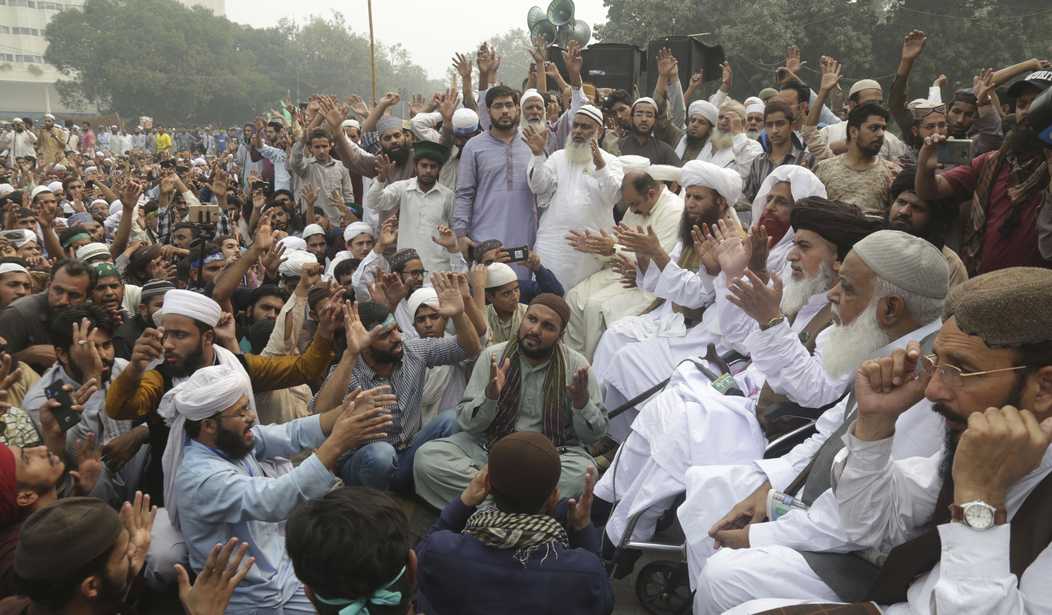
Pakistan's Supreme Court quashed the sentences of three individuals convicted of murdering a Christian man and his pregnant wife — Shahzad Masih (26) and Shama Bibi (24). The couple was burned to death after being thrown into a brick kiln. The incident occurred on Nov. 4, 2014, in Punjab's Kasur District.
Masih and Bibi, who worked as laborers at a local brick factory, were falsely accused of desecrating pages of the Quran.
The brick kiln owner reportedly prevented the couple from fleeing due to a financial dispute. A local Islamic prayer leader used a mosque loudspeaker to incite a crowd against them.
A mob of over 1,000 people then converged on the site. They severely tortured and beat the couple before throwing them into the intense heat of the industrial brick kiln furnace.
Twelve years later, Pakistan's Supreme Court has acquitted the three men who remained convicted for the murder of the couple.
Pakistan’s top court went further by dismissing the Punjab Provincial Government’s appeal against the acquittal of 102 people accused of complicity in the atrocities against the young couple. Now, no one remains convicted for the couple's murder.
Following the 2014 murder, an anti-terrorism court initially convicted several participants. It sentenced five men to death and handed two-year prison terms to eight others.
Over the years, higher courts gradually overturned most convictions due to evidentiary gaps. In 2018, a court acquitted 20 additional suspects.
On July 10, the Supreme Court of Pakistan officially overturned the final remaining death sentences for the three last-held convicts. The court cited weak prosecution and flawed evidence presentation by local police forces.
In interviews with Catholic charity Aid to the Church in Need (ACN), Bishops Samson Shukardin (President of the Catholic Bishops’ Conference of Pakistan) and Indrias Rehmat (the Bishop of Faisalabad) said that the release of the men cleared of killing Masih and Bibi is part of the same pattern: Christians and other minorities are routinely denied justice following targeted violence against them.
Reacting to the court’s ruling, Bishop Shukardin said, “Shahzad and his wife, Shama, who was pregnant, were thrown into the fire alive. In the end, what is the result of all these efforts towards justice?"
The Bishop of Hyderabad added, “People feel they have no voice – that no one is listening. They cry to be heard.”
Bishop Rehmat told ACN, “We are deeply disappointed that after 12 years, history has yet again repeated itself – those who have suffered are the ones who suffer yet more discrimination and humiliation.”
Both bishops allege that often, arrests are quickly made following violent incidents, but that gradually, most (if not all) suspects are released, with charges dropped or convictions overturned.
Bishop Rehmat also spoke out against another ruling on July 13 by the Anti-Terrorism Court in Faisalabad. In this case, a man was sentenced to 10 years in prison, and the court acquitted 12 others. All were accused of participating in the August 2023 riots in Jaranwala (Punjab) involving attacks on 26 church buildings and more than 80 Christian homes. The man was found guilty of using a crane to damage church buildings.
Predicting that he would be freed within a few years if not before, bishop Rehmat said, “Those who destroy our churches, desecrate our Holy Bibles and burn our homes are given freedom. On the other hand, those who suffer pain and tragedy are given no hope. They are abandoned.”
Bishop Rehmat was referring to the arson and mob violence against the Christian community in Jaranwala on Aug. 16, 2023. Thousands of Muslim individuals rioted, vandalizing and torching churches and Christian-owned homes. The violence was sparked by false blasphemy allegations against two Christian brothers, who were framed in a personal dispute.
Bishop Shukardin highlighted concerns made in a public statement released by the advocacy organization, the National (Catholic) Commission for Justice and Peace (NCJP). They denounced “a continuing pattern that grants impunity to perpetrators of heinous crimes against religious minorities.”
Speaking to ACN, Bishop Shukardin (NCJP chair) alleged repeated police failure to register cases properly. This means that courts do not have the evidence needed to bring perpetrators to justice.“The police are the main people who should produce the evidence," he said. "The court will pay attention to what the police say. The reality of what happens is often serious, and such cases strongly demand justice, but the evidence is weak.”
The bishop said Christians and others are frightened to appeal for justice, fearing reprisals, adding, “Those who say something – their lives are also in danger.”
Bishop Shukardin urged governments in the West to call on Pakistan to uphold religious freedom for all: “If leading countries in the world were to demand that justice be done, it would make a big difference. So often, delegations from such countries come and meet with people in Islamabad [the Pakistan capital], but they don’t see the reality on the ground.”
Related: We Warned This Might Happen: Al-Qaeda’s Long-Forecasted Assault on Mali
The reality on the ground is as grave as ever. Blasphemy accusations in Pakistan frequently incite deadly vigilante violence and mob lynchings, despite the crime officially carrying a potential death penalty. Mobs have repeatedly attacked police stations to seize and murder suspects in protective custody, often triggered by public announcements over mosque loudspeakers.
In June 2024, a local tourist in the Swat Valley was dragged from a police station, beaten to death, and his body set on fire by an angry mob following accusations that he burned pages of the Quran.
In February 2023, a Muslim man was lynched by an agitated mob that stormed a police station in Nankana Sahib, Punjab province, over similar desecration allegations.
In December 2021, a mob in Pakistan tortured, killed, and then set on fire a man who was accused of blasphemy over some posters he had allegedly taken down. The victim was Priyantha Diyawadana, a Sri Lankan national who worked as general manager at a factory of the industrial engineering company Rajco Industries in Sialkot, Punjab.
Meanwhile, the Human Rights Commission of Pakistan (HRCP) and the International Federation for Human Rights (FIDH) detailed rampant, entrenched corruption in the justice system. The result disproportionately harms impoverished minorities, frequently stalling trials and leaving victims without compensation.
Pakistan’s horrific ongoing human rights record – particularly the persecution of religious minorities— demonstrates that its civil liberties protections are far behind modern standards. A country in which a blasphemy accusation can get one lynched and burnt to death, and where the perpetrators are acquitted and freed by courts, is not on the list of civilized nations and should be treated accordingly by the civilized world.
Editor's Note: Do you enjoy PJ Media's conservative reporting that takes on the radical Left and woke media? Support our work so that we can continue to bring you the truth.
Join PJ Media VIP and use promo code FIGHT to receive 60% off your membership.



Join the Conversation
VIP members get the ability to comment on articles.