





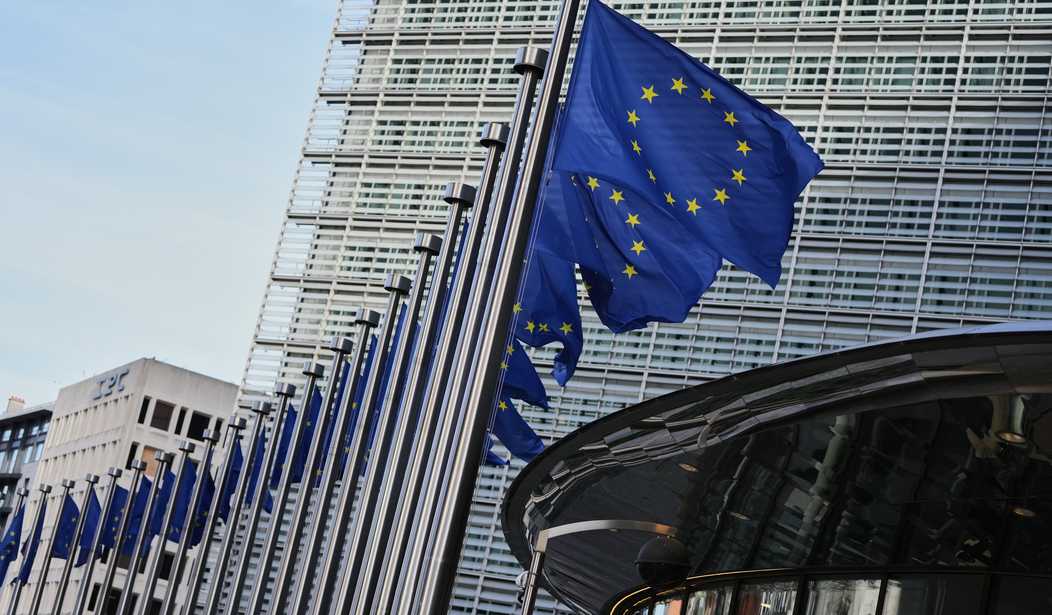
For over a decade, Pakistan has benefited from privileged access (through reduced or zero duties) to the roughly 450 million consumers of the EU market. In this framework, Pakistan’s products enter the EU market with 0% duties across approximately 2/3 of all EU tariff lines.
From 2014 to 2022, Pakistan’s exports to the EU almost doubled: they went from 8.3 billion EUR to almost 15 billion EUR.
In exchange, Pakistan pledged to sign and implement 27 international treaties regarding labor rights, good governance, and human rights. This scheme granted Pakistan trade privileges in exchange for human rights progress. It is known as the European Union's Generalized Scheme of Preferences Plus (GSP+).
Since the agreement’s inception, Pakistan has failed to demonstrate tangible progress regarding the implementation of international human rights standards. The country’s Christians suffer from the worst human rights abuses and are most negatively impacted by this failure.
Christians compose less than 2% of Pakistan's population, enduring severe systemic and societal persecution. They frequently face mob violence, deadly blasphemy laws, economic exclusion or exploitation, abductions, rapes, and forced conversions. The EU, however, keeps rewarding the country with a massive economic lifeline.
Pakistan has been a significant beneficiary of the European Union's GSP+ since 2014. They are granted duty-free or preferential tariff access to the EU market for over 66% of its tariff lines.
However, Pakistan's government continues to abuse the EU's generosity as well as the basic human rights of its minority citizens. On May 12, a married Muslim abducted a 14-year-old girl, her father and his attorney said. The man forcibly converted her to Islam and married her, exploiting her medical and mental health vulnerabilities to sexually abuse her.
Her father, Abbas Masih, is a daily wage laborer and member of a local Brethren church in Lahore’s Gulbahar Colony. Masih told Christian Daily International-Morning Star News that his daughter, Nisha Bibi, disappeared while working as a domestic helper at a Muslim household.
Legal, religious and cultural norms reinforce extreme gender inequality in Pakistan, with Christian girls vulnerable to abduction, forced conversion and marriage. International Christian Concern reported on May 13:
Each year in Pakistan, roughly 1,000 young girls — many of whom are Christians — are kidnapped from their homes.
"These girls are often found months later, after they’ve been forced to convert to Islam and marry older Muslim men. When a girl’s parents attempt to claim their daughter in court, they are often unable to provide a birth certificate to prove that she is underage. As a result, the judge often grants the man custody of the girl, denying the parents any chance of seeing their daughter again.
While this reality is nothing new in Pakistan, stories of girls in these situations are increasingly coming to light.
The organization Open Doors further notes:
Christian women and girls in Pakistan face severe gender-specific persecution. Christian girls are abducted, raped, and forced to convert and “marry” their abductor, with victims as young as seven, including girls with disabilities. Families often never see them again, while the police rarely act and the courts frequently fail victims. Survivors endure shame, PTSD, and social stigma in Pakistan’s honor-based culture. Christian women are also targeted with acid attacks, workplace harassment, blasphemy allegations, and honor killings. Many remain trapped in debt-bonded labor, such as brick-kilns, where they face additional sexual violence and exploitation.
Despite all these violations and more, Pakistan remains a major beneficiary of the trading opportunities offered by the GSP. The country continues to fail in all those same fields in which it has pledged to make progress (human and labor rights, as well as good governance), particularly when minorities are involved.
Systemic failures in protecting Christian labor rights in Pakistan are most evident within the sanitation sector. Systemic discrimination, lack of safety gear, and exploitative working conditions disproportionately affect the Christian minority.
Christians are frequently restricted to hazardous or degrading manual labor. They make up an estimated 80% of sanitation and sewer workers, largely excluded from better-paying professional fields.
This month, for instance, it was reported that at least six Christian sanitation workers died in sewer-related accidents in April and May 2026 in Punjab. Their deaths were reportedly due to the Punjab Water and Sanitation Authority’s (PWSA) negligence. Rights groups blamed PWSA for failing to ensure safe workplace conditions and safety for sanitation workers, mostly Christians. Rights groups said that workers were deployed into toxic sewer systems without any proper safety and protection gear.
These deaths have also raised concerns over a pattern of fatal workplace conditions and systemic discrimination against Christian sanitation workers.
Meanwhile, many Christian families are trapped in cycles of debt and indentured servitude, particularly in rural areas and the brick kilns industry.
Pakistan’s volatile politics, weak civilian governance, as well as military control and dominance over the country's administration, have left minorities additionally vulnerable. 96% of the population is Muslim, the majority of whom follow the Sunni tradition. According to the constitution, the right to free speech is subject to the restrictions necessary to ensure “the glory of Islam.”
Blasphemy is punishable by death. Blasphemy laws are increasingly used to disproportionately target Christians. The allegations are used as a pretext for settling scores, for the entrapment of Christians, or for economic reasons, including forced evictions.
Some people have been lynched even before their trial cases began: accusations frequently incite violent mobs. These crowds often ransack and burn Christian homes, schools, and places of worship with little to no consequence. This was illustrated by the 2023 Jaranwala attacks in which over 25 churches were attacked and homes destroyed. Three years on, Pakistan's government has been unwilling to prosecute those involved.
District courts across Pakistan, particularly in regions like Punjab, continue to issue death sentences in digital blasphemy cases. For instance, a Sahiwal district court issued capital punishments in several recent (2025-2026) instances for online sacrilege.
Other high-profile convictions include a 22-year-old man sentenced to death in 2024 and a 17-year-old sentenced to life in prison by a Punjab province court over alleged blasphemous content on WhatsApp.
The United States Commission on International Religious Freedom (USCIRF) notes that:
The Pakistani government’s systematic enforcement of blasphemy laws severely restricts freedom of religion or belief for all citizens, particularly targeting Ahmadiyya Muslims. Authorities’ failure to address mob violence associated with blasphemy accusations, as well as the forced conversions to Islam of individuals from religious minorities—including Christians, Hindus, and Sikhs—continues to reinforce a climate of fear and religious discrimination.
Meanwhile, a hopeful sign is that the EU's updated GSP+ regulation (approved on April 28, 2026) expands the number of required international conventions from 27 to 32. This will be effective starting on January 1, 2027.
Pakistan is already under scrutiny for human rights violations and slow legal reforms. It will likely face increased challenges in meeting these expanded standards. With a two-year transition period, Pakistan will remain under renewed scrutiny under the new action plan to retain benefits, risking trade losses if it fails to comply.
Since at least 2014, the EU has enabled Pakistan's severe abuses of human rights standards. Observers continue to warn the EU of consequences and call for significant change. The organization "Human Rights Without Frontiers (HRWF)," for example, refers to the GSP+ scheme as "the bad deal between the EU and Pakistan," and adds: "The GSP+ should be suspended as long as there is no substantial human rights progress." Only then will Pakistan's regime be obliged to treat its citizens with respect and dignity.
Editor's Note: Do you enjoy PJ Media's conservative reporting that takes on the radical left and woke media? Support our work so that we can continue to bring you the truth.
Join PJ Media VIP and use promo code FIGHT to receive 60% off your membership.


Join the Conversation
VIP members get the ability to comment on articles.