





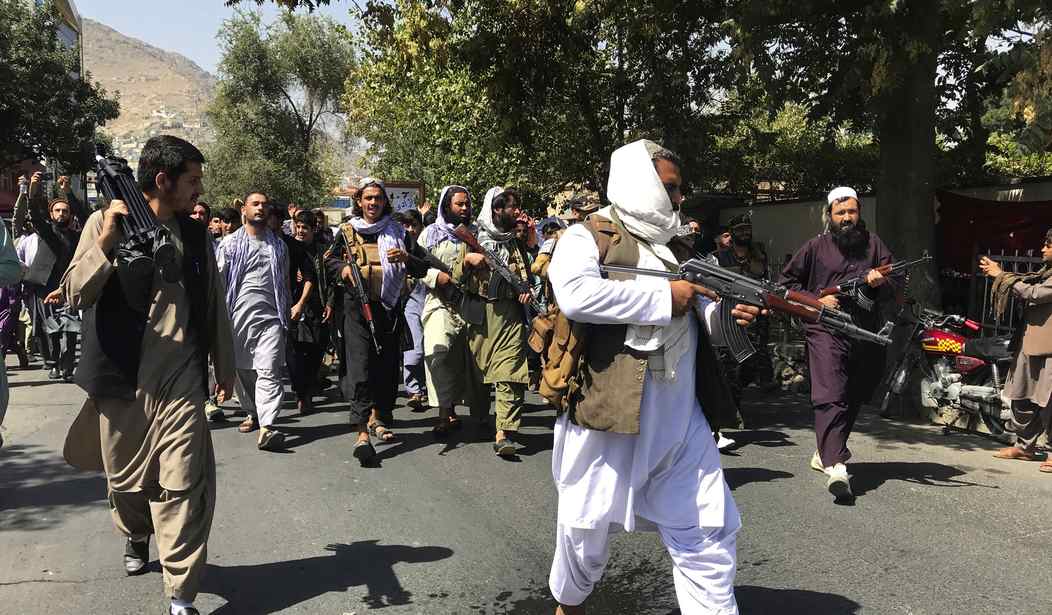
Pakistan is fighting a domestic war, and the outcomes appear deadly. The province of Balochistan (in the southwestern part of Pakistan) has experienced yet another insurgency, with the appearance of a series of gun and grenade attacks that have left more than 50 people dead. In a rare admission, Pakistan's Defense Minister Khawaja Asif said the Pakistan army is "handicapped" in its fight against Baloch rebels.
On February 1, a series of gun and bomb attacks across Balochistan province killed 31 civilians and 17 security service personnel, according to the region's Chief Minister Sarfraz Bugti. The Balochistan Liberation Army (BLA) rebel group stated that it was behind the attacks, and they claimed that dozens of soldiers were killed.
In response, Pakistan's Security Forces killed at least 145 rebels during a 40-hour gun battle, Minister Bugti said.
This marks an escalation of violence in the impoverished but resource-rich province, where Pakistan's government has been battling an ethnic insurgency for decades.
Based on 2025 reports, armed separatist groups in Balochistan — most notably the Baloch Liberation Army (BLA) and its allies under the Baloch Raaji Aajoi Sangar (BRAS) alliance — have escalated their tactics from hit-and-run attacks to temporarily seizing control of towns, infrastructure, and sections of highways. This suggests that the Pakistani army is unable to establish a presence in Balochistan.
The Baloch people are an ethno-linguistic group spread between Afghanistan, Iran, and Pakistan. Throughout history, they have experienced marginalization within their respective countries. Balochistan comprises approximately 44% of Pakistan’s territory. It stands as the country’s richest, yet most underdeveloped, region.
During the partition of India, Balochistan (specifically the princely State of Kalat) declared independence in 1947. The Baloch briefly held independence from Aug. 15, 1947, to March 27, 1948, rather than joining the new dominion of Pakistan. The Khan of Kalat insisted on sovereignty based on a 1876 treaty, but ultimately acceded to Pakistan under military pressure. Later, the Pakistani army invaded the area, leading to the forced accession of Kalat on March 27, 1948, which the Baloch consider an illegal annexation. The forced merger ignited the first of several armed insurgencies, as many felt betrayed by the forced (rather than voluntary) incorporation into Pakistan.
What followed was decades of severe human rights violations, the systemic exploitation of local natural resources, political repression, a lack of autonomy, and conflict with Pakistan's armed forces.
This situation has fueled ethnic discontent and severe anger against the Pakistani government. Local Baloch activists state that Pakistan's government keeps them poor while looting regional wealth. In response, instead of recognizing the Baloch right to self-rule, Pakistan's security establishment violently suppresses the Baloch, engaging in acts such as enforced disappearances.
Tens of thousands of ethnic Baloch people, including students, activists, and professionals, have been subjected to enforced disappearances by Pakistani security forces throughout the last two decades. The victims are frequently denied access to legal representation, held incommunicado, and subjected to torture, inhumane treatment, or even extrajudicial execution. Although some return after years, they are traumatized and broken. Many never return. Others are found in unmarked graves, their bodies so disfigured that they cannot be identified.
The Pakistani government has historically denied these allegations, often claiming that some of the missing have joined militant separatist groups or fled the country.
In response, families frequently protest in major cities like Islamabad, enduring harsh conditions to demand the safe return of their loved ones.
During a demonstration held in London on January 3, "speakers from the Baloch National Movement (BNM) questioned Pakistan’s claim over Balochistan and criticized the role of Pakistan’s parliament, asserting that it does not represent the Baloch people," the Balochistan Post reported.
They alleged that parliamentary power was dominated by Punjab [Pakistan's majority ethnic group] and described Balochistan as an occupied territory under what they termed a 'colonial-style control by the Punjabi military.' The BNM further claimed that the government in Balochistan was a puppet administration with no public credibility or authority, arguing that there was no hope of ending alleged abuses against the Baloch people within Pakistan’s existing political system.
Demonstrators said that enforced disappearances and the practice of collective punishment continue unabated in Balochistan. During the protest, speakers demanded the immediate recovery of Mahjabeen Baloch, Nasreena Baloch, Farzana Baloch, Hani Baloch and Hair Nisa Baloch, whom the BNM claims were taken into custody by Pakistani forces from different parts of Balochistan and subsequently forcibly disappeared. The speakers described these actions as among the harshest tactics employed by the state to suppress the Baloch freedom movement.
Speakers urged international human rights organisations, including Amnesty International, to increase pressure on Pakistan and to investigate what they described as serious human rights violations in Balochistan. The BNM termed recent developments in Balochistan a 'new moral low' in the ongoing conflict in the region.
In 2023, the Association MIMAN, a nongovernmental organization in special consultative status to the UN, submitted the following written statement to the UN Secretary-General:
Many of the forcibly disappeared Balochs particularly students have been killed and dumped by personnel of Pakistani secretive agencies accompanied by personnel of Pakistani Army or Frontier Corps, whereas thousands are still believed to be languishing in Pakistani torture cells.
The alarming lack of accountability for enforced disappearances in Balochistan underscores a deeply troubling culture of impunity. Families' relentless efforts to seek justice are met with indifference, misinformation, or outright denial by authorities. This erodes trust in the justice system and perpetuates a cycle of fear, silence, and helplessness among the Baloch population.
The persistent enforced disappearances in Balochistan pose a significant threat to regional stability and peace. The anguish caused by these disappearances fosters a sense of injustice and resentment, which can fuel extremism and violence. The region's already fragile socio-political fabric is further strained, potentially destabilizing neighboring areas and endangering the broader peace in the region.
Pakistan's army appears to be only interested in securing its economic interests and continuing its crackdown on activists who request an end to human rights abuses and greater political autonomy. However, Army Chief Field Marshal Asim Munir refuses to claim responsibility for Pakistan's failed Baloch policy.
On the contrary, in November 2025, Pakistan's parliament voted to give army chief Munir new powers and lifetime immunity from arrest and prosecution, a move that critics say paves the way towards autocracy. His field marshal title and uniform are for life, and he will be given "responsibilities and duties" even after retirement, determined by the president with the advice of the prime minister. The expectation is that this will give him a prominent role in public life for as long as he is alive.
The 27th constitutional amendment, which was signed into law this past November, also made significant changes to the way the country's top courts operate. Under the amendment a new Federal Constitutional Court (FCC) was created which would determine constitutional questions. The FCC's first chief justice and the judges that serve in it are to be appointed by the president.
The 27th amendment to the Constitution of Pakistan is a flagrant attack on the independence of the judiciary and the rule of law," said the International Commission of Jurists (ICJ).
The changes made to the judicial system in the 27th amendment are alarming,” said Santiago Canton, ICJ’s Secretary-General. “They will significantly impair the judiciary’s ability to hold the executive accountable and protect the fundamental human rights of the people of Pakistan.
However, Baloch armed attacks against Pakistan's security forces reveal the failure of Asim Munir's hard state policy. The space for dissent has disappeared completely in Balochistan. The attack on February 1 also reveals Pakistan's intelligence failure to preempt an attack of this scale. This signals the drying up of intelligence and, as a corollary, points to greater local support for armed Baloch outfits.
Meanwhile, reports from 2025 and 2026 continue to show ongoing disappearances and the discovery of bodies of previously abducted individuals, such as the case of Hayat Sabzal Baloch, found dead in February 2025. The Balochistan Post reports that several people – including Baloch students and women – have been forcibly disappeared since the beginning of 2026. As the Association MIMAN noted:
Enforced disappearances in Balochistan have catapulted Baloch people's lives in the province. The state and its security agencies use of a 'kill and dump' policy for Baloch people and disappearances of students, lawyers, doctors, political activists is the issue world needs to be aware of, and there is urgent need to hold Pakistan responsible for the genocide committed against Balochs.
Enjoying PJ Media?
Get exclusive content and support independent journalism with 60% off a PJ Media VIP membership. Use promo code FIGHT and join today.


Join the Conversation
VIP members get the ability to comment on articles.