Something you need to know before engaging in an argument with your woke cousin-in-law, or trying to convince your now woke son or daughter to come back to reality. It won’t work. You won’t win the argument, and you certainly won’t – through words alone – convince a family member to change their political and ideological stripes.
If you’ve read some of my past columns, you’ll no doubt find mention of two psychological dynamics that drive public opinion when it comes to both politics and ideology. The first is “cognitive dissonance,” which was best summed up by Mark Twain when he said, “It’s easier to fool people than to convince them they’ve been fooled.” For our purposes, there's no need to get into the psychology of it all.
The other psychological dynamic is “confirmation bias,” which is right in front of you in the form of your smartphone and all of the social media apps residing on it. Those apps and their algorithms are trained to know what you like and know what you want to see and hear and then give you just that and only that. If you let the algorithms control you, you will see nothing online that your leftist neighbor is seeing when he logs onto Facebook, or X, or Reddit. You’re both in separate, walled-off information silos.
As a result, your phone constantly confirms your pre-existing biases unless you intentionally seek to break free from it all.
As much as I’d like to say that only leftists are susceptible to cognitive dissonance and confirmation bias, the truth is, we all are equally vulnerable. The difference, however, is that if you’re a conservative, your biases and worldview are more in line with the American tradition and the American way of thinking. “Conservatism” means to conserve something, and that’s what you’re conserving.
Or, as the Trump campaign drove home in 2024, you’re working to conserve common sense.
For comparison, since until recently, most people were brought up with some level of appreciation for and exposure to common sense, to have become leftist, your woke friends and family have had to at some point be radicalized in some way. And you were not.
Does that make you more right than they are on most issues? I think so, but again, that’s just my opinion, because you and I are on the same team.
All of that to say that you will not change anyone’s mind with words. You will not convince a leftist they’re wrong and you’re right… ever. You may win the debate, but you’ll never get the other person to admit you won or that they lost.
If you want to know how the leftists in your life have a chance of coming over to our side, it may be best to look at a couple of examples. Both of them have some common themes that are so obvious, you’ll never be able to unsee them again.
Jennifer Sey was a serious competitive gymnast in her younger years. She competed on the U.S. Women’s Team at the 1986 Goodwill Games. Since then, she made a very successful career in business, most notably as a senior leader at Levi Strauss & Co.
But all of that came to an end during the COVID-19 pandemic when she went public with her criticism of the pandemic school closings. Pretty soon, she found herself on the outs with so many of her leftist friends and colleagues. Soon enough, she found that she had no recourse other than to resign from her position at Levi’s over her disputes with senior management at the firm and her unwillingness to back down on matters that were more important to her.
Since then, she’s been an outspoken critic of men in women’s sports. Politically, I still couldn’t tell you if she’s a registered Democrat, Republican, or independent, but I do know this. If you’re a conservative, you’re likely to find that you and Sey agree on most things, and on those matters where you may disagree, you will find that your disagreements will be very civil and respectful ones. This is in contrast to how the left behaves.
She’s now built a brand around her values, which is called XX-XY Athletics.
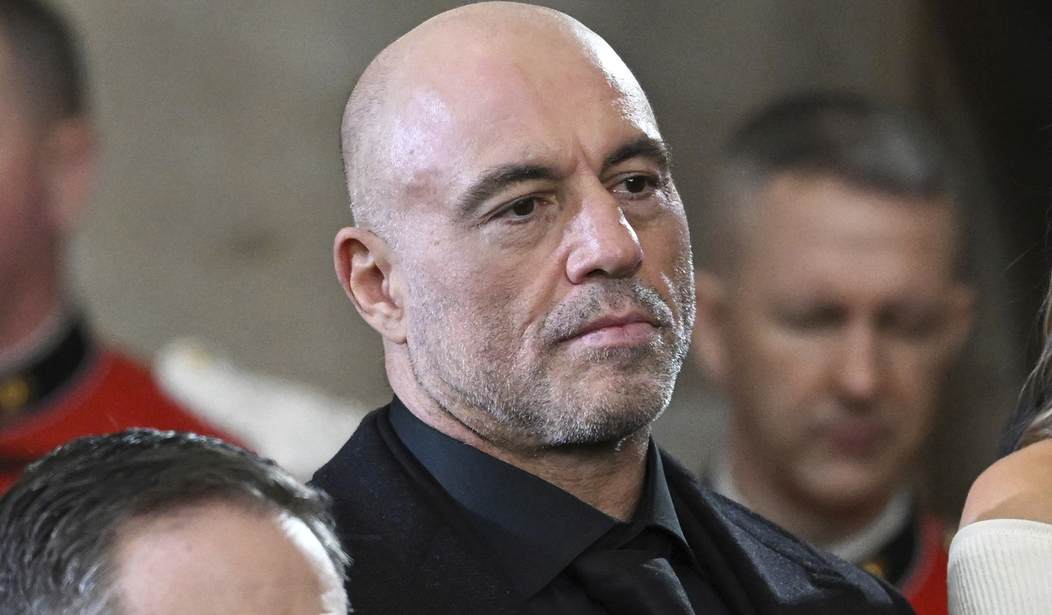
This other example is very short, but equally important. Joe Rogan was, for the longest time, a product of the entertainment business. He was liberal, he was Hollywood, he was left-of-center on most things. While on some issues he may have been libertarian, he definitely was not conservative.
And so, you wouldn’t have expected Rogan to take a strong stand on any conservative issue; that was until the COVID-19 pandemic hit and he decided to deal with his own illness in his own way. He defied the leftist establishment by taking Ivermectin, among other things, to treat the infection. He did what he normally would do when faced with a personal challenge. He researched it and did what he thought was best for himself.
But this time, that was not acceptable to his leftist, Hollywood “betters.” No. He was to follow the Dr. Fauci protocol to the letter. He was to do everything the CDC and the NIH way, all the more so because he was famous. People were paying attention to him. If he went off the reservation, the leftist powers that be worried that millions more might do the same.
So, they tried to cancel him, and he fought back. This was a trying time for Rogan, just as it was for Sey. The same leftist mobs tried to cancel them both, and they defeated those mobs. Sey and Rogan survived and eventually thrived. In the process, both ended up to the right of center.
Chances are you’re more conservative than both of them, because they don’t even profess to be conservatives. But both are great examples of how change happens at a personal level.
It happens through experience. That’s it. If your leftist cousin-in-law has any hope of seeing things the way you do, the only way it can happen is if she goes through some sort of major experience that causes that change. Or, if someone close to her goes through a similarly traumatic experience, and she is impacted by that, she may reconsider her prior worldview.
But if these things don’t happen, there’s little chance she’ll change her mind.
In the headline, I mentioned my experience as compared to yours. My journey to conservatism was a short one. Coming from a blue-collar family, in a rank-and-file blue-collar town, I registered Democrat when I was 18, but not because of ideology. Rather, it was a more pragmatic decision. In this town, if you want to be part of the power structure or even get a job, you have to be a Democrat.
But then Ronald Reagan came along, and I was working for my college NPR-affiliate radio station. Every day, I’d report on the 1980 race between Reagan and George H.W. Bush, and then between Reagan and incumbent President Jimmy Carter.
I actually covered a dinner where Reagan and Bush gave stump speeches in the same room prior to Bush conceding to Reagan. After the dinner, I stuck a mic in Bush’s face and asked him if his hints at Republican unity that night meant he was about to concede to Reagan. He gave me the 30-second sound bite I needed to get on the next day’s Morning Edition program at NPR, which represented the first actual money I made ($40) as a communicator.
That was the year I realized I should have been a Republican and not a Democrat. Just hearing the common sense that I thought Reagan espoused was enough for me to figure out which team I should be on. At the same time, I had my own experiences. I saw leftism and unionism in action first-hand, and I didn't like any of it.
Maybe your experience was totally different than mine, but you and I ended up in the same place, most likely for similar reasons.
Of course, it would be years before I more fully embraced the “conservative” identity. I did that with the help of Rush Limbaugh and a daily diet of his show, and my own curiosity and voracious reading after that.
In 2025, I became a pundit here at PJ Media. Before that, in 2020, I started writing for conservative media, sparked by the same trigger that pushed Sey and Rogan into public battles with the left – COVID-19. I saw things through my work that bothered me at a new level of disgust. I had personal interactions with long-time friends and colleagues that told me I couldn't stay quiet. While my convictions weren’t new, my decision to get more vocal was new.
When you spend a career in public relations in the way I’ve been, you’re involved in “the fight” every day. But you’re always behind the curtain, not in front of it. My clients over the years were not particularly conservative or liberal, so for me to be more open about my personal views was an economic risk with very little upside. It could have killed the business I built. I did it anyway.
That’s not to say that I haven't been in the trenches on the issues. My bread and butter in my work has been crisis communications and issues management. Before George W. Bush, before there was The Tea Party, and before President Donald Trump rode that golden escalator, I had already been in the heat of battle on campaigns over labor relations, environmental issues, major First Amendment litigation before SCOTUS, fracking, abortion, and other social issues.
In other words, I may not always have had a public conservative profile, but I’ve got some decades-old scars that testify to the fact that I’ve been in this fight for a while.
In that sense, your story may not be all that different from mine, and I’d love to hear it.