


It won’t happen overnight, and it won’t happen in Washington. Sen. Chuck Schumer (D-N.Y.) won’t have anything to do with it. And neither will the DNC, at least directly. But it will happen.
America’s most rural states have the smallest and easiest-to-change voter bases. In the end, it’s just a numbers game. All these states need is more leftists to move in, and the states will flip from red to blue. Up until now, though, the problem has been giving leftists a reason to want to live in a state like Wyoming, the Dakotas, or Idaho.
Enter data centers. The Wall Street Journal has reported on one such example where Wyoming is the target of massive data center development. One of the big and most immediate issues is the need to accommodate all the people who will need to relocate to the state to work there.
In America’s least populous state, companies must import armies of workers—and find somewhere to put them. So local officials are weighing a developer’s pitch to erect a ‘temporary workforce housing complex’ for as many as 5,600 laborers and tradespeople. The complex would be larger than 84 of Wyoming’s incorporated cities and towns, according to state data, the Journal reported.
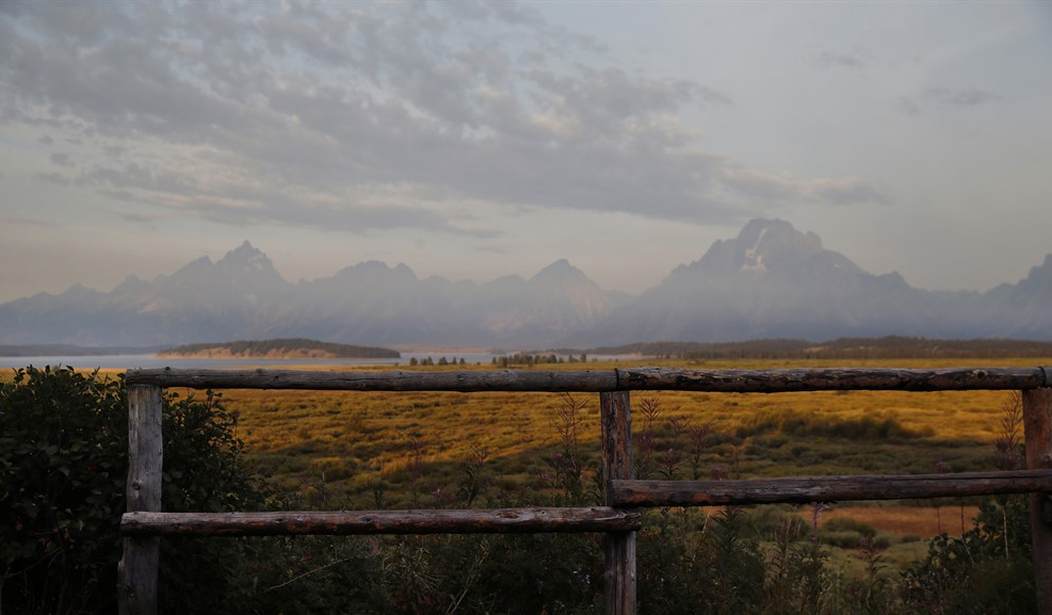
People who live in Wyoming do so primarily because of its natural solitude and natural beauty. But in Cheyenne, that’s changing. And it’s not just this one town.
That pastoral scene is gone: Heavy trucks, earth movers and hundreds of construction workers have run nearly round-the-clock for about two years building a Meta Platforms data center. To the east, Microsoft recently announced plans to triple the acreage of its already sizable data complex. To the south, work is just getting started on Project Jade, which could one day be among the biggest data centers in the U.S., added the Journal.
Rural states and counties have long been attractive to commercial developers, particularly industrial developers, for a number of reasons. It’s easier to get things built there. Fewer zoning restrictions, fewer existing residents to impact, more cheap land, more access to water, and less visibility to the media and the population centers. Out of sight, out of mind.
Meta, which is behind one of the data centers under development in Wyoming, is headquartered in Menlo Park, Calif. If all you want to do is erect a sign in front of your business in Menlo Park, the city will require you to comply with Chapter 16.92 of its Zoning Ordinance. That ordinance will require you to submit the planned sign size, placement, materials, colors, and design before it will approve it. Given all of these criteria, there is a chance your sign will not be approved.
In Cheyenne, let’s just say zoning regulations are far less restrictive for signs. And that’s just for signs. Now scale that up to everything a company might want to do when building a data center. What’s the permitting process in Wyoming like when compared to California? The short answer is that it’s far less of an issue for the developer. The point is, rural states and counties have less red tape, no matter what you plan to do.
Add to the fact that rural areas are known to be cash-strapped. A couple of data centers can bring in a lot of tax revenue and campaign donations.
So what you will see is politicians running toward the digital carpetbaggers who are about to turn rural states and counties on their heads. Yes, they will generate more tax revenue, and those revenues will be needed to cover the costs of all the new highways, bridges, and roadways that will need to be built. Infrastructure is the start, which includes investment in everything from the electrical grid to water and sewage supplies for residents and businesses. Then there will be the need for more commercial and residential development. Of course, schools (and bigger teachers’ unions) are right behind. It won’t take more than a few data centers to fundamentally transform a rural state like Wyoming.
Oh, and did I mention crime and corruption? I almost forgot. Yes, with all those new residents who didn’t call your rural state home until five minutes ago, you have to know they’re bringing new levels of larceny and violence with them. Thus, the need for bigger and more sophisticated police forces.
As for the profile of the workforce, the unions are all over data centers, and with unions, you get Democrats. A typical data center workforce, both skilled and unskilled, is most likely to lean left. Whether it’s unionized rank-and-file workers or the “white-collar” techies that parachute in from places like Silicon Valley, New York, Boston, and Oregon. Those will be your new school board members, city mayors, state reps, and ultimately your elected representatives in Washington.
If you live in a red state with large swaths of rural land that’s caught the attention of data center planners, this is what they see, and this is your future — unless something is done now to prevent it. Sure, you may fear the impact data centers could have on your power supply, energy costs, and your water. These are all very legitimate concerns. But there’s much more you may not be thinking about. Perhaps one of the most significant impacts data centers can have on the country is turning once red states into blue states.
Find out what you’re missing behind the members-only wall. It’s time for you to take advantage of the full catalogue of common-sense thinking that comes with a PJ Media VIP membership. You’ll get access to content you didn’t even know you wanted, and you’ll be hooked. The good news is, PJ Media VIP memberships are on sale! Get 60% off of an annual VIP, VIP Gold, or VIP Platinum membership! Use promo code FIGHT to get 60% off a VIP membership!





Join the conversation as a VIP Member