
When I was in law school, one of my (very attractive) classmates appeared on one of those schlocky daytime TV talk shows. And I mention her (very) attractive status not just because I’m a (very) disgusting chauvinist pig, but because it’s relevant to why she was on TV: She was a (very) ugly kid who had a glamorous glow-up.
So she went on national TV to shame an ex-classmate who used to tease her — but now yearned to date her. In her moment of triumph, she turned him down, told him off, and walked away with her head held high, basking in the studio audience’s cheers.
Now THAT’S good TV!
Only none of it was true. She was actually a good-looking kid, too. (According to her. I didn’t know her when she was a kid.) Apparently, she submitted her info for an episode about fussy daters, but the show’s producers went in a different direction. So they doctored her childhood photos to make her look like a mess: blacked-out teeth, eyes crossed, goofy expression — you name it.
That ex-classmate she told off? It was really her current boyfriend. But hey, they got a free trip to Chicago out of it.
Because everything you see on TV is a lie. There is no “reality” in reality TV and “documentary” movies don’t document the truth.
It’s varying degrees of fiction. All of it.
Folks, if you thought the TV news was horribly biased, trust me: It doesn’t hold a candle to the genres that openly allow artistic interpretations!
Traditional news telecasts have rules and ethics, like objectivity, boundaries, and not directly paying for interviews. (Yes, I know these rules are oft-ignored, but at least they exist.) Biased people in biased groups will almost always produce biased results, but TV news has a different editorial standard than documentary films and reality TV. It’s night and day.
The latter have a much freer hand to play fast and loose with the truth — and so, they do.
Which, I suspect, is part and parcel of that industry: It’s composed of people who found the traditional news format too restricting. Too limiting. Not enough creativity.
And so, they take full advantage of their new medium’s creative freedom.
Photography was around during the American Civil War. If you’re inclined, there are plenty of gruesome images to peruse (NSFW). But the photos were usually staged when the battle ended: Photographers would rearrange dead bodies to create a more dramatic shot. Not, presumably, because the photographers were all liars and charlatans, but because their #1 goal wasn’t documenting the world as it actually was.
Instead, they sought to expose the horror, scope, and emotions of a brutal war. Which necessitated an artistic interpretation.
It’s an attitude that persists today in documentary films. If anything, this attitude has likely increased, because we’re in a golden age of documentary filmmaking. There have never been more opportunities for opinionated documentarians: Between 2018 and 2021, demand for documentaries increased by 142%, making it the fastest-growing genre in all of streaming.
From Netflix to the silver screen, more documentary films are seen by more people than at any other time in history.
Speaking of the silver screen, two new documentary films are wagging tongues: Musk, the anti-Elon Musk flick by filmmaker Alex Gibney, and You Can See Everything, the Elizabeth Holmes (Theranos scandal) documentary by Nathan Fielder. In both films, the directors don’t just document the truth — they “contribute” to the story by either interjecting themselves, using AI stand-ins, or hiring actors to mimic the source material. The line between reality and fiction has never been so blurred.
Of course, some documentary filmmakers will fabricate entire scenes.
Back in 1994, I was the College Republican chairman at James Madison University. Ollie North was running for the Senate, and JMU’s CR club was the biggest in Virginia. Long story short: Documentary filmmaker Brett Morgen followed me around for about half a year. (Which was a nice little ego boost for a dopey college kid, to be honest.) It became the movie Ollie’s Army.
Morgen went on to be nominated for an Academy Award, but is probably best known for his documentaries on ESPN and his HBO movie about Kurt Cobain.
But some of our Ollie's Army scenes were completely staged: Morgen missed filming our takeover of a rival club, so he bought us beer and had us pretend like we were still planning the takeover. (One of my on-camera coconspirators was ex-Virginia attorney general Jason Miyares, who’ll hopefully be the next governor.)
As we filmed retake after retake, my underage roommate got progressively more inebriated.
Morgen also staged my date with a JMU student named Julie. See, she was with me at Ollie North’s (ill-fated) victory party, so Morgen felt the audience needed a better intro to our relationship. So, several months AFTER the election, he filmed me getting ready for our (fake) first date — and then followed us to the restaurant.
Only by then, we’d already broken up. And I REALLY didn’t want to be around her anymore.
It’s kinda funny: I rewatched the doc with my kids a few years ago. I did a lousy job at hiding my unhappiness. (I was an immature doof.)
So why’d I do it?
Because Brett Morgen asked me to.
I liked him. I thought he was my friend. Being important enough to be filmed tickled my ego. I figured, it’s his movie — if that’s what he needs to make it better, what do I care?
Plus, in the back of my head, I knew he could make or break me with his footage. If he wanted to portray me in a negative light, it was 100% within his wheelhouse. He had hundreds of hours of video of me hamming it up and acting like a goofball: This movie could destroy my reputation!
So maybe, if I make him happy, he’ll make me look good.
Generally speaking, I came across okay. But my roommate came across like a drunken maniac. I can’t link to it ‘cause it was in the JMU school paper, but in an article about the movie, Morgen said something to the effect that it wasn’t his fault that my roommate was always binge-drinking on camera.
Which is partially true: Drinking is a decision.
But it’s also true that Morgen was the one who bought him the beer — and he did so when he was underage!
One of my PR clients did a few “celebreality” TV shows, including the WWE diva competition and VH1’s Flavor of Love. If you suspect these shows aren’t exactly 100% on the level, give yourself a pat on the back.
It’s entertainment, babe. Don’t overthink it.
Politically motivated documentaries are a bit different. Because here, entertainment is secondary. (A high second, ‘cause entertaining = eyeballs.)
The fundamental goal is the mass dissemination of propaganda. And we’re about to enter a brave new world.
PRediction: If Andrew Breitbart’s theory is right — and politics is downstream from culture — then the golden age of documentary filmmaking will lead to the golden age of documentary-style political propaganda.
And if that’s the future, MAGA would gain an advantage by being early adopters.
They’re super-cheap to produce. Anyone with a smartphone can make one. And with AI-created music, graphics, and special effects, a political movement could easily mobilize an army of documentary filmmakers.
There were early outliers, of course. Michael Moore’s Fahrenheit 9/11 and Al Gore’s An Inconvenient Truth were political home runs. But for whatever reason, the genre ran out of steam by the mid-2000s.
I think it’s because those films’ paying customers were primarily left-wing diehards. (Not too many conservatives and independents bought tickets to catch the latest Michael Moore flick.) And by the mid-2000s, left-wing political diehards were being satiated by the cable news explosion — which often featured the same footage, discussion, and expert commentary you’d find in a documentary film.
But today, cable news is dead.
It’s a brand-new day — and a helluva opportunity for the MAGAverse.
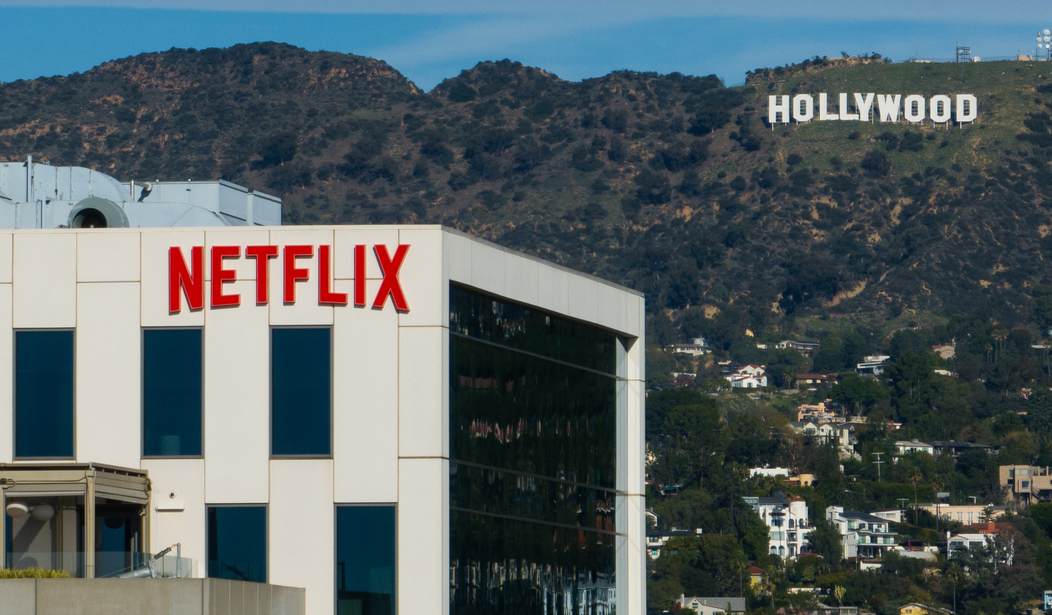
Netflix and Hollywood pioneered the model. Politicians and parties are (ahem) the opposite of nimble, so it’s taken ‘em a while to catch up. But if Breitbart is right, it’s inevitable: Whatever is upstream will soon be down.
We’ll see an explosion in professionally filmed, high-energy, popcorn-worthy documentaries about candidates and issues. It’ll be a radical new era of political myth-building — and character assassinations.
PRojection: Which will lead to synergized political propaganda. Because, if it’s cost-effective for a campaign to weaponize filmmakers, it makes sense to assign different topics to different people and stagger the release dates.
You almost have to think of it like a Hollywood movie studio: You don’t want Film A to cannibalize Film B. Gotta spread it out.
For instance, think of Abdul El-Sayed: Be awfully nice if the Rogers campaign could drop an explosive, investigative-styled documentary film about El-Sayed’s familial ties to the Muslim Brotherhood. (Be fantastic for Halloween! Super-spooky!)
And maybe a month before that, what if Rogers had released one about his other scandals — like El-Sayed’s false claims of being a physician, and his weird race-based medical studies in college?
And what if that had followed a documentary that dropped right after El-Sayed won the Democratic nomination, which detailed his close relationship with Hasan Piker?
Be a solid one-two-three punch. Rogers could hammer away on his opponent for being a socialist loon, and those three films would do most of his dirty work.
The El-Sayed docs could air in longform on YouTube, social media, and streaming services. Chopped-up clips could go viral on X and TikTok.
They’d probably get millions of eyeballs.
The filmmaker/director could also make the media rounds as an “expert” on the candidate — just like Alex Gibney now claims to be an expert on Elon Musk. (Gibney, who’s never met Musk or been to medical school, has diagnosed him as “sociopathic.”) If he/she interviews well, it would give the campaign another media asset.
Makes sense to me.
PRaise: To one of the early pioneers of the political documentary genre, Dinesh D’Souza. He blazed a trail that conservative filmmakers will follow.
His star has dimmed in recent years, but D’Souza is ideally positioned for a dramatic comeback.
There’s a short-list of well-known conservative documentarians; he’s near the top. His Indian heritage will likely be, alas, relevant in 2028, when Groyper bigots attack JD Vance’s wife. D’Souza also has close ties to Turning Point, having spoken there and having a daughter who used to work for Charlie Kirk.
His daughter, by the way, is the wife of the brightest GOP superstar in Congress, Brandon Gill. As Gill’s profile rises, so will his family’s.
That’s how it usually works.
In 2028, the stars will be aligned for a D’Souza comeback. Be fascinating to see what he’s got in the cooker.
PRedators: Unfortunately, the rise in documentary filmmaking won’t elevate our political discourse. It’ll do the opposite.
As documentaries are increasingly weaponized by biased filmmakers (and funded by biased backers), we’re entering an age of snark, rudeness, and smears. I don’t see any way around it.
The strategy I detailed for El-Sayed will be used by the Democrats against us, too.
And snarky, “gotcha” nastiness will grab more eyeballs on social media than a fair-and-balanced exposé about a candidate. It’s more quotable and sharable.
Which makes it more effective.
Buckle up, boys and girls: These documentaries might be fake, but their impact will be very real.