


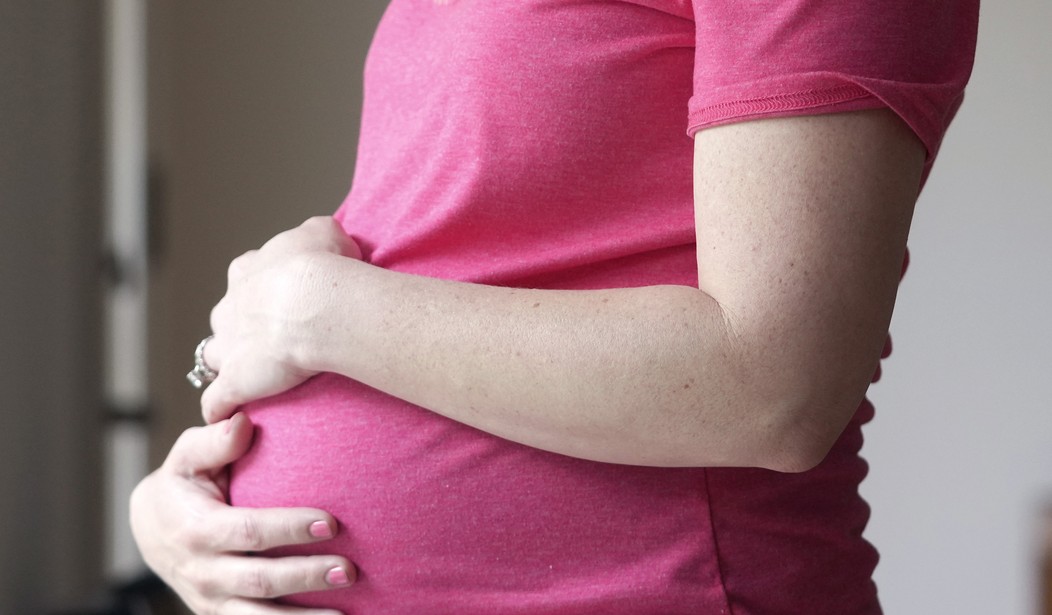
“Scott! Come over here! I need to show you something!”
“Okay. Where are you?”
“The bathroom! Come quick!”
“Um… no thanks.”
“Scott, you really need to see this!”
“NO! STOP BEING GROSS! WHAT THE HELL’S THE MATTER WITH YOU?!”
Anyhoo, eventually I went in (and held my nose). Turns out, my wife wanted to show me that she tested positive: We were gonna have our first baby.
This conversation took place 20 years ago. Today, we have two sons, ages 19 and 17. Both our boys are healthy, happy, and doing great (thank God).
But what if they had tested positive for Down syndrome?
Statistically, the overwhelming majority of Down syndrome babies are aborted in Western countries. Some of the stats might shock you.
Originally discovered by French pediatrician Jerome Lejeune in 1959, Down syndrome affects an estimated 6 million people worldwide. Denmark boasts a 98 percent termination rate of babies who test positive for Down syndrome, followed by the United Kingdom at 90 percent, the United States at an estimated 85 percent, and France at 77 percent.
In the United States, about 19 percent of pregnancies are terminated overall. So why are babies with Down syndrome so disproportionately targeted for abortion?
There’s almost certainly more than one reason for the sky-high abortion rate. Some families fear the stigma of having a special needs child. Others view the fetus as an inanimate clump of cells — so, if they got a “bad batch,” they’ll simply scrap it and start over. But a very large number of abortions, it seems, are driven by a perverse concern for the baby’s well-being:
For many, it’s about quality of life: Parents believe, sadly, that a family member with a disability or Down syndrome translates into an unfulfilled or bad life. Societal beliefs reflect this view: Oxford biologist Richard Dawkins once said it would be “immoral” to give birth to a child with Down syndrome if the parents had a choice, as though life with the disorder would be a terrible thing to inflict on a person.
Likewise, in CBS’ story about Iceland, one medical practitioner justified this practice by saying that she is working to “prevent suffering.” Many in the medical community share this same approach, viewing a positive Down syndrome test as a horrible fate, and delivering the diagnosis as such to the families. A number of years ago, a medical student shared with me that his professor told students that they had a “responsibility” to encourage parents to terminate babies who receive a Down syndrome prenatal diagnosis.
Before the birth of our first child, my wife and I discussed this possibility. She told me she’d abort a Down syndrome baby. One of her aunts had Down syndrome, and she said I didn’t understand its devastating, life-altering impact on families.
I started to argue — but then shut my mouth. (I figured our baby was unlikely to have Down syndrome, so what’s the point in arguing with a pregnant woman?) Besides, deep down, I didn’t think she’d go through with it: She was just terrified that something would go wrong.
The fate of Down syndrome babies was in the news last week, when social media influencers Jesse and Ashley Ridgway announced to their 4.3 million followers that they were aborting their baby, who had tested positive for the condition. (The Ridgway’s story was superbly covered by my PJ Media colleague, Tim O’Brien.)
For the Ridgways, their life will continue. They’ll try again, have more babies, and move on. In a few years, their home will be filled with family photos… of all the babies they allowed to live.
But for their Down syndrome baby, there will be no second chances. The baby is simply gone — no grave, no memorial, no life.
It’s paradoxical: Despite all the medical talk about “preventing suffering,” statistically, people with Down syndrome AND their families tend to be happier and more satisfied than the general public.
The Miami Herald article continued:
In 2011, Brian Skotko, a Harvard-trained physician and researcher, published a groundbreaking survey, “Self-Perceptions from People With Down Syndrome.” His work revealed that people with Down syndrome have a high level of satisfaction in their lives and are generally happy people. Similarly, family members of people with Down syndrome also rank high in levels of personal fulfillment. So not only are people with Down syndrome happy, but they also bring a great deal of happiness to their friends and family members. Indeed, the survey found that 88 percent of siblings of children with Down syndrome feel that they are better people for having had their brothers and sisters; and other studies have found that children with Down syndrome have strong adaptive skills and that their parents tend to divorce less than the parents of children without Down syndrome.
I read Dr. Skotko’s survey:
Among those surveyed, nearly 99% of people with Down syndrome indicated that they were happy with their lives; 97% liked who they are; and 96% liked how they look. Nearly 99% of people with Down syndrome expressed love for their families, and 97% liked their brothers and sisters. While 86% of people with Down syndrome felt they could make friends easily, those with difficulties mostly had isolating living situations. A small percentage expressed sadness about their life. In our qualitative analysis, people with Down syndrome encouraged parents to love their babies with Down syndrome, mentioning that their own lives were good.
Those are astonishingly high numbers: Nearly 99% of people with Down syndrome are happy with their lives — yet only 44% of “normal people” are happy with their own lives!
If you’re a parent who worries about your children’s happiness, they’re more than twice as likely to be happy if they have Down syndrome!
This obliterates the “quality of life” and “preventing suffering” argument used by the medical establishment to justify the mass extermination of Down syndrome babies. If happiness is our most important metric, then the exact opposite would be true: The “normies” should be aborted — and all the Down syndrome babies spared!
Or better yet, maybe we shouldn’t abort any babies at all.
Related: Poll Stunner: Support for Gay Marriage DROPS. Was the Trans Issue the Poison Pill?
My wife was right: I don’t know what it’s like to have a special needs child. Both our kids won the genetic lottery: They’re smart, healthy, and spectacularly gifted. They could become doctors, lawyers, engineers, inventors — or even the president of the United States. Their future is limitless; as long as they work hard, pray hard, and dream big, they can be whatever they want to be.
That’s just not true for a Down syndrome child. He or she won’t be a doctor. Nobody wants to go to the hospital for brain surgery — and in walks a surgeon with Down syndrome, holding a scalpel and grinning ear-to-ear. (Be a funny hidden camera gag, though.)
Their path is different… but equally important.
Humanity is already blessed with millions of deep thinkers. We already have more “geniuses” than we know what to do with. Very possibly, with the A.I. explosion, intelligence itself will be universally accessible: If you have a smartphone, you’ll have access to the greatest minds — artificial or otherwise — in world history.
But what humanity needs more than anything else right now is someone who can teach us how to love each other.
And that’s the most underreported, underappreciated tragedy of the mass extermination of millions of Down syndrome babies: We’re cheating ourselves, too.
We’re cheating ourselves out of the opportunity to learn what’s really important in life.
When ex-Alaska Gov. Sarah Palin discovered her unborn baby, Trig, had Down’s syndrome, she wrote a letter to her family. Only she didn’t write it as Trig’s mother — she wrote it as a message from God:
Every child is created special, with awesome purpose and amazing potential. Children are the most precious and promising ingredient in this mixed up world you live in down there on earth. Trig is no different, except he has one extra chromosome. Doctors call it "Down's Syndrome", and Downs kids have challenges, but can bring you much delight and more love than you can ever imagine! Just wait and see, let me prove this, because I only want the best for you!
Some of the rest of the world may not want him, but take comfort in that because the world will not compete for him. Take care of him and he will always be yours!
[…]
Please look to me as this new challenge and chapter of life unfolds in front of you. I promise to equip you. I won't give you anything you can't handle. I am answering your prayers. Trig can't wait to meet you. I'm giving you ONLY THE BEST!
Love,
Trig's Creator, Your Heavenly Father
Today, Trig is 18 years old. He went to school when he turned eight. His Instagram page is full of family photos, silly faces, wonderful adventures, people who love him — and people who’ve learned to love because of him.
Thank God he lived. Our world is a warmer, brighter, more loving place because he’s in it.
And I’m 99% sure he’s happy.
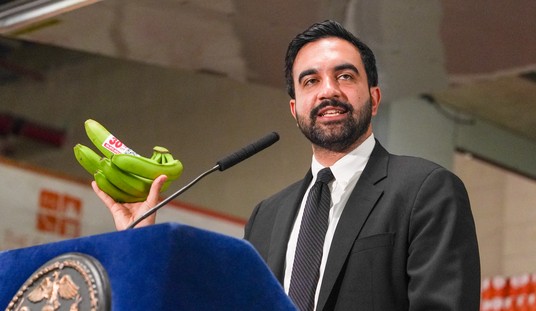
One Last Thing: 2026 is a critical year for America First. It began with Mayor Mamdani declaring war on “rugged individualism” and will reach a crescendo with the midterm elections. Nothing less than the fate of the America First movement teeters in the balance.
Never before have the political battle lines been so clearly defined. Win or lose, 2026 will transform our country.
We need your help to succeed!
As a PJ Media VIP member, you’ll receive exclusive access to our behind-the-paywall content, commenting privileges, and an ad-free experience. VIP Gold gets you the same level of “insider access” across our entire family of sites (PJ Media, Townhall, RedState, twitchy, Hot Air, and Bearing Arms). That means: More stories, more videos, more content, more fun, more conservatism, more EVERYTHING!
And if you CLICK HERE and use the promo code FIGHT you’ll receive a Trumpian 60% discount!
Thank you for your consideration.


Join the conversation as a VIP Member