


According to the State Department's Bureau of International Narcotics and Law Enforcement Affairs (INL) and Costa Rica's Ministry of Public Security (MSP), the two countries have come together once again to make the Western Hemisphere a little safer. Last week, a joint anti-narcotics operation involving the United States Drug Enforcement Administration (DEA), the U.S. Coast Guard (USCG), and the Costa Rican Coast Guard ended with the seizure of a lot of drugs, the arrest of three individuals, and a hit to the organized crime and drug smuggling that is plaguing our region.
It happened on Thursday. U.S. officials spotted a suspicious 32-foot vessel off Costa Rica's Pacific Coast, about 175 nautical miles off Blanco Cape, in the Nicoya peninsula. The boat was named the "Poseidon," but it had no registration numbers or national flag. A U.S. aircraft tracked it until the Costa Rican Coast Guard found it and intercepted it. They arrested three Colombian nationals and towed the boat back to shore, where they found approximately two tons of cocaine. Costa Rican prosecutors are seeking to slap all three men with international drug trafficking charges.
INL's support to Costa Rica’s Coast Guard's Special Operations Unit led to the interdiction of 1.9 MTs of cocaine destined to the United States. 🇺🇸🇨🇷 cooperation makes our Hemisphere more secure. https://t.co/YgfLEx2zyi
— US Dept of State INL (@StateINL) April 20, 2026
It was all part of a long-standing, bilateral maritime agreement between our two countries that's been in place for about 25 years. Costa Rica’s Legislative Assembly voted 38-5 to renew it in December, allowing up to 195 USCG vessels to access the country's ports this year.
But it's also a sign of something bigger: a growing relationship. Expect to see a lot more of this in the future.
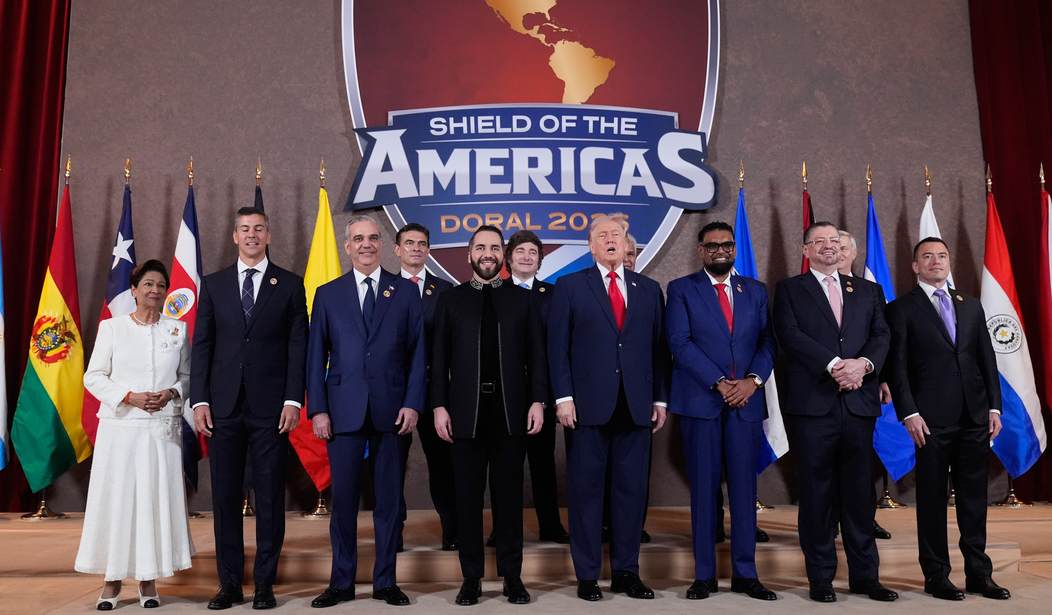
Costa Rica's president, Rodrigo Chaves, and the country's president-elect (she takes office next month), Laura Fernández, were both guests at Donald Trump and Marco Rubio's Shield of the Americas summit in Dorla, Fla. in early March.
Shortly after that, U.S. Special Envoy for the Shield of the Americas Kristi Noem visited San José, and she and Chaves signed a non-binding migration agreement that Costa Rica would accept up to 25 third-country nationals per week. In return, the United States provides financial support, and Costa Rica has the right to reject any individual for any reason. The International Organization for Migration (IOM) provides a week of food and lodging, and Costa Rica offers deportees a temporary special migratory status. They can then return to their home countries, or, if they fear persecution, seek refugee or asylum status.
The first flight arrived at Juan Santamaría International Airport last weekend, carrying about 25 people, while a second flight arrived this past weekend, carrying about 30 people.
In March, the United States also donated two mobile scanners to Costa Rica to help ramp up security at the country’s main border crossings. The equipment was reportedly worth about $2.5 million and came from INL.
As I wrote earlier this month, Costa Rica has always been a strong partner and ally for the United States, and up until 2007, had strong diplomatic ties with Taiwan. The president at the time began shifting toward China, but the deals that were made never quite lived up to the hype. Under Chaves' leadership, Costa Rica has been moving away from its Chinese ties and back toward the United States.
That's only gotten stronger since Trump became president again and made Rubio his secretary of State. Costa Rica was one of the first countries Rubio visited after he was confirmed in his new role.
Related: Tracking China in the Americas: Adiós, Amigos
Costa Rica even declared the United States its "favorite partner" this year, despite threats and warnings from the Chinese government. That will only continue and most likely grow even stronger after Fernández takes office on May 8.
And it's not just China. Earlier this month, Costa Rica officially declared the IRGC (Iran’s Islamic Revolutionary Guard Corps), Hezbollah, Hamas, and the Houthis terrorist organizations. The Foreign Ministry said it was "in accordance with Costa Rica’s international commitments in fighting terrorism and its financing," but let's read between the lines. It's also a show of support for and alignment with the United States.
Anyway, y'all know I love to brag on the country that has become like a second home to me, but the reality is that this is important. As Rubio has said, the U.S., under Trump, will not just be an ally, but a friend to any country in the Western Hemisphere that wants to partner with us to combat cartels, make exclusive economic deals, and ensure our adversaries are kept on their side of the globe.
The result is that both of our nations will become safer, stronger and more prosperous.
Costa Rica is proving that this isn't just empty diplomatic talk — it's what happens when U.S. leadership prioritizes the right relationships. WIth any luck, by 2028, all of Latin America and the Caribbean will be on board, and the Americas will be stronger than ever.
Want to support conservative media? You can do so by becoming a PJ Media VIP member. It's less than $20 for the entire year, and you get some cool perks too. We can't wait to have you!





Join the conversation as a VIP Member