


A few years ago, I was on a road trip in Costa Rica with a friend who lives there — we were driving across the country from Tamarindo to Puerto Viejo — and we stopped at a gas station to get some drinks. He came out and handed me my Gatorade Zero and said, "Are there a lot Chinese businesses in Atlanta?"
It wasn't something I'd thought much about, so I told him I wasn't sure, and he told me they were popping up all over Costa Rica at rapid speed. He said something like, "I don't know how they do it. It all just falls into place. It's like they sold their souls to the devil. Everything works out for them."
Later, he asked me what I thought of Chinese car brands. I told him we didn't really have that in the United States, and he told me they were flooding the Costa Rican market, and the cars were awful. "Give me a Ford over a Chinese car any day," he said.
Up until that point, I had no idea just how much China had infiltrated Costa Rica and/or Latin America, but after that I started learning. It was ugly. It's what prompted this "Tracking China in the Americas" series that I began writing last fall.
But here's the good news: The tides are turning in many places.
One of my favorite journalists, Arturo McFields, has been documenting this in his articles over at the The Hill in recent months. If you catch my "New Monroe Doctrine" column on Friday nights/Saturday mornings, you may have seen some of them. Examples he gives of China losing power in the Western Hemisphere include "A planned 'Chile-China Express' submarine cable has been suspended. Colombia has announced tariffs on Chinese steel. Mexico is reviewing Beijing’s economic security. Peru has slammed the door on a Chinese military hospital ship. Honduras could soon even reactivate its relationship with Taiwan."
Of course, I've been writing about how Panama gave China the old heave-ho at the Panama Canal recently, and how China has retaliated by detaining and inspecting Panamanian ships at record numbers. Marco Rubio called it "bullying" and promised to have Panama's back. Several other countries in the Western Hemisphere have also condemned China's little tantrum. McFields points out in another article that this harassment from the CCP, which promised all these countries that it would always be a friend to them, is backfiring and making them wary of a future relationship and "could even spur a rapprochement with Taiwan."
As a sign of the times, in March, Donald Trump and Rubio hosted the Shield of the Americas summit in Doral, Fla., a gathering of 12 Latin American and Caribbean countries ready to partner with the United States on everything from mass migration to taking care of the cartels that plague our two continents, but there was an underlying tone of keeping "foreign interference" out of the hemisphere.
Meanwhile, later in March, as McFields points out:
During the tenth Summit of the Community of Latin American and Caribbean States, organized by Colombia, Xi Jinping had hoped to deliver a virtual address to 33 heads of state from the Americas. But the event managed to attract only three Latin American presidents. This was a significant embarrassment, given that this organization is China’s version of the U.S.-created Organization of American States.
It's not a huge surprise. Our president and secretary of state are offering these countries real partnerships. The Chinese offer them debt traps, loss of their own sovereignty, and a string of weak and naive policies that rarely end well.
One country that has figured this out is my beloved Costa Rica.
Up until 2007, Costa Rica had diplomatic ties with Taiwan, but the president at the time, center-left Óscar Arias, decided that switching over to Beijing would be a great economic decision, making it China's first diplomatic ally in Central America. There were promises of big investments, huge trade opportunities, and new infrastructure. China was even going to bring a panda to San José to celebrate. But the results looked more like cheap Chinese products, stalled projects that never seemed to end, and issues like those crappy cars and Chinese businesses popping up seemingly overnight that my friend talked about.
The current president, Rodrigo Chaves, who has been in office for the last four years, saw the writing on the wall and began to push back, long before Trump and Rubio were in charge of U.S. foreign policy. The media called the new relationship between Chaves' Costa Rica and China the "frozen smile," meaning there's still a formal diplomatic relationship, but trust has eroded significantly.
It largely started with 5G. In August 2023, Chaves signed a decree to regulate the rollout of Costa Rica's 5G network, but the stipulation for companies that wanted to bid on contracts was that they must be from countries that signed the Budapest Convention on Cybercrime, an international treaty on cybercrime cooperation that went into effect in 2004. Spoiler alert: China is definitely not on the list, and naturally, it objected because its major telecom firms, like Huawei, were not invited.
The fact is that Chaves did this on purpose. He, along with leaders in the U.S. and other countries, has long suspected and accused the CCP of using Huawei equipment to spy and steal data and intellectual property. Chaves even went as far as to call the Chinese government "totalitarian" and bluntly stated that Chinese companies were a security threat to Costa Rica. It was a gutsy move for a little country.
Since Trump's been in office, Chaves has distanced Costa Rica even further from China and toward the U.S.
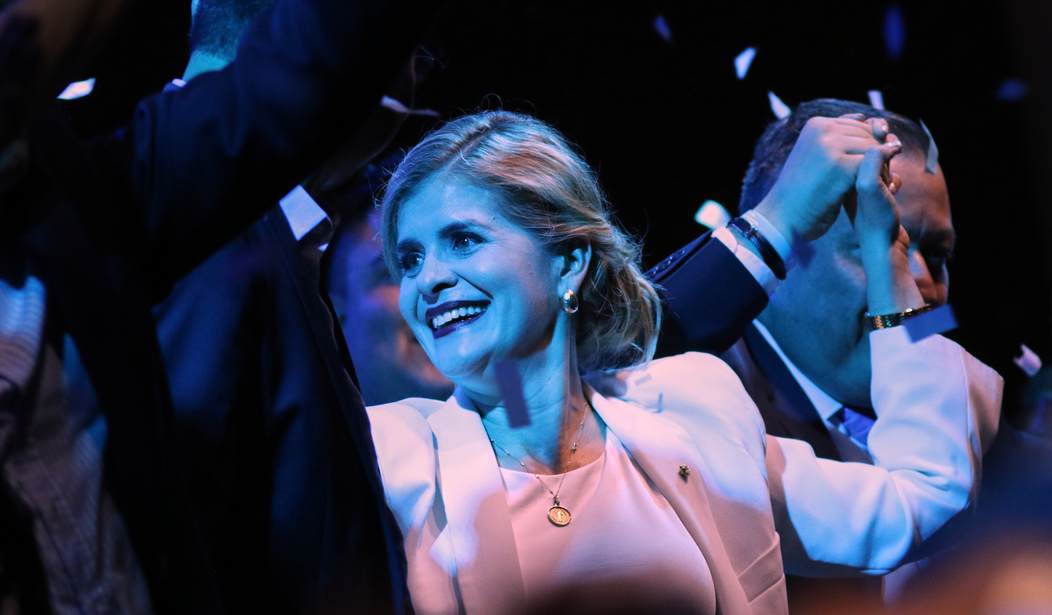
Rubio's first overseas trip as Secretary of State was to Latin America, including a stop in Costa Rica. Chaves and Costa Rica's President-Elect Laura Fernández, who will take office on May 8, were also guests at the Shield of the Americas. Costa Rica has even declared the United States its "favorite partner."
🇺🇸🇨🇷 Trump recibe a Rodrigo Chaves en la cumbre Shield of the Americas en Miami. pic.twitter.com/FsQWgcvMkk
— Progresismo Out Of Context (@OOCprogresismo2) March 7, 2026
Relations between China and Costa Rica have also soured even further in 2026. Earlier this year, cybercriminals attacked systems within the Costa Rican Electricity Institute (ICE) and stole information. The United States has been helping them address the situation.
Chaves' government declared it an attack on national security and accused a group linked to China of carrying it out. The CCP responded with its "deep surprise and disappointment" and a thinly veiled warning about cozying up to the U.S.
"Sacrificing relations between China and Costa Rica to please other countries does not earn anyone’s respect," a spokesperson said, adding, "To date, the Chinese side has not received any request for assistance or evidence submitted by the Costa Rican government . It should be emphasized that China has no interest in Costa Rican data."
While the spokesperson never mentioned the United States directly, it did say, "the international community knows perfectly well which country systematically carries out mass wiretapping and cyberattacks against other states."
And just this week, Costa Rica’s ambassador to Beijing, Alfredo Ortuño Victory, a longtime friend of former president Arias, who played a role in the big 2007 switch, resigned from his post.
As it distances itself from China, Costa Rica's future is looking brighter and brighter. Fernández, who was Chaves' handpicked heir and who won the recent presidential election by much higher margins than predicted, promises to continue to grow the country's partnership with the U.S., and she is already forming relationships with Trump and Rubio. She's also a hardliner on crime who has promised a Nayib Bukele-like crackdown within her country, and we expect her to be a great partner in our efforts to counter cartels and narco-activity.
It's not clear whether she will divorce Costa Rica from China entirely — that would be a huge move — but there will be no more enthusiasm for that relationship within the next four years. As my friend implied, the Costa Rican people have had enough of China's heavy-handed and one-sided "friendship." Thanks to Trump and Rubio, both of our countries will experience a relationship that is much bigger and better for all of us going forward.
Editor’s Note: Do you enjoy PJ Media’s conservative reporting that takes on the radical left and woke media? Support our work so that we can continue to bring you the truth. Join PJ Media VIP and use the promo code FIGHT to get 60% off your VIP membership!




Join the conversation as a VIP Member