


I heard about this story over the weekend, shortly after it happened, and I debated writing about it. I had no idea that it would blow up and become as big as it has here in the United States.
Also, I've found that some of the headlines are a bit misleading, so I thought I'd offer my own take.
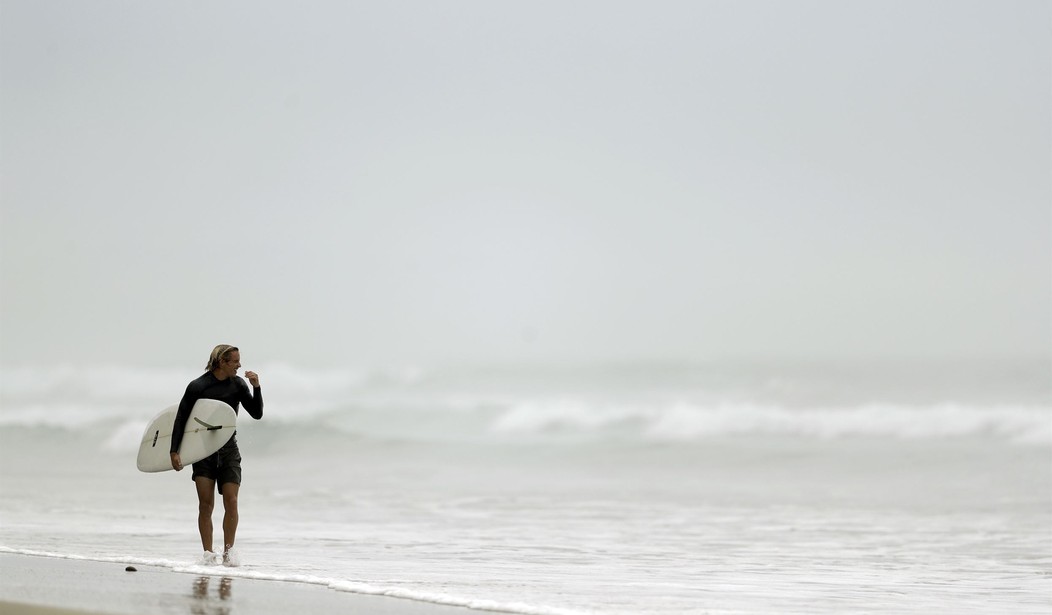
Back in the 1980s, pioneer surfer Kurt Van Dyke moved from Santa Cruz, Calif., to Costa Rica's Caribbean coast and settled in the town of Puerto Viejo, where he became a popular member of the community. He bought and ran a hotel — Hotel Puerto Viejo — and people called him the "King" of Salsa Brava for his ability to master the waves in a particularly notorious spot off Puerto Viejo's coast. He'd been there ever since.
On Valentine's Day, he was in his home in the nearby town of Cahuita, when armed men broke in and tied up him and his girlfriend, whose full name has not been released, stole their car and other valuables, and then murdered Van Dyke. The 66-year-old was found on the floor under a bed with stab wounds, signs of asphyxiation, and a sheet covering his body. The girlfriend survived with minor injuries.
The media has turned this into a "crime is on the rise in Costa Rica" story, and they're not wrong to go there. Tourist hotspots like Jacó, the port town Limón, and bigger cities, like San José and Liberia, have seen an increase in crimes in recent years. While petty theft is fairly normal in Costa Rica, armed robberies, assaults, burglaries, and scams have increased.
A friend of mine who lived in Jacó was actually sleeping in his bed one night a couple of years ago when a bullet came flying through his window and lodged in his wall. Not long after that, someone tried to steal his car. He's moved to a quieter part of the country now, but my point is that I've seen it. It's not just numbers and stats.
Murder rates have gone up too. There were 580 homicides in 2020; there were 906 in 2023. There were 833 as of mid-December in 2025. To put that into perspective, there were 82 total homicides in El Salvador in 2025, and it has about 1.2 million more people than Costa Rica does.
Much of Costa Rica's crime problem has to do with cartel and drug trafficking activity from other countries — particularly Colombia and Mexico — that has worked its way into the tranquil little Central American nation. Figures show that about 70% of murders are drug or cartel-related, usually due to disputes over territory or drug routes.
The State Department travel advisory for Costa Rica is currently a "Level 2 - Exercise increased caution," and it was last updated December 10. It warns that "Petty crime is common throughout Costa Rica. Violent crime also affects tourists. This includes armed robbery, homicide, and sexual assault."
But my point is that while all of that is true, Van Dyke's brother says that what got him killed may have been something more personal. "There are people who like him and there are people who don’t. It was more nefarious," he told the New York Post on Monday.
The two men talked weekly, and it sounds like there were some business dealings that may have gone bad. The brother, Peter Van Dyke, said he'd talked to Kurt recently, and he'd told him "he had everything under control." He also said that he didn't think the police were releasing all of the details just yet. It'll be interesting to see what comes of this.
Peter said his brother was someone who'd never hurt anyone else. "Total shock, because Kurt was a benevolent person. He was very giving. He helped anybody that asked for it and rescued animals and people, loved the ocean," he said, adding, "His passion was life, and surfing was a big part of that. And he found an area that he absolutely loved. It’s tropical, the wave is perfect — you know, fresh fish, good food, good people, really nice culture that he melded into."
I can't speak to the waves at Salsa Brava because I do my swimming a little further south in an area that's calmer than a manmade pool, but I've spent months in Puerto Viejo over the last few years, and I love it for all of those reasons he mentioned and then some. I've never really felt unsafe there. As a matter of fact, I was just joking with my dad the other day that I have more trouble in an Atlanta-area grocery store parking lot in one daily outing than I have in all the time I've spent in Costa Rica. There are parts of the Limón province where I definitely wouldn't go, especially at night, but that's anywhere in the world. I still wouldn't hesitate to go back to the area, and I actually plan to later this year. That said...
Regardless of whether this was an extremely targeted murder or whether it was just a symptom of an increasing crime problem, the incident feeds the growing unease of expats, tourists, and locals alike. It also highlights how unchecked cartel infiltration is now even impacting what many consider to be the most peaceful country in the Western Hemisphere.
This is one reason why I fully support Donald Trump and the other leaders in the hemisphere blowing up drug boats, making land strikes, and doing whatever it takes to try to put an end to organized crime. Not only does it impact the United States, but I'd like to continue spending time down there, and I'm sure many others would too — tourism from the U.S. and Canada is a huge part of the Costa Rican economy. I also have friends down there who are worried and deserve better. Before I wrote this article, I was actually talking to a Costa Rican friend of mine who is concerned that the new president won't be tough enough on crime, and she was curious about my perspective from the United States.
However, that's largely why Laura Fernández was elected president a few weeks ago. Her predecessor — Rodrigo Chaves, the man who hand-picked her — was already in the process of building a mega-prison, similar to El Salvador's CECOT. Salvadoran President Nayib Bukele is actually serving as something of a consultant to the Costa Rican government. Fernández campaigned on being a hardliner on crime, and that's one reason why she won in a landslide. Costa Rica is such a laid-back, peaceful place, and the people there do not want to see their country turn into the next Latin American nightmare.
And none of us want to see more crime in our own backyard.