
Four-year-old Mei from Shanghai was diagnosed with a "rare genetic mutation linked to developmental delay and autism-like traits," according to Noema, a science and technology publication. The condition was mild, and little Mei showed improvement with therapy and special education.
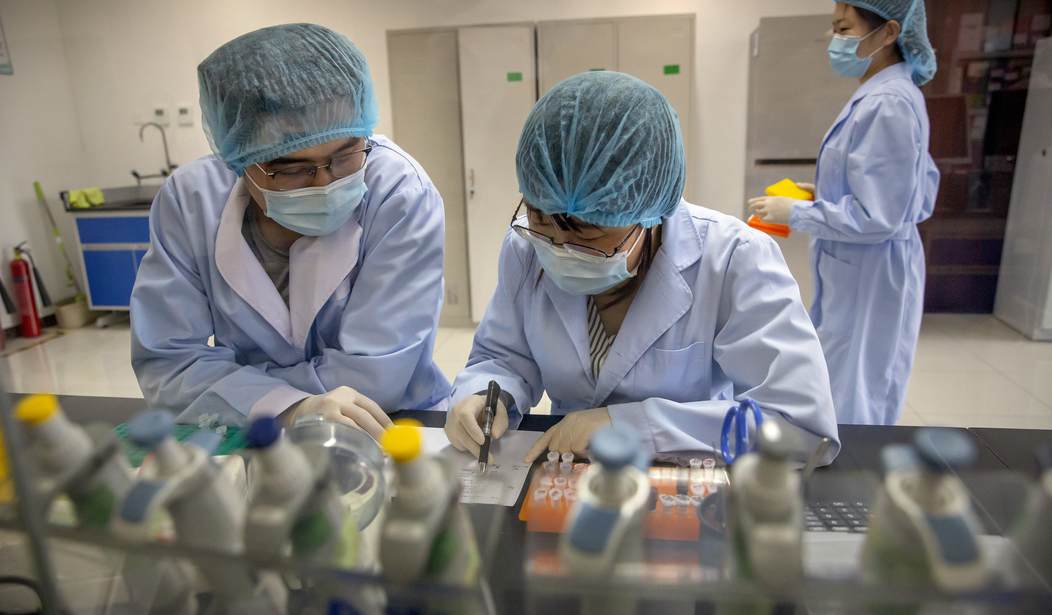
But her desperate parents, fearing that the little girl would be left behind in China's competitive education system, approached Qiu Zilong, a renowned neuroscientist at Shanghai Jiao Tong University, to help. Qiu charged the parents more than $860,000 to develop a customized gene therapy.
The therapy involved sending trillions of a specific virus to the brain. The procedure had been approved by Xinhua Hospital, a leading hospital for rare diseases.
After being injected with the viruses, Mei developed a fever and kidney failure and died within days.
When Qui's team published the case in Nature, they never mentioned that Mei died or what the parents shelled out for the procedure. This is typical in China, which geneticists and ethicists refer to as the "Wild East" of biotech.
No government oversight of the highly experimental procedure was available. At the time, permission from the hospital was enough. That has since changed, but perhaps only in form. The new government agency tasked with oversight is overwhelmed with requests and lacks the expertise to judge the efficacy of many experimental procedures.
The sad part of this story is that Mei is not the only victim of this lax oversight and regulatory desert that is gene-editing labs in China.
Deaths in clinical trials are not unusual. What is shocking are the regulatory lapses revealed by an investigation published this July in Science and subsequently corroborated by a separate investigation conducted by the Shanghai municipal government, which released its findings last week. The treatment’s consent form, for instance, didn’t warn of the possibility of death. The hospital had approved treatment before toxicology findings showing liver and kidney damage in monkeys that received similar treatments. And, among other crucial omissions, the researchers failed to disclose Mei’s death.
Another child died in August after a severe immune reaction to a similar therapy. As Noema points out, deaths in clinical trials are not unheard of, but the attempts to downplay or cover up deaths and adverse effects have consequences for American healthcare.
"Recent revelations of undisclosed deaths in clinical trials conducted in China have prompted warnings against the use of Chinese data in U.S. drug development," says Noema.
China has always been a mecca for experimental drugs and procedures because of its lax regulatory regime. In 2006, stem-cell therapies were all the rage, and Westerners flocked to China for questionable treatments. Two years later, biophysicist He Jiankui announced the birth of the first genetically modified babies created using CRISPR technology.
A decade later, immunotherapies were being sold. Beijing tried to blame rogue doctors for the deaths and other problems with the experimental treatments, but they are now recognizing that it's a systemic problem requiring a drastic change in how the government approaches public health.
The response in China to Mei’s death has been divided. Some netizens portray Qiu as a reckless scientist willing to gamble with patients’ lives. Others, including longtime acquaintances, describe him as a diligent scientist committed to helping patients. In some respects, Qiu represents the antithesis of He. After the CRISPR-babies scandal, Qiu openly condemned He’s reckless behavior — only to become embroiled in a comparable scandal himself six years later.
It might be tempting to blame such scandals on individual failings. The deeper questions are: What systemic factors shaped their behavior? What does the incident reveal about China’s Achilles heel in biotechnology—and about the broader culture of international science in which it is embedded? And what can the lessons teach clinical research worldwide?
For all the promises of reform and actual changes, powerful forces are opposing this effort. "China launched Healthy China 2030, making rapid application of emerging medical technologies in clinical practice a priority — not only to address unmet medical needs but to boost national competitiveness," says Noema. This has resulted in an explosion of investigator-initiated trials (IITs) after China altered its regulations to allow many hospitals to proceed without the national regulatory oversight required for conventional drug trials.
By one estimate, more than 40,000 had been registered by April 2026. It would be impossible for any government agency to seriously study all of those proposals.
Critics point to "quality control" as the biggest problem with the IIT regimen. "Under the new rules, only top-tier hospitals can undertake IITs," observes Noema. "Trials involving emerging technologies like gene and cell therapy, brain-machine interfaces, transplantation and microbial therapies must undergo further review by the health ministry after hospital approval." Adverse effects must be reported within five days.
It's a definite improvement, but it still doesn't come close to Western government regulatory regimes. The new agencies suffer from staff shortages, lack of expertise, and resistance from some politically connected doctors and hospitals.
I can't begin to understand the desperation of parents with a sick child, so I refuse to judge them for doing whatever they can to save their kid. I will condemn the Chinese Communists who perhaps have no clue how to run a compassionate, competent public health agency.
Related: A $47 Trillion Price Tag and Seven-Month Waits: The True Cost of ‘Medicare for All’