
An Electoral College joke: "The Electoral College is like a football game where some touchdowns count more because of the stadium they're scored in." That's essentially true.
Over the next few months, we'll hear a lot of talk about the Electoral College. Many Democrats (and some suicidal Republicans) want to make U.S. presidential elections "direct" elections where whichever candidate gets the most votes wins.
That's the number one principle of democracy: Except the U.S. is not a "democracy." It's a republic, where representative democracy is the rule. Eliminating the Electoral College would radically alter the nature and character of the American experiment, creating the conditions for presidential elections that would, by necessity, largely ignore smaller states and smaller TV markets in favor of the biggest states.
The primary argument of the anti-Electoral College crowd is that a candidate can win without receiving a majority of votes. It's happened five times in U.S. history, twice in the last quarter century.
The man with the strongest argument against the Electoral College is Andrew Jackson. In 1824, Jackson and John Quincy Adams faced off in an epic showdown of establishment vs. populist. It was a brutal campaign, and Jackson won both the most popular votes and the highest number of electoral votes. But he failed to secure the required constitutional majority in the Electoral College.
The election was thrown into the House of Representatives, where Adams' wheeling and dealing was more effective. He promised the cabinet post of Secretary of State to the powerful Speaker of the House, Henry Clay. Clay was more powerful in Washington than any president and easily secured Adams' election.
The 2000 election with its charges of a "stolen election" (that Democrats never, ever make) saw George W. Bush receive 540,000 fewer votes than Al Gore. It came down to Florida, where Democrats wanted to keep counting, and keep counting until Gore won. The Supreme Court stopped that nonsense. A later audit of the ballots by several major news outlets showed Bush as the winner anyway.
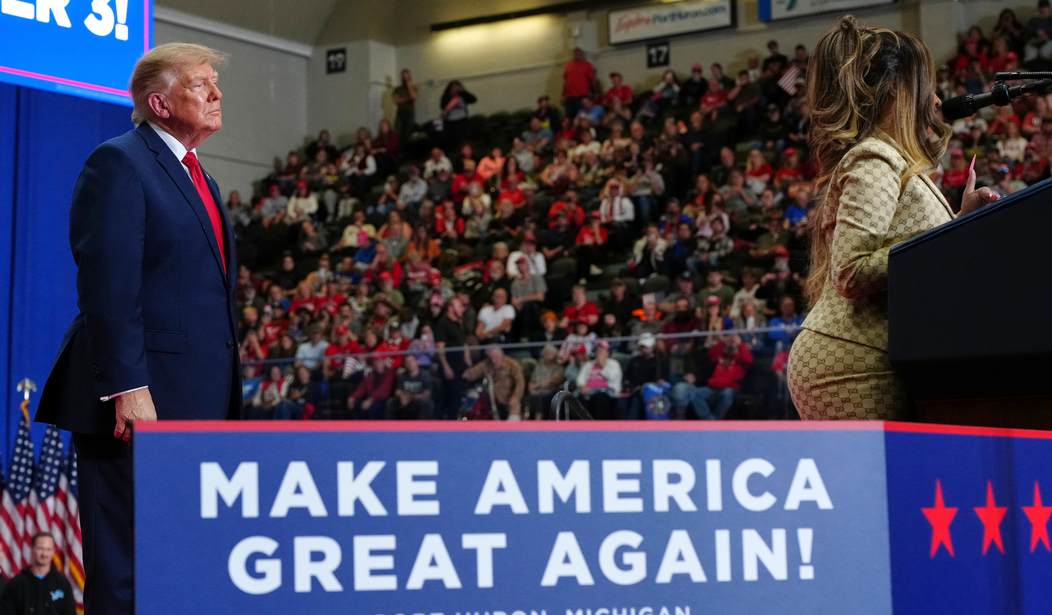
The 2016 election saw Hillary Clinton receive almost 3 million more votes than Donald Trump but didn't win the electoral votes in the right stadium. Trump won the electoral vote going away: 304 to 227.
Proponents in favor of the Electoral College argue that the U.S. is a constitutional republic composed of individual, sovereign states rather than a single centralized democracy. The Electoral College reinforces this structure by ensuring that the president is chosen through a federal process involving the states, rather than just a national aggregate tally.
Defenders argue that the system forces candidates to build broad, cross-regional coalitions. To win, a candidate cannot simply rack up massive vote margins in a few heavily populated states or specific regions; they must appeal to a diverse array of voters across multiple states with varying interests.
The allocation of electoral votes can magnify a winner's apparent margin of victory (e.g., turning a narrow popular vote victory into a decisive electoral majority), which supporters argue gives the incoming president a stronger political mandate to govern.
There are some serious arguments for eliminating the Electoral College. In addition to the aforementioned problem with a popular vote winner losing the Electoral College vote and the election, campaigns focus heavily on a handful of competitive swing states such as Pennsylvania, Michigan, and Wisconsin. Voters in reliably Democratic or Republican states often receive far less attention. Votes are not equally weighted, damaging the "one man, one vote" principle. Also, the "winner-take-all" rule discourages voting generally except in swing states.
I don't find that argument compelling. Casting a vote is a civic duty and shouldn't require any other motivation.
The "faithless elector" argument is also specious. After the 2016 debacle, which saw a record-breaking seven successful faithless electors, along with 3 other votes that were invalidated and replaced by states.
Then, in 2020, the Supreme Court ruled unanimously in Chiafalo v. Washington, affirming that states have the constitutional authority to penalize or replace electors who break their state pledges.
Faithless electors are no longer much of an issue.
Nationally, polls routinely find that roughly 55% to 65% of Americans support amending the Constitution so that the winner of the national popular vote wins the presidency. Opposition to changing the system generally hovers around 20% to 25%, with the remainder unsure or expressing no opinion.
Not surprisingly, there's a partisan split on maintaining the Electoral College. "In 2011, about half of Republicans and independents who lean toward the Republican Party (51%) said the Constitution should be amended," Pew Research reports. "Today, nearly two-thirds prefer to keep the current system, a figure that is essentially unchanged over the past two years." Between 80-85% of Democrats support ending the Electoral College.
Thankfully, the Founders made it very difficult to amend the Constitution. But more states could move to a proportionate award of electoral votes based on factors such as vote totals from individual congressional districts or state vote totals.
Right now, and for the foreseeable future, Republicans benefit hugely from maintaining the Electoral College. The GOP builds its coalitions in the South and West by capturing smaller states and winning 3 big states: Texas, Florida, and Ohio. Trump's capture of Pennsylvania in 2025 was huge. He won 31 total states to Harris's 19. The GOP is becoming more competitive in some blue states, but right now, the system is tilted toward Republicans.