
I'm just waiting for some clever Euro newswriter to pen a story about "The Children's Crusade."
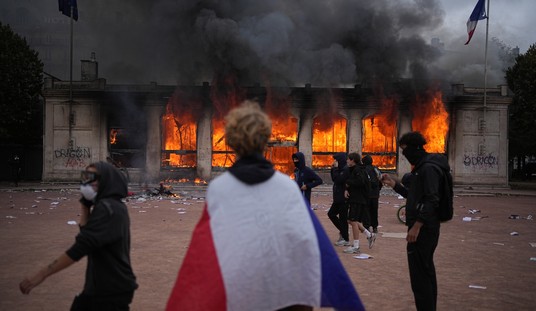
The riots sweeping across European cities aren't about anything in particular. We're told they're about more money for education; more money in the budget for pensions; more effort to control the cost of living; more money for healthcare. More. More. More.
The only thing the protesters want less of is inflation. They don't understand that more goodies from the government means more government borrowing, which means interest rates rise, which means businesses have to pay more to borrow money for their needs, which means ... you guessed it: higher inflation.
The kids and the radical left, who have joined forces in a mutually beneficial cause, want "more" of everything. The problem is that their mothers, fathers, grandmothers, grandfathers, and great-grandparents stole it from them so that they could have an easier life and a comfortable retirement. Oh sure, they promised to pay you back, but guess what: they were too busy kicking the can down the road to right the terrible wrong done to you.
The youth and radical left may win a few elections and try to make good on their promises to give the young the same life earlier generations enjoyed. How will they do it and not bankrupt the state?
French radical-left populist Jean-Luc Mélenchon has has the brilliant idea of pretending that the last 80 years of socialist spending in France never happened. He has called for the state to effectively write off or "cancel" the portion of French public debt that is currently held by the Bank of France (roughly 18% of the total national debt, amounting to around €600 billion). He has famously quipped that they could just "throw it in the fire" or put state debts "in the freezer" as an accounting maneuver to clear the ledger.
Critics point out that European Union treaties (specifically Article 123 of the Treaty on the Functioning of the European Union) explicitly prohibit central banks from directly financing public authorities or monetizing debt. (When did rules ever concern a radical leftist?)
Opponents argue that a forced write-off would shatter investor confidence, severely spike France's borrowing costs on international markets, and potentially trigger a crisis that could force France out of the eurozone.
And that's exactly what Mélenchon has in mind. Both the radical-left leader of France Unbowed and Marine Le Pen's National Rally have made noise about leaving the EU. A "Frexit" would spell the end of the EU and throw the continent into chaos. Out of the mayhem would emerge Mélenchon and France Unbowed, along with other radical-left parties in the eurozone.
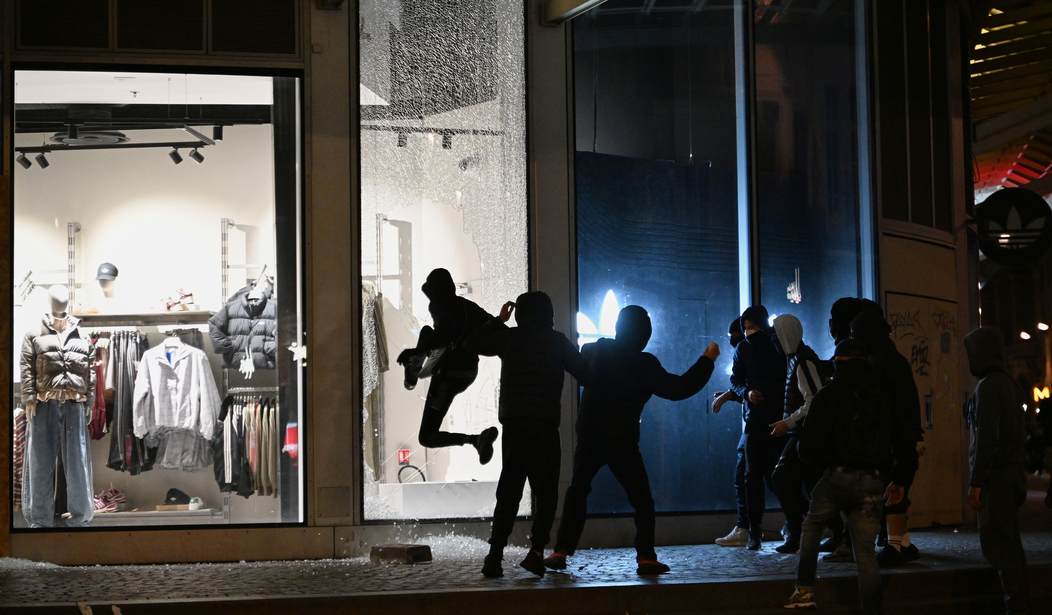
The story in the rest of Europe is similar. Adolescents join violent radical-left rioters to express the inexpressible. How do you protest generational theft?
“Many young people increasingly lack a sense of belonging and prospects for the future. Part of our society feels excluded, amid social and economic inequalities,” said Milan’s welfare councilor Lamberto Bertolé, a member of the center-left Democratic Party.
Those aren't kids needing a spanking, setting cities afire. The masked hordes of radicals know exactly what they're doing. The kids might be running wild, but they're being unknowingly directed by experts in mob psychology.
The incoherence of the protests is bad for the mainstream media. They can't figure out how to fit what's happening in the streets into a 100-character headline.
Despite their different catalysts, however, all these movements have acted as a sort of black hole, drawing in any discontent before exploding in a catch-all outburst of frustration for a generation of young people who fear they won’t have the same opportunities as their parents. They have, in part, inspired each other, too. Protesters in Italy and Greece have referenced their French counterparts in their slogans. Housing protests in Spain spilled over into Portugal. And student unions across Europe are sharing advice and their experiences with one another, Alice de Brito, vice president of France’s main student union, UNEF, told CNN.
The protesters themselves are clueless.
“I see so many more similarities than differences,” de Brito said. “We are all talking about the need for investments in education, in the universities, in youth in general. But we are also talking about the cost of living, about housing.”
She doesn't see how it's all connected. There are no "investments" to make, and the lack of funds for those youth priorities results from the money not being there. It's been spent already.
Across Europe, older voters will vote for law and order. The youth will vote for revolution. It will almost certainly lead to a generational schism that will roil European politics for decades.