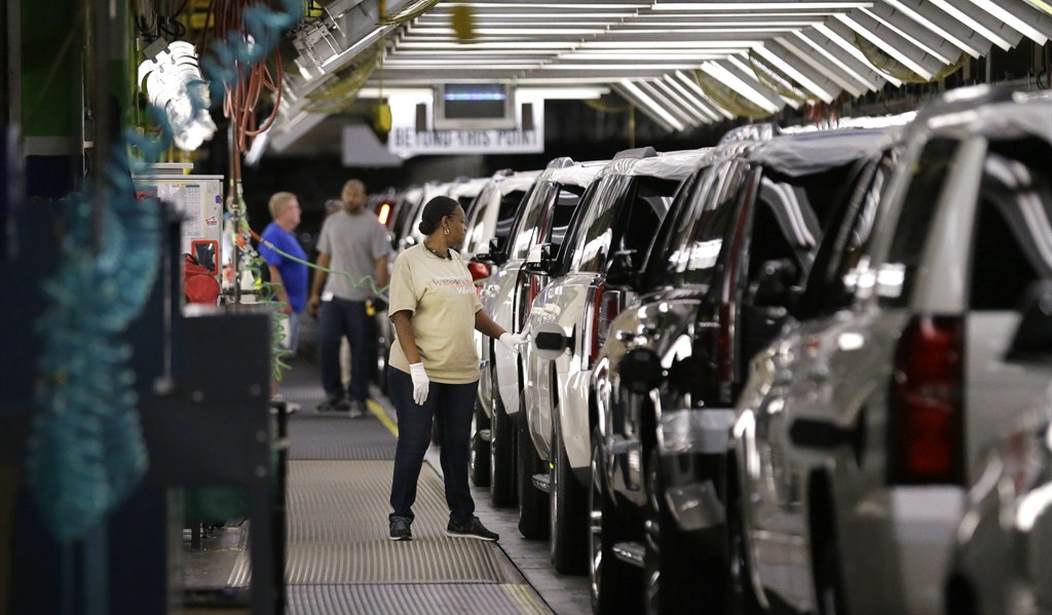

For much of the industrial age, large American companies were structured around generational goals. Companies didn't just try to survive the next fiscal quarter; they built massive, vertically integrated systems designed to dominate for decades.
The electronics age was birthed in the late 1940s and 1950s when Bell Labs, General Electric's Research Laboratory, DuPont, and other industrial giants sacrificed short-term profits for long-term gain. They pursued fundamental, blue-sky basic research that took 10, 20, or 30 years to commercialize. They invented technologies like the transistor, synthetic polymers, and information theory long before a clear market existed, believing systematic innovation would inevitably secure the future.
By the late 1950s and 1960s, America reached a high water mark for structured corporate strategy. Management thinking shifted toward formal, long-range planning departments. Corporations routinely drafted 10- and 20-year forecasts, mapped out demographic shifts, and tied corporate growth to national infrastructure projects, like the Interstate Highway System or the space race.
America's booming economy in the 1980s and 1990s altered the equation. Instead of planning for the future, management believed its primary mission was to maximize shareholder value. This led to enormous pressure on management to meet or beat quarterly earnings estimates.
An activist investor class also pressured management to boost prices rapidly through stock buybacks, leveraged restructuring, and cost-cutting, often cutting long-term Research & Development (R&D) and workforce training budgets.
China doesn't have a better economic system than the U.S. It has a more efficient one: a hybrid command/market economy that plans meticulously for the long term. By meticulously, I mean they leave little to chance. Supply chains align with planned expansion to avoid the bugaboo of command economies: shortages and gluts.
“The market is not a feature unique to capitalism. Capitalism does not have the patent right over the market economy," the ideology chief of the Communist Party Politburo, Hu Qili, told Nathan Gardels of the Berggruen Institute in 1987. "What we are trying to create is a new and unprecedented modality where planning is combined with the commodity economy, where the state regulates the market, and the market guides the enterprises.”
Gardels notes that China takes a “whole dragon' approach in which start-up subsidies, sourcing, supply chains, and production capacity are vertically aligned, making it one of the most powerful production ensembles in economic history."
I would ask, "At what cost"? Over-regimentation, brutal repression of religion, inability to speak out and organize for change, and prison if you think independently.
We can beat China to the future if we recognize what the future will look like and grab it. That's how we've always won the future in the past. We've envisioned what the future would look like and gone out and made it.
The chief flaw of China’s system, of course, is closely linked to its strength. To keep the consensus from fraying, it overcompensates on the side of repressive order and control of freedom. It is the opposite of the open societies of the West, where the flaw lies within the strength of diverse participation and electoral competition: a growing inability to forge a consensus on long-term goals out of the cacophony of voices, the welter of contending interests and the immediate wash of fickle public opinion.
When all-out competitive partisanship destroys consensus among the body politic, the democratic transfer of power can mean a complete rupture of policies endorsed by most voters only four years earlier. Sticking to the course for the time it takes to reach fruition is not a reliable feature of this system.
The extreme edge of this stark difference can be seen in the contrasting behavior of the current leadership in the U.S. and China. America’s leader relishes dominating the memes of the moment, battling his way through every 24-hour news cycle by firing off social media barrages at sundry foes. China’s near-dictatorial leader has used his amassed clout to chart out a roadmap for the next half century.
Opposition to data centers that power the next big leap in humankind's development is short-term thinking getting in the way of long-term gains. Rejecting the revolution in battery power and storage because we only see batteries in ugly, underpowered automobiles, rather than the massive gains in battery technology China has made, is causing America to lose the race to the future.
"Green" isn't just to save the Earth from climate change. Green is going to rule because it's going to be cheap and plentiful and better for humans in the long run. Standing in the way, or even actively opposing it, is like blacksmiths and wheelwrights opposing the automobile. It's coming whether you like it or not.
America can still win the race to the future and keep China at bay. It will take vision that's currently lacking in our leadership and political class.