


In 1959, there were only a handful of female astronomers in the country. One of them, Nancy Grace Roman, was discouraged because her teaching position at the Yerkes Observatory in Wisconsin was a dead-end job. The chances of any woman receiving tenure at any astronomical institution were nil.
When Roman heard that NASA was hiring, she applied and was surprised that it hired her. She knew immediately she had found a home. “I felt that the team treated me as one of the team without a problem.”
Roman was there at the dawn of space astronomy. As NASA's first Chief of Astronomy (and first female executive) in the 1960s and 1970s, she set up NASA's space astronomy program from scratch. She brought together astronomers and engineers from across the country to establish a unified list of scientific specifications for what would become the Large Space Telescope (later renamed Hubble).
Roman was dubbed "The Mother of Hubble" for her efforts. Her leadership has led to about 20 space-based telescopes, including the James Webb Space Telescope (JWST), which has already altered our perception of the early universe, and TESS (Transiting Exoplanet Survey Satellite), which has discovered dozens of planets orbiting other stars.
The latest addition to the array of space-based observatories is the Nancy Grace Roman Space Telescope, launched this past Sunday, August 30. It will take a position about 930,000 miles directly behind the Earth at an astronomical point known as the second Sun-Earth Lagrange Point (L2). It lies on a straight line extending from the Sun through the Earth out into space.
The Lagrange Points allow space telescopes, such as the James Webb Space Telescope, Euclid, and the Nancy Grace Roman Space Telescope, to keep the Sun, Earth, and Moon continuously behind their protective sunshields while looking out into the cold, dark universe.
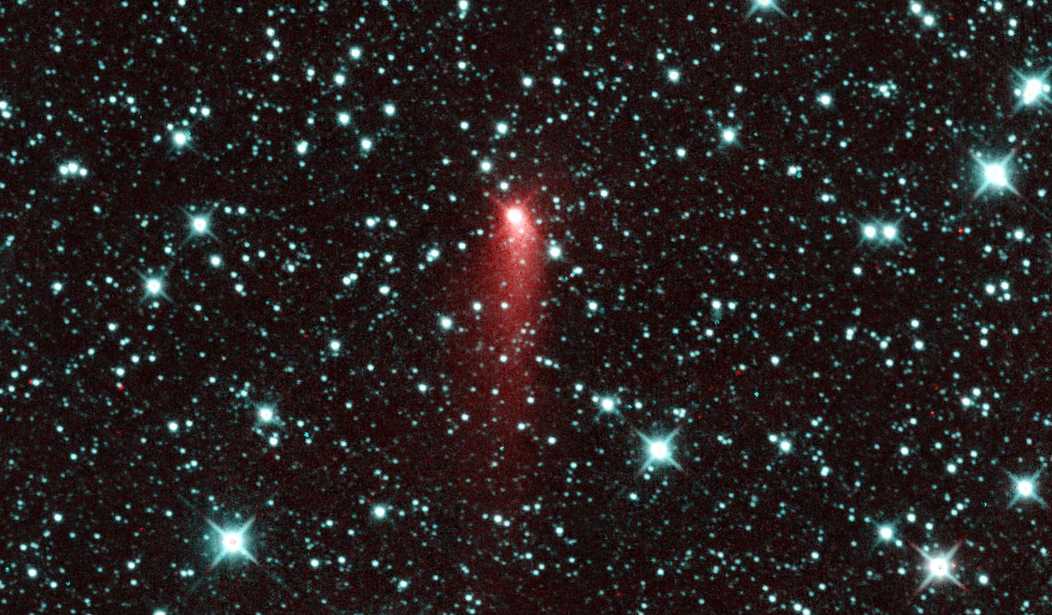
Roman will monitor stars scattered throughout a deep slice of the galaxy to watch for any that change in brightness. Some stars periodically dim as orbiting planets cross in front of, or transit, them. Others temporarily appear to brighten as the gravity of an intervening star and orbiting planets magnify a farther star’s light, thanks to a phenomenon called microlensing.
These two methods tend to reveal very different types of planets. The transit method, which Roman will use to reveal around 100,000 worlds, is best at finding gigantic, scorching worlds since they block the most starlight and transit more frequently.
Microlensing, which Roman will use to find more than 1,000 worlds, is better suited to finding planets with larger orbits, like those in our solar system, whose gravity can be more easily separated from the gravity of their host stars. Microlensing can find planets as small as Earth and Mars and can find them within their star’s habitable zone and even farther out. Such planets are almost undetectable by other methods and are virtually unknown outside of our own solar system. Pairing the two techniques will help astronomers explore planet formation throughout the galaxy, including Earth’s birthplace and beyond.
At $3.2 billion to build and another billion dollars in launch costs, ground communications, data processing, and primary mission operations for five years, it's not a cheap investment, but when you consider that the Hubble Space Telescope has accumulated 150 to 200 terabytes of science data over its lifetime, the textual raw equivalent of Hubble's data footprint would fill anywhere from 1,500 to 4,000 typical local libraries packed end-to-end with books.
I think it's worth it.