


Harold Camping (1921–2013) was one of the most famous modern Christian radio evangelists. He was known for repeatedly predicting the end of the world.
Camping gained global media attention by predicting that the Rapture would occur on May 21, 2011, when millions of believers would suddenly disappear and ascend to heaven. This would be followed by the destruction of the world on Oct. 21, 2011. His ministry spent millions of dollars on over 5,000 billboards, radio broadcasts, and caravans across the United States, warning people of Judgment Day.
It didn't pan out. Meanwhile, thousands of people gave away everything they owned, emptied their savings accounts, and waited for the moment they would rise up to heaven. Were they disappointed or relieved?
I have been warning about debt Armageddon for most of my professional life, and I know how Camping felt when his warnings fell flat. The debt crisis always appears to be just around the corner, never imminent, never upon us.
Is there anything different this time that might force a debt reckoning within a few years?
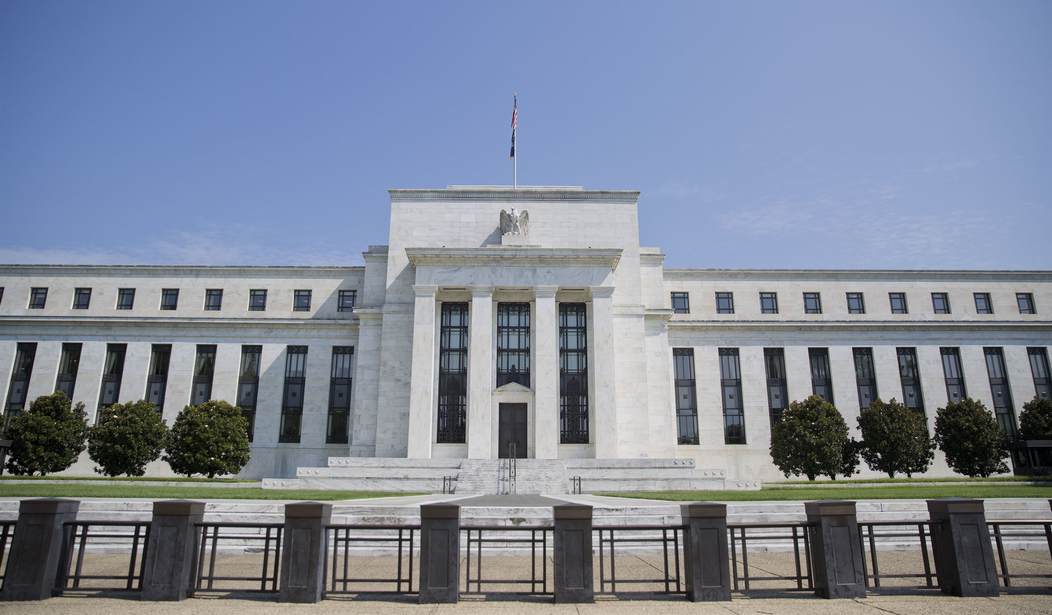
Just last week, the U.S. national debt crossed the $40 trillion threshold, and aside from some media outlets using the occasion to blame Trump, the milestone passed as all debt milestones pass: little noted and immediately forgotten. Meanwhile, American corporations have gone "all in" on spending for artificial intelligence; not just the models and the huge cost to adopt the technology company-wide, but building out the infrastructure to keep up with the massive growth in power generation necessary to feed the AI boom.
It's a "capital squeeze," notes Axios. "On one side: Trillions Washington must borrow to pay for the past. On the other: Trillions the economy needs to build the future."
"The next president will inherit a fiscal reckoning decades in the making," notes Axios. "The price it exacts — on taxes, benefits, borrowing and investment — could shape America's prosperity and power for generations."
The national debt is a tricky beast. About $32 trillion is owed to investors who buy U.S. Treasury securities and to other nations. The rest is debt the government owes to Social Security and other federal trust funds. The CBO projects budget deficits of $2.4 trillion per year for the next decade.
Old debt comes due, Washington replaces it with more expensive debt, and the resulting interest bill feeds future deficits.
CBO projects annual deficits will average $2.4 trillion through 2036, pushing debt held by the public to 120% of GDP — above the record set after World War II.
The U.S. has already spent $963 billion on interest in the first 10 months of this fiscal year, $200 billion more than it spent on the military over the same period.
For years, Silicon Valley's AI buildout was financed almost entirely with cash. Now Big Tech is becoming one of the biggest new forces in global debt markets.
Bond sales by the "hyperscalers" building AI infrastructure are on pace to roughly double in 2026. Goldman Sachs projects debt will fund more than a third of their AI spending by 2027.
Nvidia is working with BlackRock, Goldman Sachs, KKR and other Wall Street giants on plans to marshal more than $500 billion for AI infrastructure.
Meanwhile, big AI companies are looking to borrow "another $3 trillion in future commitments, mostly tied to AI, that aren't yet reflected on their balance sheets," reports the Wall Street Journal.
This is already raising interest rates
Axios reports, "America's debt burden is approaching the point where it starts reshaping household finances, presidential politics, and the country's economic choices."
That's because long-term Treasury yields — most notably the 10-year U.S. Treasury yield — are directly connected to interest rates on consumer loans. Those rates are at the highest level since the 2007 economic crisis. Because U.S. Treasuries are considered the benchmark "risk-free" rate for the global financial system, lenders use them as the base floor when deciding what to charge individual borrowers.
When government borrowing or market forces push long-term Treasury yields higher, borrowing costs rise for everyday consumers across almost every debt product.
America's fiscal options are narrowing as its political ambitions expand.
On the left, democratic socialism and economic populism are surging, pairing promises of cheaper housing, health care and child care with calls for higher taxes on the wealthy.
On the right, the Trump-era GOP has protected Social Security and Medicare politically while pursuing tax cuts and higher defense spending, including Trump's push for a $1.5 trillion Pentagon budget.
The bottom line: Few problems loom larger over America's future than its colossal debt burden. Yet few are treated with less urgency by the politicians who will have to confront it.
As long as no existential crisis arises that forces us to dole out the kind of economic pain to ordinary Americans needed to get a handle on our finances, we will continue to coast along, surfing our way to economic oblivion and a historic reckoning.
Recommended: AOC for President? It's Time We Take That Proposition Seriously.
Editor's Note: President Trump is leading America into the "Golden Age" as Democrats desperately try to stop it.





Join the conversation as a VIP Member