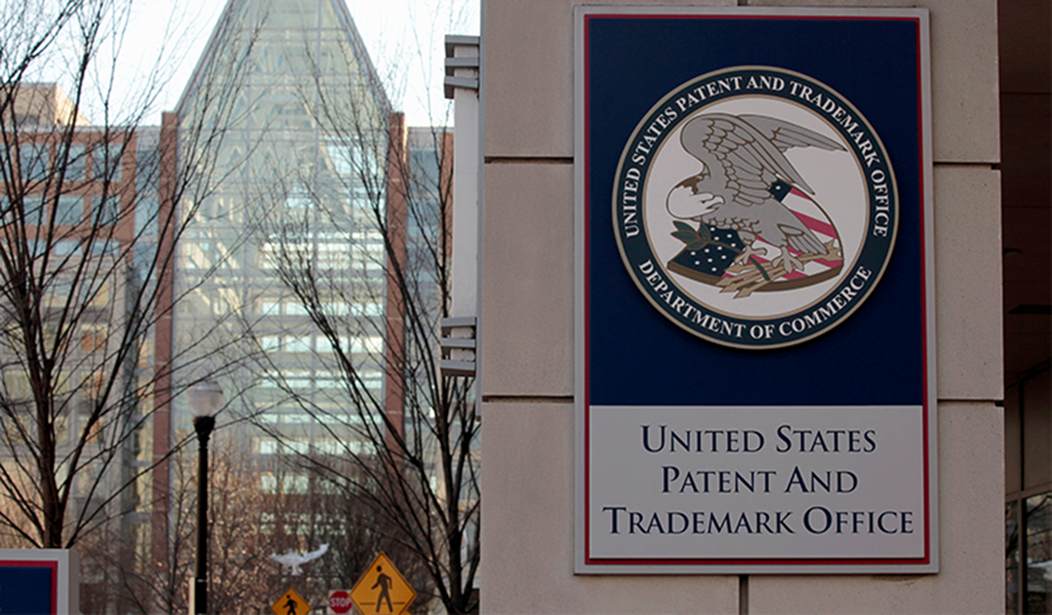
Is the U.S. government hiding the patent for an engine that runs on water? It's a persistent conspiracy theory passed down from generation to generation.
It's not impossible, but it's also not likely. The conspiracy theories are made possible because of the government's mania for secrecy. During the Cold War, Congress passed the Invention Secrecy Act (ISA) of 1951, which authorizes the federal government to suppress the disclosure and patenting of new inventions if revealing them is determined to be detrimental to national security.
The national security rubric has ensnared hundreds of inventors who are prevented from trying to sell their work to anyone by a secretive process that has identified their work as relevant to the strictures imposed by the ISA.
Every patent application (provisional or non-provisional) submitted to the U.S. Patent and Trademark Office (USPTO) is screened by reviewers against the Patent Security Category Review List.
If an application contains sensitive dual-use, military, nuclear, aerospace, or advanced technological subject matter, it is flagged and forwarded to designated defense or intelligence agencies (e.g., Department of Defense, Department of Energy).
If an agency determines that public disclosure would harm national security, the commissioner for patents issues a secrecy order.
The patent application is placed in a sealed condition and withheld from issuance. The inventor is barred from publishing, exporting, marketing, or commercializing the technology without explicit authorization.
Peacetime secrecy orders are issued for one-year renewable terms, which agencies can renew indefinitely as long as national security risks remain. That one-year renewal is not how the law is actually applied.
"In practice, the ambiguity of the law creates an obtuse and fairly convoluted process for the impacted inventors," writes Michael Natale of Popular Science. "What constitutes 'sensitive information' as it applies to national security? How does one even define 'national security?'”
To date, no information has been revealed that constitutes a "smoking gun" that would prove the U.S. government withholds patent approval for inventions that might harm powerful interests like the oil or auto industries. But "the law in its current form makes it possible to do so, and it’s not at all apparent what measures are in place, if any, to prevent that from happening," Natale writes.
Absence of evidence does not mean evidence of absence. How powerful interests could put their thumb on the scale and stop patents, or get the patent office to declare an invention impacting national security, is never explained by the conspiracy theorists. And we don't know all the safeguards the government has in place to prevent that kind of interference.
It's a compelling mystery that requires answers.
There is, it should be stressed, no credible evidence to suggest that the government has ever used the ISA to deliberately drive any inventors into poverty, let alone actively assassinate anyone over an invention. There’s no evidence to even suggest that any of the 6,543 inventions given secrecy orders under the ISA in 2025 are even close to the kind of miracle cure, perpetual motion, or cold fusion-generating machines the fringe parts of the internet imagine they are.
The trouble is, there inarguably are 6,543 inventions that the U.S. government very pointedly doesn’t want you, the public, to know about. And there’s no real way to find out what they are, or why they were withheld for “national security.” So what you decide those 6,543 inventions might ultimately be hinges on how much you personally want to believe the government is a shadowy cabal that inhibits human progress to protect its interests.
In recent decades, the government has imposed roughly 60 to 350 new secrecy orders per year. For instance, the USPTO reported 102 new secrecy orders imposed in FY 2025 alone. Every year, a smaller number of orders are lifted (e.g., 30 rescinded in FY 2025), which is why the net total of restricted inventions continues to grow slowly over time.
What makes the ISA and subsequent denial of patents so maddening is the Spillover Effect, or Technological Crosspollination. An original breakthrough in one field unlocks new tools, materials, or conceptual building blocks. Inventors in unrelated fields then combine those new blocks with existing ideas to create completely unforeseen innovations.
For example, research conducted for NASA’s space programs (such as heat shielding, satellite telemetry, or lightweight alloys) resulted in downstream breakthroughs in unrelated civilian fields, ranging from memory foam mattress technology and advanced water purification to advanced camera sensors (used in modern smartphones) and digital image processing (vital for modern medical CT/MRI scans).
The problem is the government doesn't know what breakthroughs will come from innocuous patents. The freedom to "cross-pollinate" has led to the creation of countless modern technological marvels because of the free exchange of ideas represented by the patent office. The ISA, although well-intentioned, has put a damper on technological progress, perhaps unnecessarily so in some cases.
A review of the law by Congress is needed to bring the patent office's procedures up to date.