


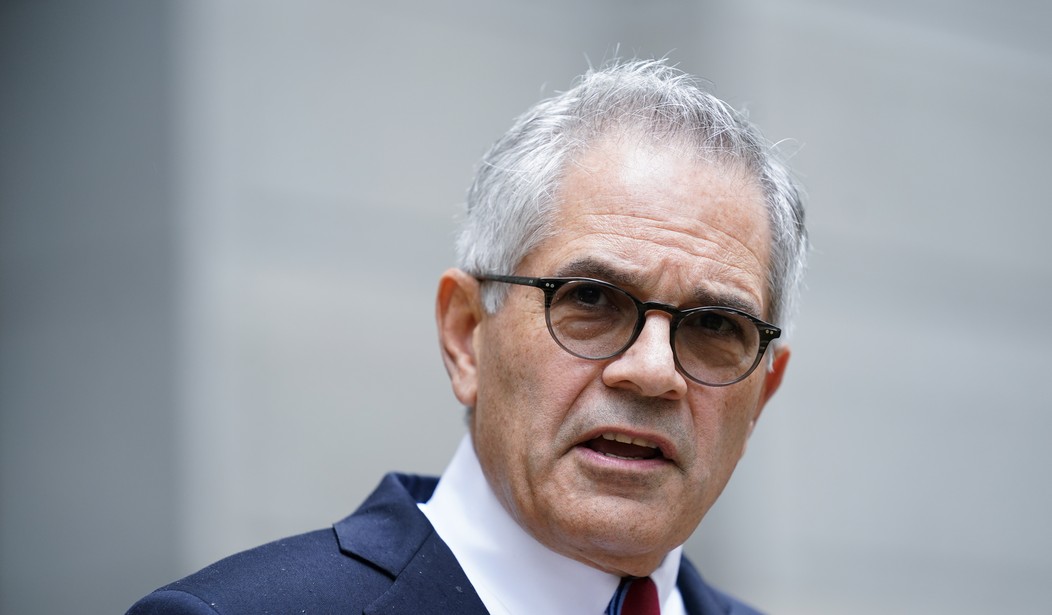
Since taking office in 2018, Philadelphia District Attorney Larry Krasner has been a lightning rod for controversy, fundamentally reshaping how the city’s prosecutor's office handles both active prosecutions and past convictions.
He instructed his office to stop seeking cash bail for low-level offenses, stop charging prostitution (for individuals with fewer than three convictions), decriminalize marijuana possession, and decline to pursue retail theft charges under $500 as felonies.
State Republicans and former Philadelphia prosecutors have consistently targeted Krasner's handling of VUFA (Violation of the Uniform Firearms Act) cases. Critics allege his office routinely withdraws or dismisses illegal firearm possession charges at a disproportionately high rate, arguing that failing to prosecute illegal gun possession directly feeds into the city's gun violence epidemic.
This fierce political backlash led the Pennsylvania House of Representatives to formally impeach Krasner for "dereliction of duty" and mismanagement of his office. Though the ensuing state Senate trial was indefinitely postponed and the articles eventually expired, it remains one of the most drastic legislative moves against a sitting DA in modern U.S. history.
Krasner’s administration has aggressively utilized its Conviction Integrity Unit (CIU) to review past cases, successfully supporting the overturning or reduction of over 100 convictions (mostly homicides) as part of an effort to correct past prosecutorial misconduct. However, critics and victims' advocates have long accused his office of effectively acting as co-counsel for the defense rather than an adversarial prosecutor.
Finally, one of Krasner's more outrageous reviews was taken to the Pennsylvania Supreme Court. The court reviewed the case of Lavar Brown, a convicted murderer who was granted a new trial after Krasner’s office chose not to oppose his petition.
Brown is an ultra-violent, repeat offender whose case was reviewed by Krasner. Brown was tried and convicted of second-degree murder in the 2003 case of a drugstore manager whom Brown robbed with an accomplice. While Brown didn't pull the trigger in that case, he was held responsible.
He was also convicted of shooting another man several times in the back in a targeted killing. The circumstances warranted the death penalty.
Krasner's inaction led to the case being reviewed by the state Supreme Court. In a scathing 4-3 majority opinion, the court ruled that Krasner's office had "repeatedly lacked candor to the court, misrepresented facts, failed to conduct adequate investigations, and inexplicably dodged necessary evidentiary hearings" in its rush to concede past verdicts.
The court stripped Krasner of unilateral power over these cases, ruling that future post-conviction relief attempts in Philadelphia will now face an extraordinary, mandatory layer of oversight by the state Attorney General.
One of the cases cited by the Supreme Court was when Krasner’s office attempted to drop the death penalty against Robert Wharton, convicted of the murder-torture of a Pennsylvania couple, claiming the DA's office had communicated with the victims' family and that the family agreed. A federal judge later blasted the DA's office for "dishonesty," finding that they had actually misled the court and ignored the family's explicit wishes. The state Attorney General's office had to be appointed to step in and properly represent the interests of the Commonwealth.
In the Brown case, "The Supreme Court of Pennsylvania exercised its King's Bench jurisdiction to review the case. The Court held that the DAO's concession was not reliable, as it had failed to disclose material evidence, submitted a false stipulation, misrepresented facts, and opposed a required evidentiary hearing."
Reviewing old cases has been a priority for Krasner, which he cast as “correcting the mistakes of the past” in a way that builds trust with the people of Philadelphia. In particular, he has focused on capital murder convictions — “confessing error” in old cases pursued by his predecessors and arguing in favor of life sentences over the death penalty.
The Office of Attorney General criticized this move, saying that “none” of the cases “has ever resulted in the arrest and prosecution of a new perpetrator.” Many were either dismissed or negotiated pleas to reduced charges.
“Our communities deserve a fair and just process for post-conviction review that adheres to the rule of law. We are hopeful that the Richardson and Crawford families are heartened with this ruling from the Pennsylvania Supreme Court and thank them for their advocacy for their loved ones,” state Attorney General Dave Sunday said in a statement.
Staff purges, virulently anti-police policies, in addition to the lies, the misrepresentations, and the inexplicable defense of violent criminals, when the duties of his office called for vigorous and passionate advocacy on behalf of victims, Krasner seemed to make it his job to make Philadelphia his personal fiefdom. And a far more dangerous place.
The ruling by the Supreme Court was unprecedented."Our duty to safeguard justice compels us to order that in all PCRA [Post Conviction Relief Act] cases in which the DAO concedes relief, the PCRA court shall afford the OAG [Office of Attorney General] notice and the opportunity to intervene before ruling on the concession."
Perhaps Krasner will refuse to accept the humiliating conditions of the ruling and resign. We can only hope.
Editor’s Note: Every single day, here at PJ Media, we will stand up and FIGHT, FIGHT, FIGHT against the radical Left and deliver the conservative reporting our readers deserve.
Help us continue to tell the truth about the Trump administration and its successes. Join PJ Media VIP and use promo code FIGHT to receive 60% off your membership.





Join the conversation as a VIP Member