


I've always been cynical about growing older. It happens to everyone, so why fight it?
The older I get, the more cynical I become, especially about young people. Then I recall my grandfather saying that my generation wasn't worth anything and that the U.S. would face an unprecedented decline when we took power.
It didn't happen, of course. Now, the older generations are saying the exact same thing about Gen Z, just like what the Victorians said about my grandfather's generation and the Gilded Age adults said about Victorian kids. It's an unbroken cycle dating back to humanity's beginnings on the African savannah, when adults probably told teens that their generation was doomed and they'd probably be eaten by a lion if they didn't shape up and fly right.
Gen Z might not be eaten by a lion, but they are in danger of losing something passed down from generation to generation: a sense of who the United States of America is and what it stands for.
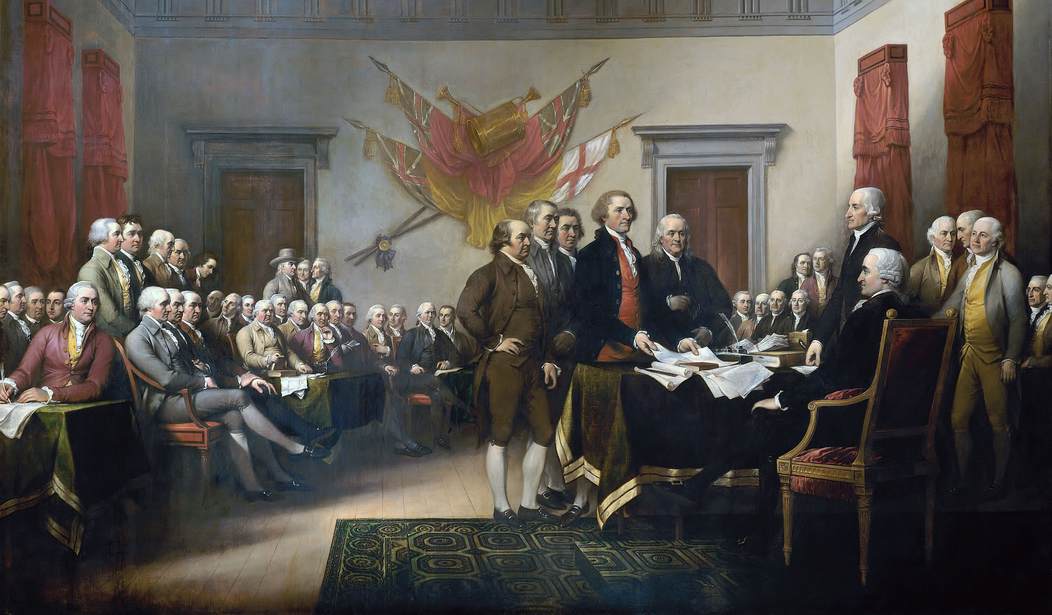
"If we want rising generations to understand and appreciate their country, we must ensure that they grasp the essential meaning of the American Revolution," writes Wilfred McClay, the Victor Davis Hanson chair in classical history and Western civilization at Hillsdale College in City Journal. "Without that point of reference, we not only forget the succession of historical events, the names and places and stories that form the warp and woof of our common life; we will also eventually forget who we are as a people."
As the U.S. marks the 250th anniversary of our independence, it is certainly time to reflect on the past. I vehemently disagree with the claim that we have nothing to celebrate, as many on the left seem to believe. They fear the unabashed, joyous outpouring of patriotic pride in the nation, its founding, and its many glorious contributions to humanity, which have raised people up, giving them dignity and hope for the future.
While some look to Marx and Engels for inspiration to rebel against oppression, many, many more look to Jefferson and Madison for a roadmap when fighting for their own freedom. That fact is forgotten in the orgy of self-loathing over slavery, the oppression of women, the stealing of Native American land, and all the other sins, real and imagined, that America has committed over the last 250 years.
They are a part of our history and must be taught alongside the extraordinarily serendipitous nature of our founding. But to look through the prism of time and see only one vision of the past is ignorant and does an enormous disservice to young people learning about the United States. It's not our sins or the triumphs that define us. They are but signposts on the road to the future. Teaching the young from where we come and how we achieved the impossible of defeating the world's greatest superpower at the time is absolutely essential to giving them a sense of nationhood. It's the greatest common denominator we share, since so many of us come from elsewhere, believe different things, and worship different gods.
McClay notes that at times, history can actually get in the way of that goal.
In our own time, this concern takes the form of a curious paradox: while we “know” more and more about previously hidden details of the American past, we often understand less. As a people, we lack an active sense of the overarching meaning of that history—the kind of meaning that shapes how we live together and how we imagine our future. We lack a mature perspective that can place America’s great achievements in proper relation to its admitted failings and shortcomings.
More than that, we fail to weigh those achievements against the dark and dismal features of most of human history. We lack a shared sense of how remarkable our pioneering experiment in self-rule has been, and of how much despair, want, and inequity have characterized most of the human past, and much of the present, by comparison. We lack a sense of the brilliant light that entered the world in 1776, when, for the first time in history, a nation came into being explicitly committed to the principle that liberty and equality are endowments bestowed upon all human beings. Its very existence asserted, in Jefferson’s words, that “the mass of mankind has not been born, with saddles on their backs, nor a favored few booted and spurred, ready to ride them legitimately, by the grace of God.”
The "dismal" human past of which America is a part is often used to justify ruining every effort to celebrate our heritage. "The weight of our imperfect history now presses heavily upon us," writes McClay. "Memory is necessary, but so is forgiveness, especially for past deeds that cannot be undone and past debts that can never be repaid."
Alas, that forgiveness will not be forthcoming anytime soon. Listing our sins during patriotic celebrations is a ritual as ingrained in our culture as fireworks on Independence Day. "Reminding us" of our sins (as if we could ever forget) is now a political power play used to rally minorities and other "oppressed" groups to the left-wing banner.
Efforts to tell the whole story of America's founding and our history are criticized as "whitewashing" our past. But it's essential that young people are taught that story in all its glorious, improbable, unbelievable and painful, tearful, blood-soaked reality for many Americans.
There won't be an America 250 years from now unless kids are exposed to the ideas of the Revolution and how radical they truly were for those times.