


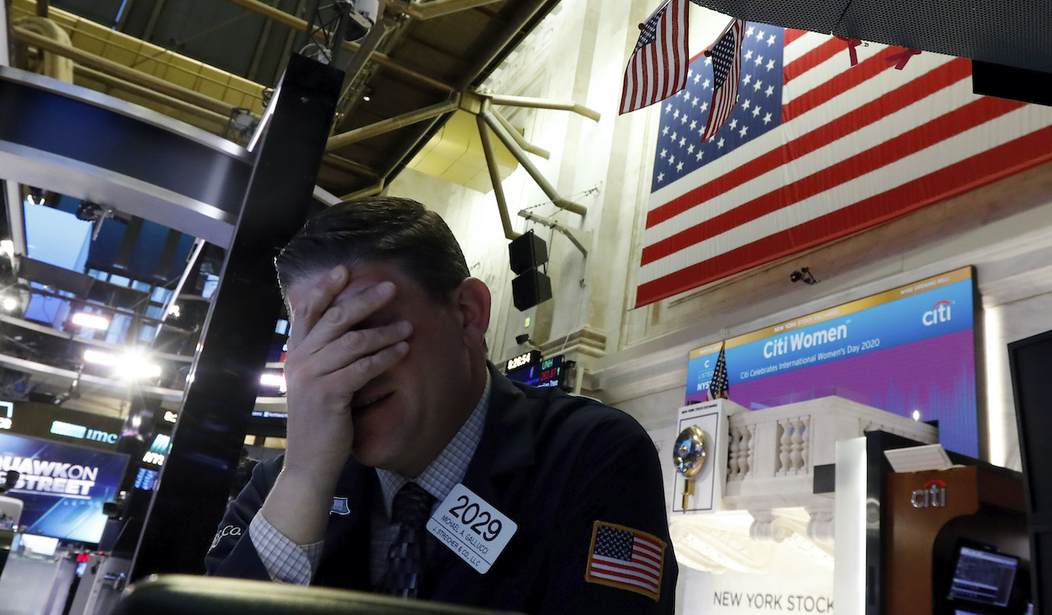
Smart investors knew that the AI boom in the stock market over the last three years was part illusion, part excitement over "something new."
AI stocks had a major retreat last Friday, and analysts are trying to unpack exactly what that means. The tech-heavy Nasdaq composite led the market lower with a 4.2% drop, while the S&P 500 fell 2.6%. The retreat reignited fears that artificial intelligence valuations had climbed too high, too fast, setting off what analysts called a "semiconductor wipeout" that dragged down global tech markets.
Alan Greenspan called the dot-com boom "irrational exuberance" in December 1996. That's a good way to explain what has happened over the last three years with the AI boom.
Does anyone remember Webvan? Founded in 1996 as an online grocery delivery service, the company raised nearly $400 million from venture capitalists and went public at the peak of the boom.
Alas, they burned through $1.2 billion building massive, automated warehouses and buying a fleet of delivery trucks before proving that the business model actually worked or securing a stable customer base. In July 2001, the company, decades ahead of its time, filed for bankruptcy.
The AI boom is not the dot-com boom. It may be worse. It may not be. We may come out the other side of the boom to a soft landing or crash and burn the entire economy.
Whatever happens, it's going to be big. That's what has characterized the AI boom from the beginning: superlatives, hype, and eye-popping advances that have many people demanding we "slow down" the development of AI.
Is that even possible?
"The most dangerous assumption in AI safety is that we can control AI once it’s smarter than us," writes Andrea Morris of Forbes. "The second most dangerous assumption is that we can control how fast we develop it."
"The scientific case against a global AI pause is that human control over collective human action and institutions has well-documented limits, Morris writes. "Technologies can be halted by moratoriums when you can see exactly who’s doing the risky thing, where they are doing it and how to stop them."
Because AI is a digitally distributed utility, it "can’t be governed like human cloning or nuclear arms development," says Morris.
Perhaps whatever governance AI needs will be provided by the companies themselves. Simple economics might act as a brake, as returns on AI investments lag behind the enthusiasm.
Investors were confronted this past week with four difficult realities that may fundamentally change the way they think about AI the business vs. AI the technology:
- AI is too expensive, say CEOs and even Microsoft itself.
- It's not paying off nearly as much as companies expected, per a new Bain study.
- Infrastructure demand is strong — but not as strong as the most optimistic wanted, as Broadcom showed with its "weak" forecast.
- Financing that infrastructure is going to be more expensive for longer, with signs pointing to the Fed raising, not lowering, interest rates.
Those realities challenge assumptions that powered markets to historic heights over the past few years. It's hard to justify chip or memory stocks rising 1,000%+ in a year if the boom isn't what everyone assumed.
Much of the U.S. stock market is built on the concept of a quick return on investment, with company leaders far too concerned about quarterly profits and stock prices. Investing in AI is a long-term strategy for a short-term environment. CEOs who might not have understood the challenges of AI in integrating the technology into their business are getting very nervous.
Annex Wealth Management chief economic strategist Brian Jacobsen wrote Friday morning: "Recent earnings reactions suggest that even outstanding growth isn't always enough when expectations are stretched — a classic 'priced for perfection' dynamic.
"But not everything is priced that way," he added. "There are still areas where expectations are more reasonable, and valuations offer a cushion."
"Every great new technology has its moment where the business behind it resets, even as the tech itself keeps advancing," writes Ben Berkoitz of Axios. "We could be seeing the start of that moment for AI."
Or we might see tech bros selling apples on street corners before too long. Anything is possible at this point.
Editor's Note: The Democrat Party has never been less popular as voters reject its globalist agenda.
Help us continue exposing Democrats' plans to lead America down a dangerous path. Join PJ Media VIP and use promo code FIGHT to receive 60% off your membership.






Join the conversation as a VIP Member