


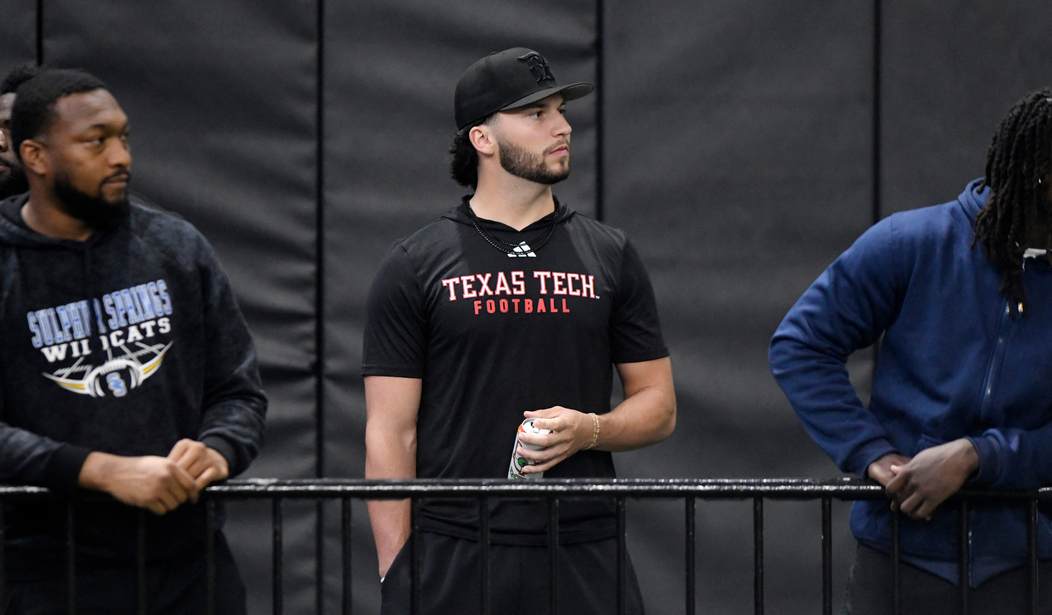
Last March, law enforcement officials flagged the gambling history of former Indiana quarterback Brendan Sorsby, now a Texas Tech multi-million-dollar transfer baby, setting off the biggest betting scandal in college sports since the 1950s.
Gambling is not the biggest element in this scandal. Court documents revealed that Sorsby wagered at least $90,000 on college and professional sports across multiple states using so-called "proxy bets" (getting other people to bet for him). This included more than 40 wagers placed on his own team (the Indiana Hoosiers) during the 2022 football season.
Sorsby admitted to placing the bets only after sportsbooks in several states flagged his accounts and turned the evidence over to the FBI. He immediately entered rehab.
It's what happened when Texas Tech took the case to federal court after the NCAA ruled Sorsby permanently ineligible that shocked college sports to its core.
Judge Ken Curry of the 99th District Court in Lubbock County, Texas — the same county where Texas Tech is located — issued a temporary injunction throwing out the NCAA lifetime ban on Sorsby and instead suspending him for two games. It's the first case of an athlete in a major sport admitting to gambling on his own team and still being allowed to continue playing that sport.
The NCAA is appealing the ruling, but no one is optimistic that the judge's decision will be reversed.
College coaches were shocked. “Unbelievable,” said one top-tier college head football coach. “If gambling isn’t punishable. What is?” said another major head coach.
“That’s f***ing crazy! Beyond wild,” said a major head coach. “We have some serious problems that if they don’t get fixed — the entire thing is going to implode. Soon.”
Implosion is the course that was set by pro and amateur sports organizations when legalized sports betting became widespread. Online sportsbooks had a total handle in 2025 of more than $166 billion. You didn't need to be a soothsayer to figure out that with all that money floating around in a poorly regulated industry, with bets being easy to place and even easier to cover up, a major scandal would pop up.
Sorsby’s high-profile attorney, Jeffrey Kessler, argued that the NCAA's strict enforcement rules harmed Sorsby’s welfare as a recovering gambling addict who had since sought treatment. Judge Curry accepted the argument, ruling that depriving Sorsby of elite Division I training, coaching, and exposure to the NFL would cause him irreparable harm.
Curry apparently believes that the harm caused to Sorsby, were he deprived the ability to “benefit from the elite coaching, training resources, camaraderie and regimen that only being a member of a Division I college football team can provide,” is more damaging than the harm caused by setting a precedent that someone can bet on their own team — the cardinal sin of being an athlete — and receive no consequences besides missing games against Abilene Christian and Oregon State.
Major League Baseball’s all-time hits leader, Pete Rose, had to die before that sport would forgive him for betting on his own team. But a Big 12 quarterback? Two-game suspension.
Former Iowa defensive tackle Noah Shannon saw his college career ended because he placed one legal bet on his school’s women’s basketball team, believed to be for less than $100. Sorsby placed at least 40 bets on Indiana football while still underage, and approximately $90,000 in sports wagers using other people’s sportsbook accounts, and will be back in time for the Red Raiders’ Big 12 opener against Houston.
The ruling castrates the NCAA. If the organization cannot be allowed to police its member institutions and the athletes who play for them, the current chaos confronting college sports will only get worse.
Texas Tech leadership has defended Sorsby, with university president Lawrence Schovanec claiming NCAA bylaws haven't kept pace with the legalized sports betting era. However, rival schools and coaches have reacted with immense frustration. Big Ten officials have already begun discussions regarding a potential league-wide ban on scheduling Texas Tech in any sport, and several athletic directors have publicly condemned the ruling.
“It speaks to the power of attorneys and politics and the lack of control the NCAA has over governance,” one major college coach told The Athletic. “Betting on your own teams or sport has always been a death penalty. But now it’s overlooked?”
In fact, some schools are thinking of breaking away from the NCAA and forming their own athletic association.
“What is the purpose of the NCAA?” one top-tier coach said. “I don’t understand anything about their purpose anymore if a guy can do what he just did, blatantly break the rules, go gamble, and he can get a judge in a local area to sign off, and he can go play football? I just think it puts us one step closer to the Power 4 [conference] or certain teams in the Power 4 separating and having their own governing body.”
That would mean that the biggest colleges would make rules about eligibility, NIL (name, image, and likeness) guidelines, and other governing aspects of college sports. Smaller schools will not be protected as they are under the NCAA regime.
Some school administrators are calling for Congress to intervene and address the chaos. Such a fraught issue will take years to resolve. In the meantime, college sports in the United States have never been under such a severe threat. It is one major gambling scandal away from becoming irrelevant.
Editor’s Note: Every single day, here at PJ Media, we will stand up and FIGHT, FIGHT, FIGHT against the radical Left and deliver the conservative reporting our readers deserve.
Help us continue to tell the truth about the Trump administration and its successes. Join PJ Media VIP and use promo code FIGHT to receive 60% off your membership.




Join the conversation as a VIP Member