


New York passed something called the 2019 Climate Act, which "requires New York to cut statewide greenhouse gas emissions by about one-quarter from that year’s levels by 2030," according to City Journal's Ken Girardan.
Here we are in 2026, and the state has made minuscule progress toward that lofty (and ridiculous) goal. What's a radical progressive governor like Kathy Hochul to do?
The Climate Act comes with a massive regulatory burden that would make living in New York a nightmare. It presents the state with three different problems:
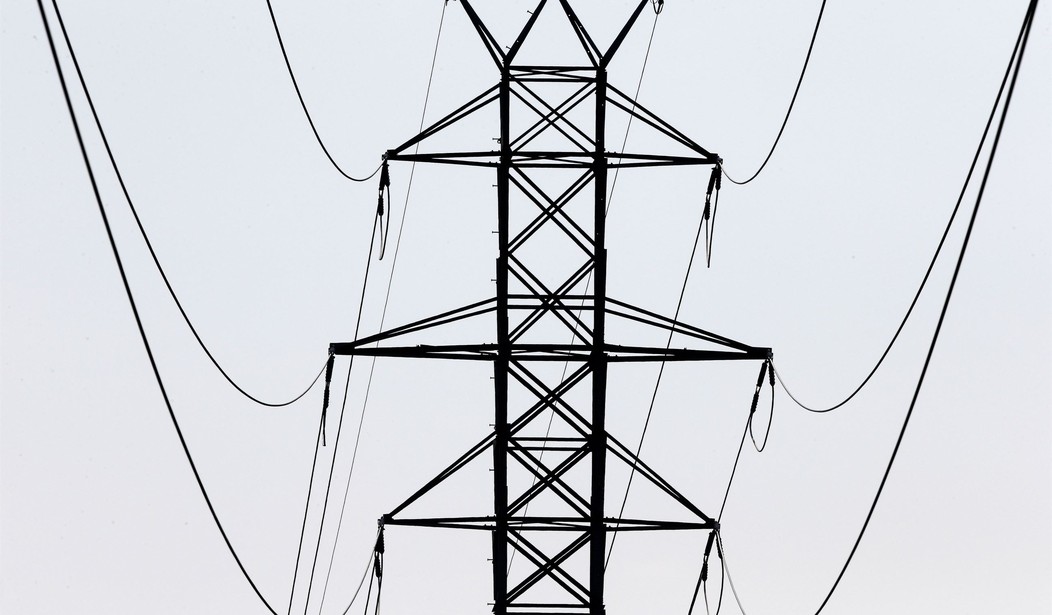
1) The threat to the reliability of the grid.
The necessity of "transitioning" to wind and solar power would make flipping the light switch in the state like flipping a coin: heads you lose, tails you lose.
Exhibit "A": California and its "rolling blackouts" during hot weather.
2) Rising electricity bills.
"As of November, bills were up an average of 7 percent over last year, and up a whopping 47 percent since 2019 on average," reports Girardan. A state energy forecast showed that "electricity prices across Upstate New York could rise at least an additional 40 percent in the next five years."
3) A looming surge in fuel prices.
It's not just the Iran War that's driving up gas prices.
The state has also been fending off a lawsuit by environmental groups upset that the state hasn’t issued the Climate Act’s long-promised—and legally required—regulations to increase fuel costs for homes, businesses, and vehicles. The costs only go up from here.
The state Department of Environmental Conservation was supposed to implement these regulations two years ago. But Governor Hochul has resisted, in part because such a system would immediately increase gasoline prices by $1.62 per gallon and cause similar price hikes on home-heating oil, diesel, and natural gas.
Unfortunately for Hochul, the environmental activists won at the trial level and have a good shot of prevailing on appeal in their lawsuit. That means she needs to modify the Climate Act substantially in ongoing budget talks to prevent what would amount to the biggest middle-class tax hike in state history (and, relatedly, a sizable operating-cost hit for state agencies).
Incredible. But the greens don't care — they're trying to save a planet. They don't care about your family, your job, your income, and most especially, they don't give a crap about you.
This is the power of "The Groups," the NGOs, special interest groups, and radical donors who run the Democratic Party, set its agenda, enforce its litmus tests, and discipline those lawmakers who don't toe the line and spout the party line.
I've written about the "Interest Group Questionnaire Industrial Complex," in which Democratic candidates "are forced to fill out 20-30-page questionnaires from several major interest groups, with dozens of 'litmus test issues' that determine whether they receive that group's support." Then the groups watch you like a hawk to make sure you never utter a word in opposition.
Even more radical than the interest groups are the climate bureaucrats.
In spite of this sort of demand, state air-quality regulations (related to ozone and separate from the Climate Act) have already forced operators to close a few dozen small “peaker” power plants—plants that previously ran for a few hours each summer when demand was highest.
Some of the lost peaker capacity should have been replaced years ago. But state environmental officials, citing the Climate Act, blocked a major power plant upgrade in Astoria in October 2021 and another one in Orange County the same day. That move—about which state officials jetted off to Scotland to boast—put the kibosh on other upgrades. The remaining stock keeps getting older: the two yet-to-be-replaced power plants in Astoria that went offline amid the heat last June were built in 1954 and 1958.
In December, the state’s utility regulator, the Public Service Commission (PSC), ordered the city’s electric utility, Con Edison, to address the shrinking margin between peak electricity demand and supply. But because of the Climate Act, the PSC told the company to look only at “non-emitting solutions”—i.e., those that didn’t create additional greenhouse gases. It remains unclear how Con Edison will handle the next sweltering weekday afternoon.
Politicians like Hochul, New York City Mayor Zohran Mamdani, Senate Minority Leader Chuck Schumer, and other prominent Democrats will blame the power companies or the oil companies for the blackouts, the unaffordable electric bills, and why the AC won't work on 100-degree days.
The media will parrot those reasons, and the public will swallow them whole. Such is America in the second quarter of the 21st century.
Also for our VIPs: We Don't Need to Copy China to Beat Them in the Race for Rare Earth Mineral Dominance