


Steve Witkoff, Donald Trump's Iran negotiator, was on "My View" with Lara Trump last week, and asked a telling question: Why doesn't Iran capitulate?
Witkoff on Iran: The president is curious as to why -- I don’t want to use the word capitulated but why they haven't capitulated. Why under this pressure with the amount of naval power over there, why they haven't come to us and said we profess we don't want a weapon… pic.twitter.com/gdv9CXjwBW
— Acyn (@Acyn) February 22, 2026
George Bush asked the same question in 1991 after the U.S. sent 250,000 soldiers and a huge amount of firepower to the Middle East to kick Saddam Hussein out of Kuwait. George W. Bush also asked the same question in 2003. Why didn't they avoid war by simply acknowledging reality and giving up?
The answer lies in the leadership dynamics of dictatorships and the cold calculations of power politics. The inherent weakness of dictatorships makes it impossible for them to surrender. Showing weakness would embolden opposition both internally and externally. It would tempt the supposed loyal inner circle to attempt to seize power. And the street protests would grow in numbers and intensity.
"As a New York Times headline noted on Feb. 23, 'For Iran’s Rulers, Refusing U.S. Demands Is a Risk Worth Taking,' with the clerical leadership viewing concessions as a greater threat to regime survival than the prospect of war," write Tanya Goudsouzian and Ibrahim al-Marashi in War on the Rocks.
Iran is a far different country today from what it was in June 2025, when Israel and the U.S. all but "obliterated" the Iranian nuclear program. Those attacks weren't designed to initiate an uprising, but Israel tried to spur protests against the regime by hacking into the Iranian national TV network and showing video of past huge demonstrations never seen in Iran before.
It didn't work, because the Iranians saw Israel as having initiated the attacks, and protesters didn't want other opposition groups to accuse them of being "tools" of the Zionists.
Since then, the economy has collapsed, at least 30,000 protesters were slaughtered on Jan. 8-9, and up to 50,000 people have been arrested. At least 30 prisoners were confirmed executed in late January and early February across the country. Charges included "premeditated murder" and "drug-related offenses."
As of Feb. 20, 2026, Amnesty International reported that at least 30 individuals, including children as young as 17, are at immediate risk of execution following "sham trials" related to the January uprising. Eight of these individuals were sentenced to death in February alone.
Prior to and immediately after the Jan. 8-9 mass murders, the Iranian government brought in Shiite militias from Iraq, Lebanon, and Yemen to help put down the demonstrations. This radically changed the situation on the ground in Iran from June, when U.S. and Israeli intervention would have been unwelcome.
Nearly nine months later, the political environment is different. Iranians answered Trump’s calls for protests and pleaded for American intervention, regarding US action as indispensable help rather than the start of a new confrontation. After Iran accepted the aid of foreign militiamen from its Iraqi and Lebanese terror proxies to kill unarmed Iranian protesters, the protest movement appears far more willing to tolerate foreign intervention from its allies abroad.
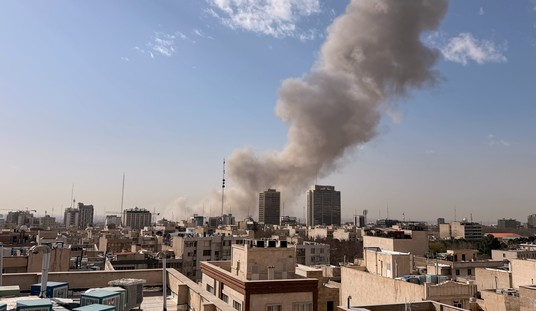
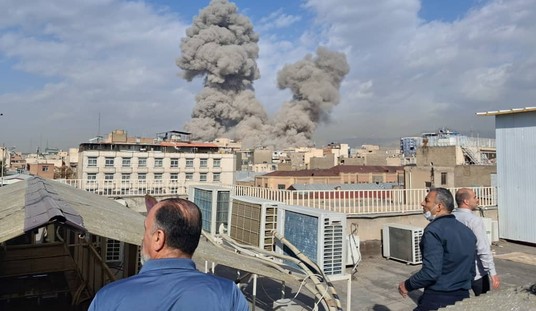
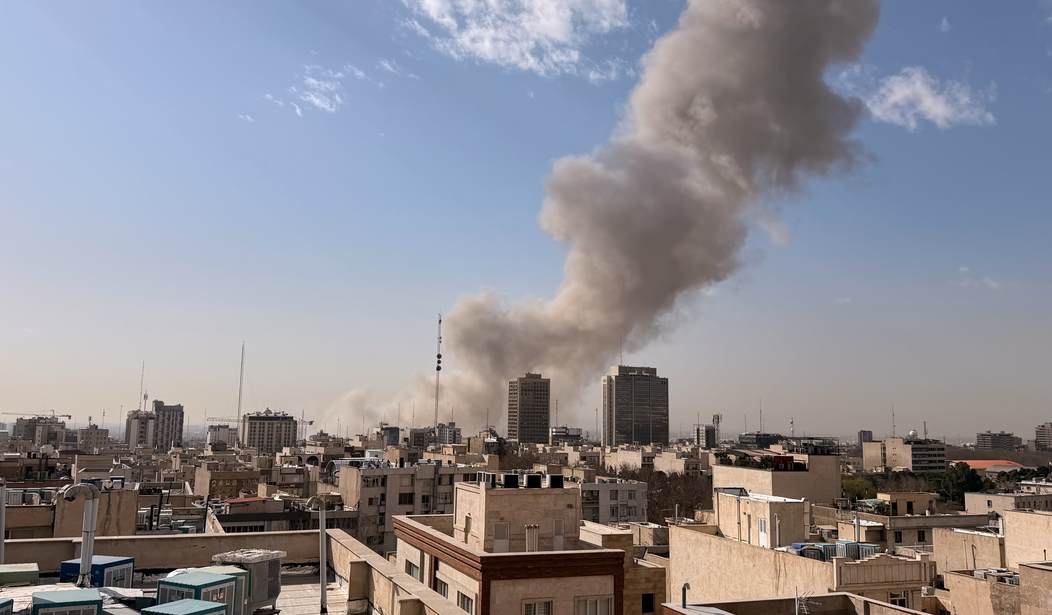
As of now, the endgame of these strikes is unknown. Assuming the goal is regime change, removing the leadership of the Revolutionary Guards and the government is a good first step, but it doesn't materially help the protesters in the streets.
An effective strategy to topple the Iranian regime must include establishing communications (if they haven't already) between the opposition protesters and the intelligence services of Israel and the U.S. Some coordination will be necessary as the bombing campaign moves forward.
While the opposition is fractured and the internet being down is a disadvantage, the Iranian protesters are resourceful, having dealt with the regime tactics for the last decade. They will find a way to communicate and coordinate with each other.
Signs of this have been evident over the last fortnight as protests have begun again, this time marking the end of the traditional 40-day mourning period. Authorities wouldn't dare cancel this cultural and religious observance, so they have reluctantly allowed it to proceed. As grieving families spout anti-regime rhetoric, protesters have appeared in order to join the mourners. In some cases, the protesters have numbered in the thousands.
The stage is set for the end of the Iranian regime. What can the U.S. and Israel do to make it a reality?
It follows, then, that striking at Iran’s repressive apparatus must go beyond hitting empty buildings. While bombing a local IRGC or Basij headquarters may be a symbolic statement, it is far more important to actively target Basij units and security forces actively involved in repression on the ground.
This is no easy task, of course. It means leveraging real-time intelligence and precision drone operations, rather than relying solely on airstrikes against large fixed bases. But it is possible to do. During the 12-Day War, Israel demonstrated the effectiveness of forward intelligence assets and drone bases inside Iran for targeted eliminations. The United States should apply those same capabilities directly against mobile repression units, including Basij squads on motorcycles or pickup trucks mounted with heavy weapons.
Altering the balance inside Iran depends on changing the risk calculus of those enforcing repression. At present the asymmetry is clear. Protesters face live fire, while Basij forces operate with relative impunity. Once security personnel see that their own lives are in jeopardy, they are more likely to defect than to suppress. They must lose the sense of impunity and understand that continued loyalty carries immediate personal cost.
The psychological momentum is on the side of the opposition. The regime is running scared, and we should watch for defections among the Basij and Revolutionary Guards. They may be fanatics, but they also don't want to die.
Nothing is guaranteed, and Trump/Netanyahu may not even be swinging for the fences and going for regime change. If they are, we'll know in the next 48 hours, as the oppression apparatus is targeted in earnest. That may embolden the protesters to go into the streets and face their oppressors.