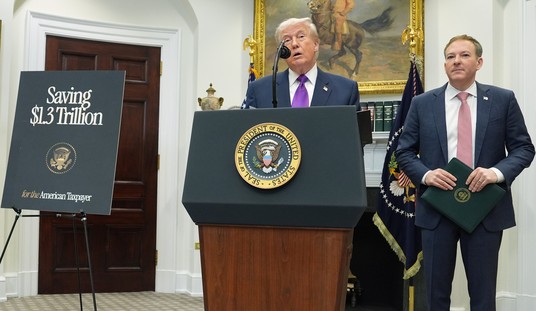



Israeli Prime Minister Benjamin Netanyahu paid a visit to Donald Trump on Thursday to discuss Iran and Hamas. "Nothing definitive" came out of the White House meeting, according to a Trump post on Truth Social.
"There was nothing definitive reached other than I insisted that negotiations with Iran continue to see whether or not a Deal can be consummated," he wrote. If a deal cannot be reached, "we will just have to see what the outcome will be. Last time Iran decided that they were better off not making a Deal, and they were hit with Midnight Hammer — That did not work well for them."
The trip was last-minute, precipitated by Trump's desire to make a deal with Iran. Netanyahu flew to Washington to tell Trump, “Any negotiations must include restrictions on ballistic missiles and an end to support for the Iranian axis.”
In his talk with Trump, Netanyahu “emphasized Israel’s security needs in the context of the negotiations” with Iran. The prime minister's number one priority is to get Trump to agree to prevent Iran from reconstituting its ballistic missile program, which Israel severely damaged in the 12-day war. Preventing Tehran from rebuilding Hamas, Hezbollah, and the Houthis fighting forces is also a priority.
At present, Iran has agreed to only talk about its nuclear program. But Iran has recently indicated that it may change if the U.S. is willing to make some concessions on what it will accept as far as an Iranian nuclear program. The Institute for the Study of War(ISA) reports that "National Security Council (SNSC) Secretary Ali Larijani separately told Omani media on February 10 that Iran could agree to expand the scope of its talks with the United States to other areas if the current nuclear negotiations are successful."
Is it a serious offer? Almost certainly, no.
Iran may be floating the possibility of talks about Iran’s ballistic missile program in an effort to delay possible US military action and extract concessions from the United States in nuclear negotiations. This signaling may be intended to drag out the current talks by leaving open the possibility for discussions about other issues apart from the nuclear issue. Iran may calculate that continuing to reject any possibility of discussing its ballistic missile program with the United States could increase the risk of US or Israeli military action against Iran.
Nevertheless, Iran is gambling that playing for time is its best strategy going forward.
Larijani’s statement to Omani media suggests that Iran would only be willing to entertain the possibility of talks on its ballistic missiles in the event that the United States and Iran reach a nuclear agreement. Iran’s nuclear-related demands include the United States recognizing Iran’s “right” to enrich uranium and lifting sanctions in return for any Iranian concessions on its nuclear program. Iran has thus far only offered limited concessions on its nuclear program. Some regime officials have suggested that Iran may be willing to dilute its enriched uranium from 60 percent to 20 percent, but only if the United States provides full sanctions relief.
With the arrival of the USS Abraham Lincoln carrier strike group in the Arabian Sea and the possible deployment of the USS George H.W. Bush carrier to the region in two weeks, Trump will have nearly unlimited strike options by the end of February. Almost 200 warplanes, plus several Arleigh Burke-class destroyers and Ticonderoga-class cruisers capable of launching hundreds of cruise missiles, will be on station.
Trump's hesitation arises from Iran's stated desire to launch a regional war if the U.S. attacks. Iran's allies in the "Axis of Resistance" are weak and in no condition to assist Iran in a war against the U.S. Netanyahu is concerned that Trump will drop his demands on Iranian missiles and proxies and go for a limited deal on Iran's nuclear program.
The fact that Netanyahu saw a need to urgently make his way to the White House after only one round of US-Iran talks seems to show how concerned he is about the possibility of Trump deciding to drop the demands on Iran’s missiles and proxies, and rush toward a deal on the nuclear file alone.
If talks do fall apart, as they are likely to do, Netanyahu wants to be sure the US and Israel have coordinated on what happens next, and what role Israel will have in military action, if any.
On Gaza as well, Netanyahu is less interested in discussing diplomacy than in coordinating how to deal with its failure to achieve demilitarization.
Netanyahu almost certainly discussed the option of another extended war against Hamas to disarm the terrorists once and for all. Hamas is rapidly building up its strength, and Israel may see war as its only option to achieve its goal of destroying Hamas and its ability to threaten Israeli civilians.
Trump will give diplomacy with Iran one more chance before lowering the boom on the regime. Iran will only be able to stall so long before Trump makes a bid to change the regime, perhaps with Netanyahu's help.