
Hello, all, and welcome to Sunday, Oct. 4, 2026 — the day of rest, for those who can manage it.
My calendar says it's 10-4 Day, Cinnamon Bun Day, Golf Lover's Day, Vodka Day, World Communion Sunday, World Animal Day, and World Space Week. So 10-4 the trucker who hauled your cinnamon bun, eat it on the back nine, and hold the vodka until after church and the dog's walk.
Today in History:
1636: The General Court of Plymouth Colony composes the first legal code in North America, guaranteeing trial by jury.
1777: George Washington's troops attack the British at Germantown, Pa., and suffer heavy casualties.
1830: Belgium proclaims its independence from the Netherlands.
1864: Dr. Louis C. Roudanez founds the New Orleans Tribune, the first black daily newspaper.
1895: Eleven golfers play the first U.S. Open at Newport Country Club in Rhode Island, finishing 36 holes in a single day.
1927: Sculptor Gutzon Borglum begins carving Mount Rushmore in South Dakota.
1931: Chester Gould's comic strip Dick Tracy debuts.
1957: The Soviet Union launches Sputnik 1, the first artificial satellite, and the Space Age begins.
1965: Pope Paul VI becomes the first reigning pope to visit the Western Hemisphere, addressing the United Nations in New York.
1970: Rock singer Janis Joplin dies at 27 in her Hollywood hotel room.
1985: Richard Stallman launches the Free Software Foundation to promote the freedom to create, share, and modify software.
1992: The Rome General Peace Accords end Mozambique's 16-year civil war.
1993: Russian tanks shell the parliament building in Moscow, ending the standoff between President Boris Yeltsin and hardline lawmakers.
2004: SpaceShipOne wins the $10 million Ansari X Prize as the first privately funded reusable spacecraft to carry a pilot to space.
Birthdays Today include: Rutherford B. Hayes, 19th president; Buster Keaton, silent-film comedian; Charlton Heston, actor (Ben-Hur, The Ten Commandments); Anne Rice, novelist (Interview with the Vampire); Susan Sarandon, actress (Thelma & Louise); Tony La Russa, Hall of Fame baseball manager; Jon Secada, singer ("Just Another Day").
If today's your birthday, too, you're sharing it with a president, a vampire novelist, and a man famous for never cracking a smile.
* * *
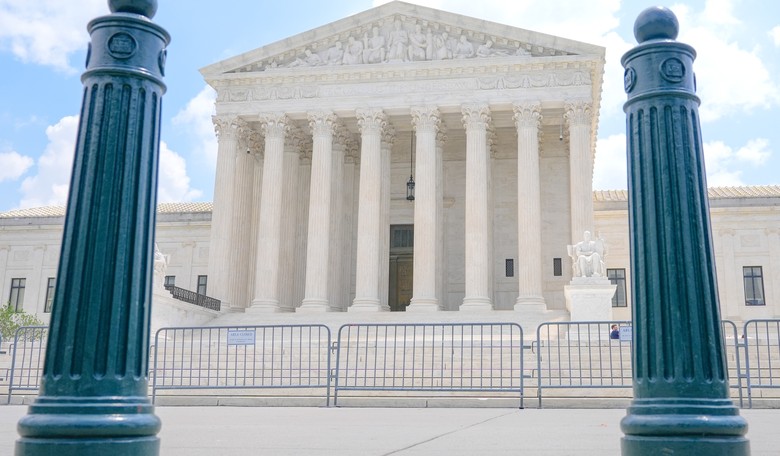
The United States Supreme Court opens its October Term of 2026 on Monday, October 5. The first two weeks' worth of cases are mostly lower-profile, by some folks' measure, and the headline cases come later in the fall. Keep a watch on your YouTube feeds for audio of the arguments before the court in each case.
This week and next (October 5-14)
October 5: Suncor Energy v. Boulder County asks whether federal law blocks Colorado localities from suing oil companies over climate damages. Boulder County and the City of Boulder filed the lawsuit in April 2018. They allege that the companies' production, refining, marketing, and sale of fossil fuels contributed to climate change, and that the companies misled the public about the environmental risks. The suit seems to treat the threat as settled science. Yet the issue appears to be one of jurisdiction. I suspect those two points are where the frailty is in their case. Justice Alito stepped aside days before argument, according to GWLR's preview, after scrutiny of his oil stock holdings.
The same day, Johnson v. U.S. Congress asks whether veterans can bring constitutional challenges to benefits laws in district court. Floyd Johnson is an Army veteran who had an 80% disability rating for service-connected PTSD. After he was convicted of several felonies and sentenced to 40 years, the VA cut his rating to 10% under 38 U.S.C. § 5313, which limits compensation for veterans incarcerated on felony convictions. Johnson sued, claiming the law violates the Bill of Attainder Clause and equal protection. He named Congress as the defendant. The lower courts have been split on this one. A district court dismissed the suit as frivolous. The 11th Circuit vacated and sent it back with instructions to dismiss for lack of jurisdiction. It held that sovereign immunity bars suing Congress, and that renaming the defendants would be futile, because the Veterans' Judicial Review Act (VJRA) strips district courts of jurisdiction over constitutional challenges to veterans' benefits laws. Johnson has an uphill battle, even assuming he wins at the USSC, because even if Johnson wins, he only gets his claim heard, not a ruling on the merits. His status as an incarcerated felon makes the underlying claim at the least a hard sell. I should point out that several groups have filed friend-of-the-court briefs, including the National Veterans Legal Services Program, the Connecticut Veterans Legal Center, and Swords to Plowshares. Those are all separate filings, supporting their view of the legal question.
October 6: Anderson v. Intel sets the pleading standard for ERISA (Employee Retirement Income Security Act) retirement-plan claims. The question before the court is whether plaintiffs alleging investment underperformance must plead a meaningful benchmark to establish a plausible claim of breach of ERISA's duty of prudence. In other words, on what basis are the claims made?
October 7: Air Force v. Prutehi Guåhan tests whether the Air Force had to do an environmental review before renewing its Guam hazardous-waste permit.
October 13: Beaird v. United States asks how much deference courts owe the Sentencing Guidelines' commentary. It's worth noting that this is not a Second Amendment case. Kendrick Jarrell Beaird was indicted in federal court in Texas in 2023 for possessing a firearm as a convicted felon, in violation of 18 U.S.C. § 922(g)(1). The sentencing dispute concerned a magazine attached to the firearm. It held 17 rounds, not the 15 noted in the guidelines, to which the judge in the case deferred. The question in this case runs this way: Does Stinson v. United States (1993) still control? Stinson says courts treat Guidelines commentary as authoritative unless it violates federal law or is plainly erroneous. Beaird argues that Kisor v. Wilkie (2019), which limited deference to agency interpretations to cases of genuine ambiguity, displaced Stinson. The 5th Circuit's precedent foreclosed the argument, and courts have divided on it since.
October 14: Salazar v. Paramount Global asks whether a newsletter subscriber counts as a "consumer" under the Video Privacy Protection Act. The federal law at the center of the case is the Video Privacy Protection Act (VPPA), enacted in 1988 after a newspaper published Supreme Court nominee Robert Bork's video-rental history. That seems a little disjointed, I agree. The modern problem is that the law predates Facebook tracking pixels, targeted digital advertising, and the vast data-collection ecosystem of today's internet. Courts have had to decide how a law originally aimed at video rental records applies to websites that publish videos and share visitor data with advertising platforms. Salazar's case puts a particularly important question before the Court: Does subscribing to any service that a company that provides videos offers make someone a protected “consumer” under the VPPA, or must the person subscribe to the company's video-related services specifically? This is yet another case where government and its laws fail to keep up with technology, a point I've raised in this column several times. The court is now faced with the task of deciding if the outdated law can apply to the modern situation.
Immigration detention: Newsweek reports a seventh case on prolonged immigration detention, which the Court's calendar lists as Genalo v. Black. Genalo v. Black concerns a fundamental question about immigration enforcement: Can the federal government keep certain noncitizens locked up for months or years while deportation proceedings drag on, without giving them an individual hearing to determine whether they should remain in custody? The case pitted the Trump administration's authority to enforce federal immigration law against the constitutional protections afforded to people whom the government detains. It raised questions about the Fifth Amendment, mandatory detention, and the circumstances under which an immigration detainee can seek release on bond. This one bears watching, since we know what is going to happen should the court decide they should be released.
The bigger cases later this fall (National Constitution Center):
Early November: St. Mary Catholic Parish v. Roy is a religious discrimination challenge that Catholic preschools excluded from Colorado's universal pre-K funding have brought. The Court won't revisit Employment Division v. Smith.
December 2:Viramontes v. Cook County and Grant v. Higgins test AR-15 bans under the Second Amendment.
December 8: RNC v. Mi Familia Vota asks whether Arizona can require documentary proof of citizenship to register to vote. One important piece of background is that Arizona already had a longstanding dispute over its proof-of-citizenship requirements. Earlier litigation resulted in the LULAC (League of United Latin American Citizens) consent decree, which protected the ability of eligible citizens to register for federal elections using the federal form, without satisfying Arizona's separate documentary-proof requirement.The implications here are obvious.
Early December: Grand v. City of University Heights concerns an Ohio city's zoning threats against a home prayer group, and Jouppi v. Alaska asks whether Alaska can seize a pilot's plane over a few cases of beer. The case is something of a one-off, given the unique nature of Alaska and its dependence on private planes for getting around and getting supplies into some regions of it.
Possible additions. The ACLU is asking the Court to take up Texas's Ten Commandments classroom law, and election-law cases tied to the midterms may arrive. NPR's preview quotes Georgetown's Stephen Vladeck saying the term's biggest cases probably aren't on the docket yet, and the Trump administration's emergency-docket appeals will keep adding to it.
For context, last term, the Court struck down Trump's IEEPA tariffs and his birthright citizenship order, narrowed the Voting Rights Act in Louisiana v. Callais, and upheld state bans on transgender girls in girls' sports.
= = =
Thought for the Day: Complacency is the one luxury a great power can't afford — ask anyone who heard Sputnik beeping overhead.
VIP members: Are you watching the USSC's rulings? Which ones? Any predictions on any of these cases?
Have a great Sunday, gang. I'll be watching my 3-0 Buffalo Bills take on the 1-2 Patsies. One of the safer bets I've made this season. Go Bills!
I'll see you here tomorrow.