
McConnell Dorce owned his Brooklyn property for decades. He paid off the mortgage, but when he later fell behind on water and sewer charges, he entered a payment plan with New York City and kept making payments.
Then came the part that should make every property owner uncomfortable.
Dorce's lawsuit alleged that the city foreclosed on his property through its Third Party Transfer program without adequately notifying him.
Court records say the city valued the property at roughly $226,000 while his outstanding liability was about $45,000. His complaint alleged that the city kept accepting his installation payments even after ownership had been transferred.
Dorce died in February and never got to see the case reach this point.
New York City has now agreed to a proposed $60 million settlement covering claims involving 64 properties transferred during Round 10 of the program. A federal judge still must approve the settlement, and the city denies that the transfers violated the former owners' rights. Federal court records confirm the parties fully executed a settlement agreement in August.
New York City has now agreed to a proposed $60 million settlement covering claims involving 64 properties transferred during Round 10 of the program. A federal judge still must approve the settlement, and the city denies that the transfers violated the former owner's rights. Federal court records confirm the parties fully executed a settlement agreement in August.
There's a reason Third Party Transfer existed. Some landlords allow apartment buildings to decay while taxes pile up and tenants live with dangerous conditions. Government has an obligation to enforce housing codes and collect legitimate debts.
But taking somebody's property carries a much higher burden than writing a citation.
The old program became so controversial that it was effectively frozen in 2019. Critics argued it swept up properties that never should've been taken, including homes with relatively modest debts and owners who said they received inadequate notice. The City Council itself has acknowledged serious flaws in how the program operated.
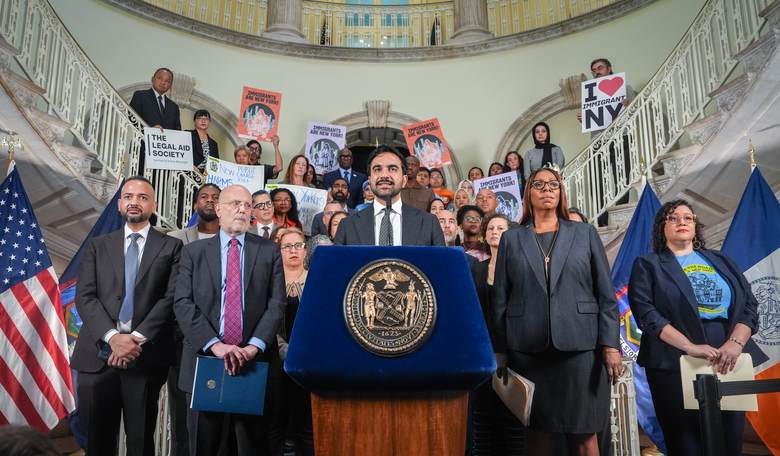
Now Mayor Zohran Mamdani wants the city to use that power again.
His housing agenda supports reviving the program through the SAFER Homes Act. The proposal isn't simply the old policy with a new label. It would eliminate the infamous "block pickup" practice, strengthen notice requirements, give owners more opportunities to correct problems, and attempt to preserve homeowner equity. Its sponsors say the revamped program would concentrate on truly distressed properties and chronically negligent landlords.
From the New York City Council:
“For too long, tens of thousands of New Yorkers have lived in undignified conditions because negligent landlords refuse to do what’s right—no more,” said NYC Council Member Pierina Sanchez, Chair of the Committee on Housing and Buildings. “The SAFER Homes Act offers a new path forward. While the city’s old ‘Third Party Transfer’ has been frozen for nearly a decade due to flaws and outdated provisions in the old program, this overhaul of the city’s power of municipal foreclosure for distressed properties will hold bad actors accountable, stabilize housing in distress, and deliver safer homes for those living in the worst of the worst buildings, through a fair process. I thank the broad coalition of tenants, homeowners, and advocates who are demanding dignified housing for every New Yorker through passage of Int. 657, the SAFER Homes Act.”
“New York is facing a housing crisis, and as our apartment stock continues to age, our laws have to keep pace with reality. The SAFER Homes Act gives the city stronger tools to stabilize distressed properties and work with mission-driven partners to keep them safe, habitable, and affordable for the people who live there. This legislation will help prevent buildings from falling deeper into disrepair and protect tenants from the instability that too often follows. I’m grateful to Council Member Pierina Sanchez for her leadership in advancing this important work,” said Majority Leader Shaun Abreu.
“Int. No. 657 brings long-needed reform to the City’s in rem foreclosure process. It strengthens notice requirements, expands fair payment options, and protects vulnerable homeowners while ensuring that truly distressed and vacant properties are addressed responsibly. That’s why I am proud to support this bill and will work with my colleague Council Member Pierina Ana Sanchez to see this cross the finish line,” said Deputy Leader Chris Banks.
Those protections are important; they also reveal how much of it needed fixing.
Mamdani's own housing plan says his administration will pursue aggressive action against negligent owners and move chronically neglected buildings toward responsible new ownership.
From the Office of the Mayor:
And as we empower tenants, we will place a special emphasis on those in the Bronx, who have so long been excluded from investments, who have been subjected to acute neglect and who have faced destructive fires at the highest rate in this city. I am proud to announce a legislative task force to overhaul our city's outdated housing maintenance code. When I say “housing,” you say, “maintenance code.” We will catch problems proactively and prevent them from becoming full-blown hazards, from day-to-day negligence to major breaches of fire code. We will also improve how 311 logs and investigates complaints. Starting on October 1 of this year, inspectors will investigate every single heat complaint the city receives. And we will support New Yorkers as they organize with their neighbors. If you form a tenant union, the city will stand with you. We will deliver the accountability you deserve from your landlord by doing a roof-to-basement inspection of your building.
Finally, through our new citywide campaign, “Fix the City,” we will focus on the worst landlords in New York City. When necessary, we will take aggressive legal action to remove negligent owners and property managers. And for buildings that have suffered chronic neglect, we will work to transfer ownership to responsible stewards. Stewards that include community land trusts, nonprofits or even the tenants themselves.
The city plainly intends property transfer to remain part of its housing arsenal.
The question isn't whether terrible landlords deserve consequences; they do.
The question is how much trust New Yorkers should place in City Hall when it exercises one of government's most frightening powers: taking someone's property.
A $60 million proposed settlement doesn't prove every allegation against the old program. It does prove the failures were serious enough for New York to pay an extraordinary price to end part of the litigation.
Before Mamdani asks property owners to trust the next version, New York should remember people like McConnell Dorce.
Government gets many chances to rewrite a program.
A homeowner may get only one home.