
When I cover Latin America, it's usually politics, cartels, security, China and Russia's involvement, economic investment, sanctions, U.S. relations, etc., but on this Tuesday, I have a little something different.
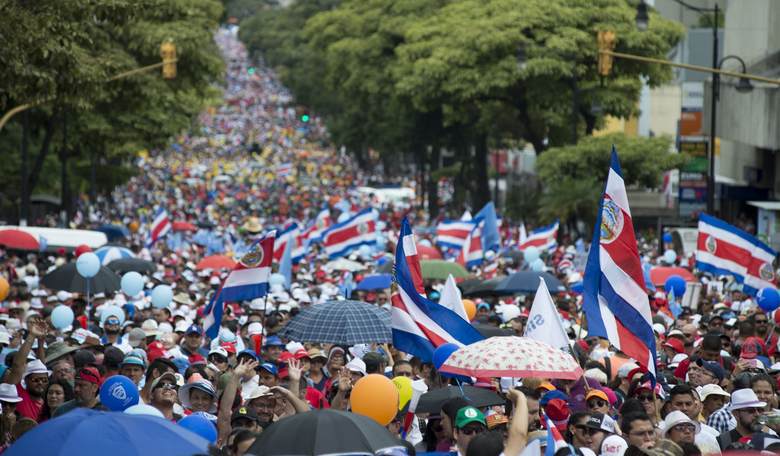
September 15 happens to be one of the most important days in much of Central America, and if you've ever been in Costa Rica, El Salvador, Honduras, Guatemala, or Nicaragua (we'll put an asterisk next to that one) during that time, you might understand why. It's one of the most festive days of the year.
It's their Independence Day.
History
I'll keep the history brief. The region that includes these five countries was established as the Captaincy General of Guatemala, a Spanish colony, in 1542. But on September 15, 1821, representatives gathered in the capital, Guatemala City, and approved the Act of Independence of Central America, which declared separation from Spain. As news spread to the other territories, they took their own steps to become independent.
For a while, they joined the Mexican Empire under Agustín de Iturbide, and when that collapsed, they became the Federal Republic of Central America before breaking away and becoming truly independent.
While it took a few years for these territories to become five separate republics, the countries celebrate September 15 as the date that got it all started. It's also why here in the United States, we begin Hispanic Heritage Month on the same day. And it's worth noting that Belize and Panama celebrate their independence on different days — Panama was doing its own thing, and Belize was under British rule.
Traditions
Even though it's been 205 years since that fateful day, these countries still celebrate many shared traditions. The biggest one is the Antorcha Centroamericana de la Libertad or the Torch of Freedom. Every year, it travels from Guatemala to El Salvador, Honduras, and Nicaragua before ending up in Costa Rica. It's meant to symbolize the courier carrying the news of independence down the isthmus. You might even see schoolchildren running down streets, carrying torches and doing their own reenactment.
But while the five nations share this date and the torch, they also have their own unique traditions.
Guatemala
I'll admit that Guatemala is the Central American country I know the least about, but many say the celebrations here are the biggest because it was the place where the path toward independence began. There's a torch lighting at Plaza del Obelisco, and throughout the country, you'll find school and civic parades, along with fireworks and various government ceremonies.
Here are some pictures from Monday night's ceremony:
Hoy conmemoramos los #205AñosDeIndependenciaGT con el firme compromiso de seguir caminando hacia adelante, siempre unidos por el desarrollo de nuestra patria. 🫱🏼🫲🏽✨
— Gobierno de Guatemala 🇬🇹 (@GuatemalaGob) September 15, 2026
¡Que viva Guatemala, soberana, digna y en libertad! 🇬🇹 pic.twitter.com/XVSY0NXHy0
El Salvador
In recent months, I've gotten to know many people from the United States who live in El Salvador. I've seen their videos and pictures from today, and it looks like they had an absolute blast. The country celebrates with school activities, like parades and folkloric dances, and there is a strong military component to official celebrations.
Here's a taste of that from a parade in San Salvador.
#IndependenciaES | Así se vivió el desfile por los 205 años de independencia patria en el sector del monumento al Divino Salvador del Mundo, punto de partida de la marcha.
— Diario El Salvador (@elsalvador) September 15, 2026
Videos Juan Carlos Barahona/#DiarioES pic.twitter.com/hesVkEz5no
And here is President Nayib Bukele attending his daughter's school parade a few days ago. Seeing him take such pride in his little girl may have given me a slight crush on el presidente. Such a sweet moment:
And here is another video of a Salvadoran father helping his disabled daughter dance in a parade. Is someone cutting onions in here? What can I say? I'm a sucker for fathers who love their daughters.
🥹 PADRE HACE POSIBLE QUE SU HIJA CUMPLA SU SUEÑO DE PARTICIPAR COMO CACHIPORRA
— Sivar News (@SivarNewsSV) September 15, 2026
❤️ La pequeña tiene dificultades para caminar, pero su padre estuvo a su lado en todo momento para que pudiera formar parte del desfile.
🇸🇻 La conmovedora escena ocurrió durante la participación del… pic.twitter.com/YX8M8Fj74Z
Honduras
In Honduras, there are also military components to the country's celebrations, and schools throughout the nation join in the parades. There are also government activities, like a reading of the Declaration of Independence, a ceremonial raising of the national flag, and the firing of 21 cannons at dawn. Here are some scenes from today's festivities.
🌿🇭🇳 | ¡Las etnias de Honduras celebran nuestra identidad!
— TNH (@TNH2026) September 15, 2026
El Desfile de Etnias se suma a la celebración de los 205 años de Independencia de Honduras, destacando la riqueza cultural, las tradiciones y la diversidad que forman parte de nuestra identidad nacional. 💙🤍 pic.twitter.com/jIMRjkCmJO
Nicaragua
Nicaragua doesn't just celebrate Independence Day on September 15, but also the anniversary of the 1856 Battle of San Jacinto on the 14th. So, it's typically a patriotic time for the nation's people. One of the biggest events is the Tope de Independencia, a horse parade through Managua. Given the current political climate in the country, I imagine it was a bittersweet day.
Costa Rica
Last but not least is the country that many of you know I consider a second home, and maybe a future home. Should I make the move, one thing I look forward to is learning more about all of Costa Rica's cultural traditions and maybe even getting involved with or supporting them however I can. While I've been there around this time of year on a couple of occasions, I've never actually been there on Independence Day. That's going to have to change.
On the night before the 15th at 6:00 p.m., the nation sings its national anthem, and that's followed by the Desfile de Faroles or a lantern parade, during which students, teachers, and families walk through the streets with handmade lanterns that might be covered with patriotic symbols. It's really the sweetest thing and looks like a lot of fun. There are also parades and ceremonies on the 15th.
Because I follow about a million Costa Rican accounts, I had a lot of videos to choose from here, but rather than stick to the most polished and generic ones, I wanted to choose ones that were real and actually show the human side of the country. Here's a parade in Cartago:
#Independencia#205AñosDeIndependencia
— NoticiasCartago (@notiscartago) September 15, 2026
Costa Rica celebra con orgullo su independencia, un hito que marca 205 años de libertad e independencia.
👇 :https://t.co/8Ray81MKVg
🎥 Desfile fiestas patrias , Paraíso, Cartago, 15 setiembre, 2026 pic.twitter.com/6IVD7d4V52
And here are a couple from one of my favorite people to follow on social media, Costa Rican entrepreneur Pablo Arias. He shares little bits of Costa Rican culture and politics on Instagram, and I love how interesting and engaging they are.
Messages From the United States
Finally, Secretary of State Marco Rubio shared some messages for each country today on behalf of the United States, and I thought I'd share them with you. With the exception of Nicaragua, these countries are all building stronger relationships with the U.S. in 2026, and it's important that this continues. Our hemisphere is stronger and safer when we can all support each other.
For Guatemala, he mentioned "significant milestones" achieved this year, like a historic reciprocal trade agreement, a five-year health MOU, and security cooperation to disrupt drug trafficking. "This is just the beginning, as the United States and Guatemala continue building a safer and more prosperous future together," he added.
Of El Salvador he said: "Our enduring partnership continues to grow stronger. Under President Nayib Bukele’s leadership, El Salvador’s steadfast commitment to regional security has made our hemisphere safer, including through its participation in the Standing Group of Partners to restore stability in Haiti. El Salvador stands with us as a founding member of the Shield of the Americas, defending democratic sovereignty across our hemisphere, and as a member of Pax Silica to drive innovation and secure regional supply chains."
On Honduras: "This occasion honors the enduring principles of liberty and justice that continue to guide Honduras forward. Honduras stands with us as a founding member of the Shield of the Americas, defending democratic sovereignty across our hemisphere. Our nations share a partnership grounded in mutual respect and a commitment to the safety and prosperity of our citizens. I commend President Nasry Asfura’s steadfast leadership in advancing our shared priorities of strengthening border security, disrupting transnational crime, and expanding economic opportunity for both of our peoples."
For Nicaragua, he had a message for the people who live under tyranny: "More than two centuries ago, Nicaraguans forged their own path to determine their future. Today, that same conviction endures despite the Murillo-Ortega dictatorship’s brutal efforts to annihilate it. Whether at home or in exile, Nicaraguans’ aspirations for a future free from tyranny cannot be cancelled or erased. The United States recognizes the Nicaraguan people’s strong resolve and conviction and today celebrates the ties that bind our two peoples."
And lastly, for Costa Rica: "Our two nations share a friendship rooted in democracy, security, and economic ties. That friendship has driven joint efforts to dismantle transnational criminal organizations, secure critical telecommunications infrastructure, disrupt illegal immigration, and bolster border security. Costa Rica stands with us as a founding member of the Shield of the Americas, defending democratic sovereignty across our hemisphere, and as a member of Pax Silica to drive innovation and secure regional supply chains. Under President Laura Fernández’s leadership, I am confident our partnership will continue to keep our people safe and advance shared prosperity."
I will wrap this up here, but I just wanted to say Happy Independence Day — or ¡Feliz Día de la Independencia! — to our friends down south.